

Peter Brown‘s fascinating Through the Eye of a Needle: Wealth, the Fall of Rome, and the Making of Christianity in the West, 350-550 AD chronicles the changing conceptions of wealth and treasure in late antiquity and the first centuries of Christianity. For our 2020 series in the rise of money (we also spoke to Thomas Piketty and Christine Desan) Brown related the emergence, in the 3rd and 4th century AD, of striking new ideas about charity and how to include the poor inside a religious community.

Brown explains how the very categories of “the wealthy” and “the poor” had to be invented in late Antiquity. Hence the importance of civic euergetism in the Greek and Roman worldview–i.e. benefaction and charity strictly confined to the good of the city.

In early Christianity, this was replaced by compensatory almsgiving by the rich to benefit the lowly poor, or beggars. That notion of the rich being “less likely to enter heaven than a camel going through the eye of a needle”–that, says Brown, “was Jesus at its wildest.” Augustine even preached about almsgiving as “like a traveller’s check” that let the rich bank up credit in heaven.
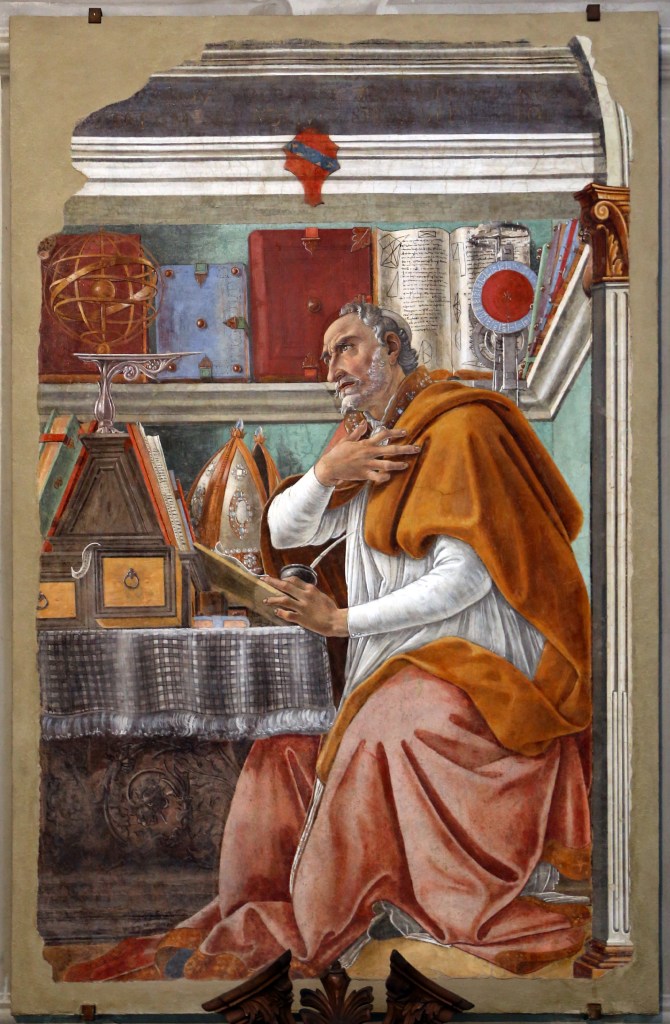
That new metaphor tells us something remarkable about how the fluidity of money in late Antiquity changed everything, even religious beliefs. (Who knew the Romans had the idea of a traveler’s check? Peter Brown, that’s who.) Brown also loves the idea of early Christianity as obsessed with the notion of ends of the earth–Church-planting felt to early practitioners like “a moon-shot.” And he has strong views about how new guiding metaphors emerged inside theological or economic imaginative models–and survive because of their metaphorical or poetic resonance.
But most crucial of all to Brown’s argument about changed ideas of wealth is that Christianity initiated the world-transformational notion of corporate identity–before Oxford, before the East India Company, before IBM. The “managerial Bishop” (Brown’s brilliant coinage) is not wealthy in his own right, but as an agent of “impersonal continuity.” Greek cities were never as impersonal and hence as trans-generationally stable (especially in patronage and finance management) as the Christian Church became in Late Antiquity and the Middle Ages.
Brown thinks Foucault got this kind of “pastoralism” in Church leaders partially right. But Foucault–“an old fashioned Catholic in many ways” Brown remarks slyly–underestimated the desire of the Christian community to designate a “consumer-driven” church hierarchy in which they can invest.

Pressed on the question of resonance to our own day, Brown (as a “good semi-Durkheimian of the Mary Douglas variety”) stresses that “these are almost incommensurable societies.” And he does note an ominous Roman parallel in present-day “personalization of power”–understanding the odious Putin by reading Seneca. Nonetheless, Brown makes clear his enduring admiration for Late Antiquity–compared to classical Greece and perhaps to our own day–because of its “remarkable tolerance for anomaly.” Brown has that too, more power to him!
Mentioned in the Episode
Peter Brown, Body and Society (1968)
Peter Brown,. Augustine of Hippo: A Biography (1968)
Peter Brown, The Cult of the Saints (1981)
Peter Brown, The Ransom of the Soul (2015)
Evelyne Patlagean, Pauvreté économique et pauvreté sociale à Byzance, 4e-7e siè (Economic Poverty and Social Poverty)
Augustine, Confessions (c. 400 AD and many other works available here )
Michel Foucault, Security, Territory, Population: Lectures at the Collège de France, 1977–1978 (on priests and the importance of the pastoral or shepherding metaphor)
George Lakoff and Michael Johnson, Metaphors We Live By
Seneca, Letters from a Stoic

 Recall This Book