172 David Cunningham on Contesting Confederate Monuments (JP) 

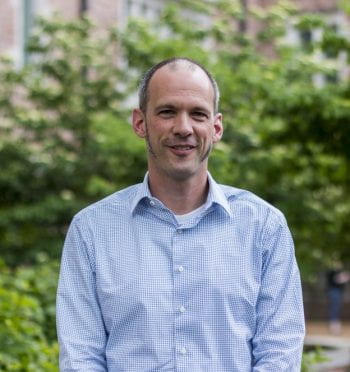
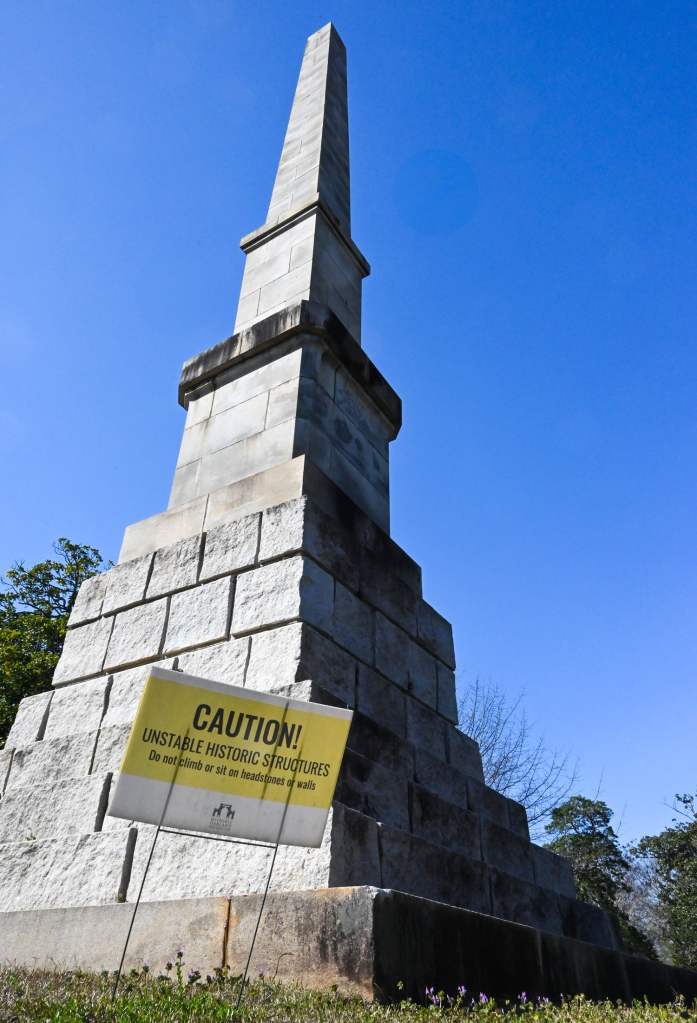
David Cunningham joins John to speak about his pathbreaking article about visiting each of the 113 communities that removed or relocated Confederate symbols between 2015 and 2023. After discussing his co-authored Social Problems  article, “Contesting Commemorative Landscapes” which  first got him thinking about monument removal, he posits that “expungement, amplification, and repositioning” are three ways contemporary communities contest the monuments of the past.. The conversation from there ranges onward through various kinds of contested removal, ending with Cesar Chavez and his ongoing de-monumentalization.
David is author of  There’s Something Happening Here: The New Left, the Klan, and FBI Counterintelligence and the award-winning Klansville, U.S.A.: The Rise and Fall of the Civil Rights-Era KKK,, a member of the City of St. Louis Reparations Commission  and recently has been engaged in exploring political signalling in public art and monuments, including a forthcoming article on the political and cultural work of murals in Protestant and  Catholic communities and in the interface areas that connect them in Belfast. His earlier Recall This Book episodes include on racialized policing in the US, on January 6th , and also on the 2024 presidential election–and a conversation with Glenn Patterson, author of Lapsed Protestant  about the mural culture and politicized spaces of Belfast and Northern Ireland.  


Listen to and Read the episode here. 

Mentioned in the episode

By David Cunmningham himself: “What Richmond got Right about taking down Confederate Monuments” and a 2023 article coauthored with Christina Simko, “Montgomery’s Monumental Truths” 

On place vs space there is wonderful work by Pierre Nora and Henri Lefebvre.

Interface  zones and the strategic cul de sacs that continue to divide Belfast neighborhoods have been brilliantly detailed and studied by various historians; eg this tour by Neil Jarman.

The lucid John Guillory article  (mentioned but not discussed) is “Monuments and Documents: On the Object of Study in the Humanities.” 

 Confederate generals whose statues were erected essentially to glorify  the KKK famously include Nathaniel Bedford Forrest. Private parks built up to collect Confederate monuments (with an underlying  anti-government bias) include North Carolina’s Valor Memorial Park, and in Texas the SS American Memorial Foundation’s military retreat space now adorned with removed Confederate statues. In Bentonville, this park glorifies a Confederate statue that has now been (dubiously) linked to Governor James H. Berry.

The MOCA/Brick reimagined MONUMENTS Exhibition includes work by Kara Walker and Bethany Collins

https://www.nps.gov/boaf/learn/historyculture/shaw.htm

Sylva North Carolina Confederate plaque debate

Kazuo Ishiguro, The Buried Giant and the Nietzschean problem of “creative forgetting.” 

The idea of Productive creative cognitive dissonance is drawn from MLK’s idea of “creative tension.”

Hajar Yazdiha, Struggle for the People’s King

How long will the Chavez National Monument last? The statue at UC Fresno is already gone…” Is The Trail of Tears a historical site the same way Confederate statues are? 

Denmark Vescey’s Garden by Ethan J. Kytle   and, Blain Roberts 
Zore Neale Hurston Their Eyes were Watching God

RTB 170 What Waltham Does When the Water Rises: Rachel McKane and Danielle Jacques (JP)

Permafrost melts, desert cities boil, inland lakes dry up; but Waltham too feels the pinch. Adverse manmade climate change is seeping into basements everywhere, and a wonderful new research project, “Building Collective Resilience via Collective Memory” (that website launches very soon) counts some of the ways.

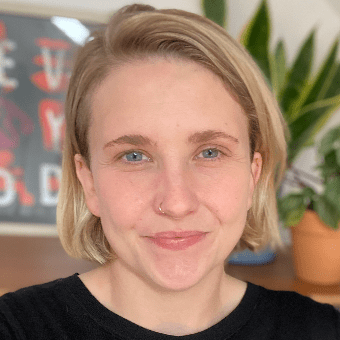
John is joined by two Brandeis colleagues who spearheaded the project and supplied some of the local interviews that bring climate change dynamics vividly to life. Rachel McKane is Assistant Professor of Sociology with interests in community-based approaches to environmental justice through networks of solidarity and mutual aid, and articles in such journals as Environmental Research Letters, Environmental Justice, Environmental Sociology, and Local Environment.

Danielle Jacques is at work on a dissertation exploring the social and spatial dynamics of the renewable energy transition. We also hear from Mark and from Colleen (about peaches!) in this episode.

Mentioned in the episode

Follow the project’s growth at Building Collective Resilience via Collective Memory. Or read about its origins in a local newspaper story here.

John Dittmer, Local People

Victorian neighborhood class proximity maps of London include the famous Booth “poverty maps.

Yuki Kato, Gardens of Hope.

Bill McKibben, Oil and Honey.

Listen to and read the episode here.

146* Peter Brown on wealth, charity and managerial bishops in early Christianity (JP)


Peter Brown‘s fascinating Through the Eye of a Needle: Wealth, the Fall of Rome, and the Making of Christianity in the West, 350-550 AD chronicles the changing conceptions of wealth and treasure in late antiquity and the first centuries of Christianity. For our 2020 series in the rise of money (we also spoke to Thomas Piketty and Christine Desan) Brown related the emergence, in the 3rd and 4th century AD, of striking new ideas about charity and how to include the poor inside a religious community.

Brown explains how the very categories of “the wealthy” and “the poor” had to be invented in late Antiquity. Hence the importance of civic euergetism in the Greek and Roman worldview–i.e. benefaction and charity strictly confined to the good of the city.

Continue reading “146* Peter Brown on wealth, charity and managerial bishops in early Christianity (JP)”

142* Greg Childs on seditious conspiracy (EF, JP)

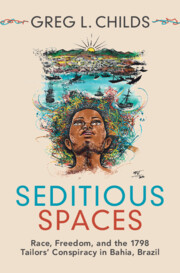
What a difference four years makes. Back in February 2021, still struggling to understand what had just happened at the Capitol, John and Elizabeth spoke with Brandeis historian Greg Childs. He is an expert in Latin American political movements and public space; his Seditious Spaces: Race, Freedom, and the 1798 Conspiracy in Bahia, Brazil is imminently forthcoming from Cambridge UP.

Continue reading “142* Greg Childs on seditious conspiracy (EF, JP)”

138c. What Just Happened? David Cunningham (Herbert Hoover gave us Woody Guthrie)


Welcome to the final episode of What Just Happened, a Recall This Book experiment. In it you will hear three friends of RTB reacting to the 2024 election and discussing the coming four years.David Cunningham, chair of Sociology at Washington University in St Louis, is author of Klansville, U.S.A. and There’s something happening Here: The New Left, the Klan, and FBI Counterintelligence His ongoing research includes the recent wave of conflicts around Confederate monuments and other sites of contested memory.

David’s vision of what has changed in 2024 relates to an extended analogy to the election of 1972, when the avowedly racist George (“Segregation….forever“) Wallace almost rode right-wing fury to victory.

Continue reading “138c. What Just Happened? David Cunningham (Herbert Hoover gave us Woody Guthrie)”

138b. What Just Happened? Vincent Brown (Ronald Reagan Gave Us Punk Rock)

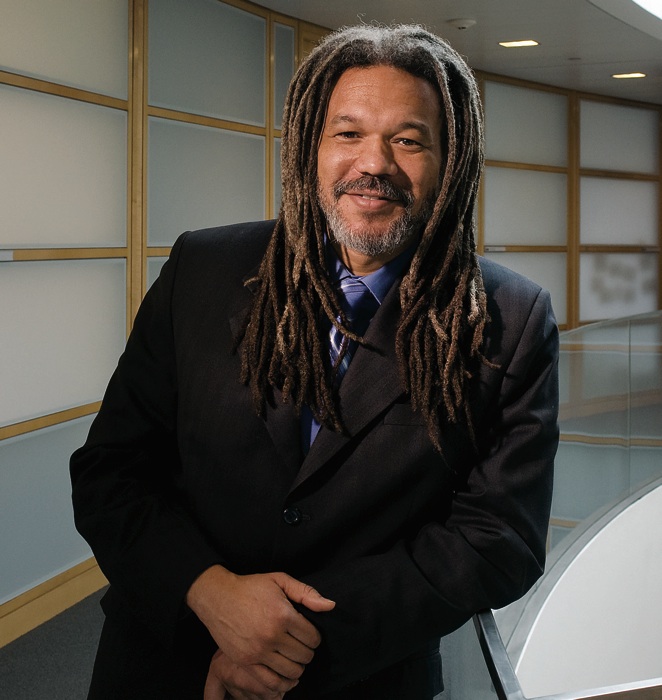
Welcome to What Just Happened, a Recall This Book experiment. In it you will hear three friends of RTB reacting to the 2024 election and discussing the coming four years. In this episode, Vincent Brown (History professor at Harvard) last spoke with us about his own work on Caribbean slave revolts; his many other well known projects include the recent PBS series The Bigger Picture.

Continue reading “138b. What Just Happened? Vincent Brown (Ronald Reagan Gave Us Punk Rock)”

122 The Culture Trap, with sociologist Derron Wallace (EF, JP)

In this episode, Elizabeth and John talk with Derron Wallace, sociologist of race, ethnicity, and education, and Brandeis colleague, about his new book The Culture Trap, which explores “ethnic expectations” for Caribbean schoolchildren in New York and London. His work starts with the basic puzzle that while black Caribbean schoolchildren in New York are often considered as “high-achieving,” in London, they have been conversely thought to be “chronically underachieving.” Yet in each case the main cause — of high achievement in New York and low achievement in London — is said to be cultural. We discuss the concept of ethnic expectations and the ways it can have negative effects even when the expectations themselves are positive, the dense intertwining of race, class, nation, colonial status, and gender, and the travels of the concept of culture in the 20th and 21st centuries.

Continue reading “122 The Culture Trap, with sociologist Derron Wallace (EF, JP)”