148* Albion Lawrence: Scientists Cooperate while Humanists Ruminate (EF, JP)

Back in 2021, John and Elizabeth sat down with Brandeis string and quantum theorist Albion Lawrence to discuss cooperation versus solitary study across disciplines. They sink their teeth into the question, “Why do scientists seem to do collaboration and teamwork better than other kinds of scholars and academics?” 

The conversation ranges from the merits of collective biography to the influence of place and geographic location in scientific collaboration to mountaineering traditions in the sciences.  As a Recallable Book, Elizabeth champions The People of Puerto Rico, an experiment in ethnography of a nation (in this case under colonial rule) from 1956, including a chapter by Robert Manners, founding chair of the Brandeis Department of Anthropology. Albion sings the praises of a collective biography of the Art Ensemble of Chicago, A Message to Our Folks. But John stays true to his Victorianist roots by praising the contrasting images of the withered humanist Casaubon and the dashing young scientist Lydgate in George Eliot’s own take on collective biography, Middlemarch.

First image taken of a black hole by a collaboration of scientists for the Event Horizon Telescope (EHT) project

Discussed in this episode:

Richard Rhodes Making of the Atomic Bomb

Ann Finkbeiner, The Jasons: The Secret History of Science’s Postwar Elite

James Gleick, The Information

Jon Gertner, The Idea Factory: Bell Labs and the Great Age of American Innovation

Black Hole photographs win giant prize

Adam Jaffe, “Geographic Localization of Knowledge Spillovers as Evidenced by Patent Citations

Jamie Cohen-Cole, The Open Mind

Julian Steward et al., The People of Puerto Rico

Paul Steinbeck, Message to Our Folks

Jenny Uglow, Lunar Men

George Eliot, Middlemarch
Listen to and Read the episode here.

100 Nuclear Ghosts: Ryo Morimoto (EF, JP)

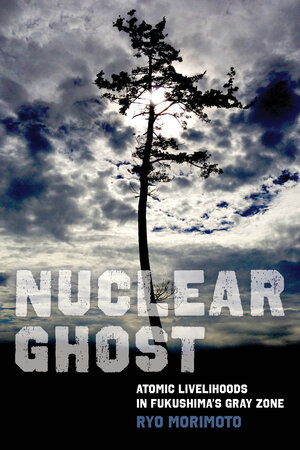
John and Elizabeth explore spectral radiation with Ryo Morimoto, Assistant Professor of Anthropology at Princeton University. His new book Nuclear Ghost: Atomic Livelihoods in Fukushima’s Grey Zone is based on several years of fieldwork in coastal Fukushima after the triple disaster of earthquake, tsunami, and nuclear accident. Ryo’s book shows how residents of the region live with and through the “nuclear ghost” that resides with them.

The trio discuss ways that residents acclimatize themselves to the presence of radiation, efforts to live their lives in ways not only shaped by catastrophe and irradiation, and the Geiger counter as a critical object.

Continue reading “100 Nuclear Ghosts: Ryo Morimoto (EF, JP)”

98 Horton’s Cosmic Zoom Room (EF, JP)

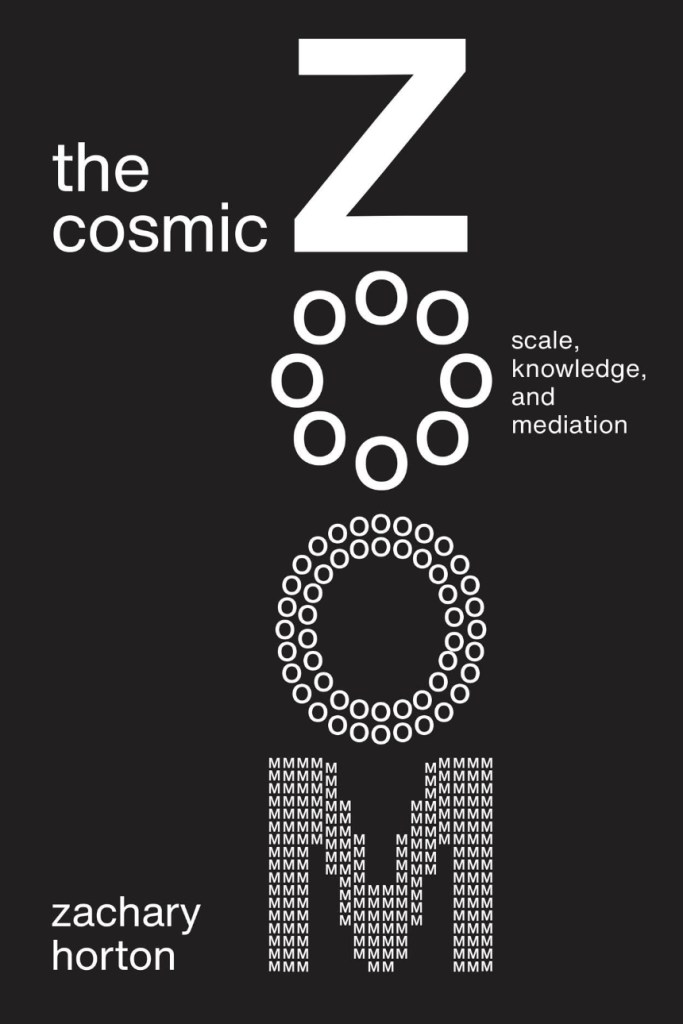
Today we welcome Zachary Horton, Associate Professor of Literature  and director of the Vibrant Media Lab at University of Pittsburgh; game designer, filmmaker and camera designer. Out of all these endeavors, he came to talk about his book  The Cosmic Zoom Scale, Knowledge, and Mediation .

Continue reading “98 Horton’s Cosmic Zoom Room (EF, JP)”

97* Lorraine Daston Books In Dark Times (JP)


Our Books in Dark Times series offered John this 2021 chance to speak with Lorraine Daston of the Max Planck Institute for the History of Science. Her list of publications outstrips our capacity to mention here; John particularly admires her analysis of “epistemic virtues” such as truth to nature and objectivity in her 2007 Objectivity (coauthored with Peter Galison).

Continue reading “97* Lorraine Daston Books In Dark Times (JP)”

96 Lorraine Daston Rules the World (EF, JP)

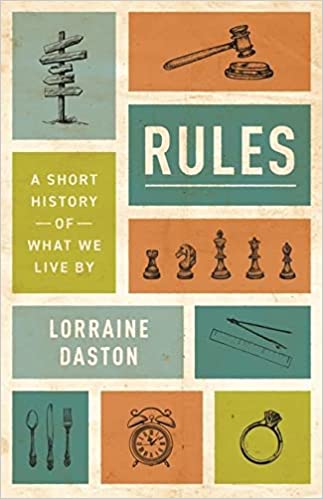
Historian of science Lorraine Daston‘s wonderful new book, Rules: A Short History of What We Live By is just out from Princeton University Press. Daston’s earlier pathbreaking works include Against Nature, Classical Probability in the Enlightenment and many co-authored books, including Objectivity (with Peter Galison) which introduced the idea of historically changeable “epistemic virtues.”

In this conversation, Daston–Raine to her friends–shows that rules are never as thin (as abstract and context-free) as they pretend to be. True, we love a rule that seems to brook no exceptions: by the Renaissance, even God is no longer allowed to make exceptions in the form of miracles. Yet throughout history, Raine shows, islands of standardized stability are less stable than they seem. What may feel like oppressively general norms and standards are actually highly protected ecotopes within which thin rules can arise. Look for instance at the history of sidewalks (Raine has)!

Continue reading “96 Lorraine Daston Rules the World (EF, JP)”