152 Why I Paneled: A Backwards Glance by Kristin Mahoney and Nasser Mufti (JP)

In RTB 151, you heard the Kristin, Nasser and John discussing what might happen before their Northeastern Victorian Studies Association conference actually took place. This episode, recorded a few weeks later, looks back at what actually occurred and see how it aligned with or defied the panelists’ prior expectations.

The three discuss what it means to have an emergent and residual shticks; differences between how you prepare to talk to undergraduates and your peers matter, and the three agree that going in without any expectations of your audience makes for a weaker presentation. Imaginary interlocution makes for better pre-gaming.

Continue reading “152 Why I Paneled: A Backwards Glance by Kristin Mahoney and Nasser Mufti (JP)”

151 Why I Panel, Part One: Kristin Mahoney, Nasser Mufti (JP)

Most scholars are both haunted, even undone, by the task of writing papers for peers and traveling to strange campuses to deliver them. Yet we keep it up–we inflict it on our peers, we inflict it on ourselves. Why?

To answer that question, Recall This Book assembled three (if you count John) scholars of Victorian literature asked to speak at the Spring 2025 Northeastern Victorian Studies Association conference. Their discussion began with the idea that agreeing to give papers is an act of “externalized self-promising” and ranged across the reasons that floating ideas before our peers is terrifying, exhilarating and ultimately necessary.

Kristin Mahoney‘s books include Literature and the Politics of Post-Victorian Decadence (Cambridge UP, 2015) and Queer Kinship After Wilde: Transnational Decadence and the Family. Nasser Mufti ‘s first scholarly book was Civilizing War and he is currently working on a monograph about what Britain’s nineteenth century looks like from the perspective of such anti-colonial thinkers as C.L.R. James and Eric Williams. (RTB listeners don’t need to hear about John or his Arendt obsession.

Mentioned in the episode

Theosophical Society in Chennai 

Annie Besant

Jiddu Krishnamurthi in his early life was a not-quite-orphan child guru for Besant. 

Eric Williams, British Historians and the West Indies on grand theorizations of race by folks like Acton

C L R James

Adorno’s Minima Moralia provides Nasser with an important reminder oF the importance of “hating tradition properly.”

H G Wells, The Time Machine and its modernist aftermath eg in the opening pages of Proust’s Remembrance of Things Past and in Ford Madox Ford’s The Inheritors and The Good Soldier, which is in its own peculiar way a time-travel novel. 

The three discuss Foucault’s notion of capillarity a form of productive constraint, which Nasser uses to characterize both early 20th century Orientalism, and the paradigms of postcolonialism that replaced it, 

Paul Saint Amour’s chapter on Ford Madox Ford is in Tense Future.

John Guillory on the distinctions between criticism and scholarship in Professing Criticism; the rhizomatic appeal of B-Side Books.

The “hedgehog and the fox” as a distinction comes from a poem by Archilochus—and sparked  Isaiah Berlin’s celebrated essay of the same name.

Pamela Fletcher the Victorian Painting of Modern Life .

Listen to the episode here. Read the Episode here.

150* Steve McCauley on Barbara Pym: The Comic Novel Explored and Adored (JP)


Back in 2019, John spoke with the celebrated comic novelist Stephen McCauley. Nobody knows more about the comic novel than Steve–his latest is You Only Call When You’re in Trouble, but John still holds a candle for his 1987 debut, Object of My Affection, made into a charming Jennifer Aniston Paul Rudd movie. And there is no comic novelist Steve loves better than Barbara Pym, a mid-century British comic genius who found herself forgotten and unpublishable in middle age, only to roar back into print in her sixties with A Quartet in Autumn. Steve and John’s friendship over the years has been sealed by the favorite Pym lines they text back and forth to one another, so they are particularly keen to investigate why her career went in this way.

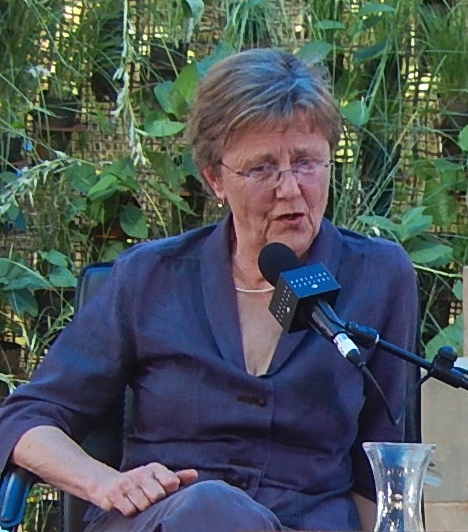
stephen-mccauley-2017 photo
Steve McCauley

In the episode, they talk about some of these favorite sentences from Pym, and then turn to the comic novel as a genre. They talk about the difference between humorous and comic writing, the earthiness of comedy, whether comic novels should have happy or sad endings, and whether the comic novel is a precursor to, or an amoral relief from, the sitcom. They also discuss some of Steve’s fiction, including his Rain Mitchell yoga novels. In Recallable Books John recommends Pictures from an Institution by Randall Jarrell and Steve recommends After Claude by Iris Owens.

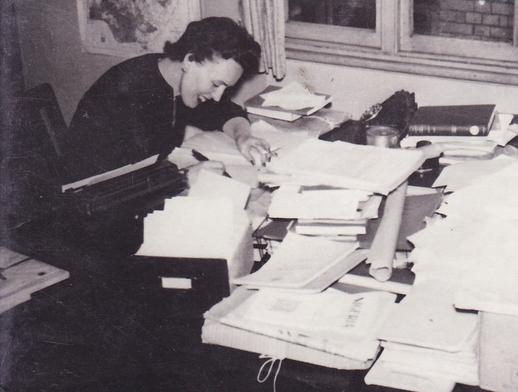
barbarapym_internationalafricainstitute
Barbara Pym at work

Discussed in this episode:

The Life and Opinions of Tristram Shandy, Gentleman, Laurence Sterne

Vanity Fair, William Makepeace Thackeray

Jane Eyre, Charlotte Bronte

The Adventures of Huckleberry Finn, Mark Twain

Jude the Obscure, Thomas Hardy

The Beast in the Jungle,” Henry James

The Thurber Carnival, James Thurber

The Group, Mary McCarthy

After Claude, Iris Owens

Pictures from an Institution, Randall Jarrell

An Unsuitable Attachment, Barbara Pym

Less than Angels, Barbara Pym

The Sweet Dove Died, Barbara Pym

Portnoy’s Complaint, Philip Roth

The SelloutPaul Beatty

My Ex-Life, Stephen McCauley

You can listen here or read here.

147 Ieva Jusionyte on U.S. Guns in Mexico: Exit Wounds [EF, JP]

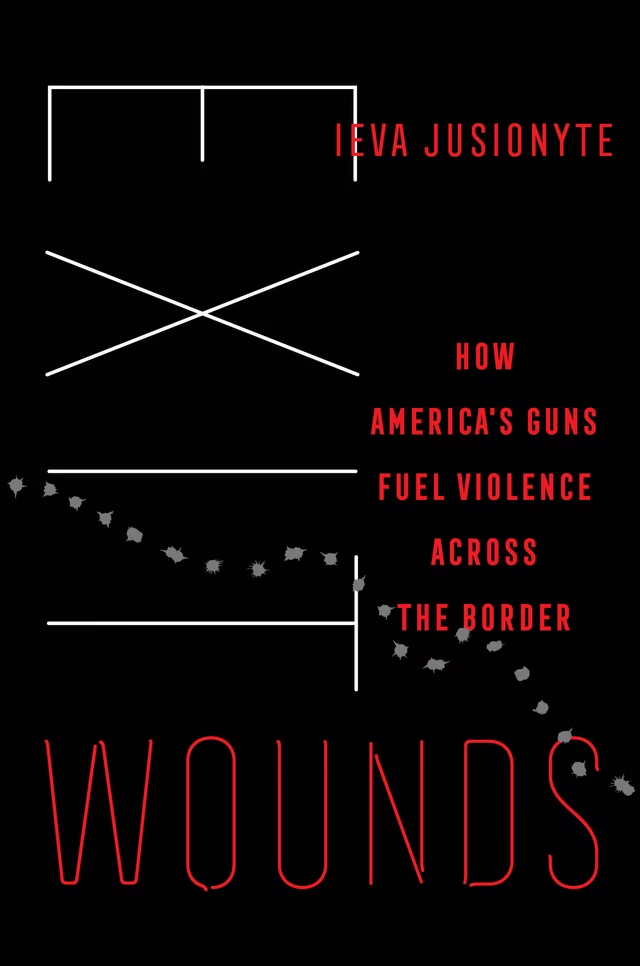
John and Elizabeth had the chance to talk with Ieva Jusionyte, anthropologist, journalist, emergency medical technician. Her award-winning books include Exit Wounds, which uses anthropological and journalistic methods to follow guns purchased in the United States through organized crime scenes in Mexico, and their legal, social and personal repercussions.

In addition to hearing how Ieva researched the topic, balancing structural understandings of how guns become entangled with people on both sides of the border with an emphasis on individual stories, we also talked about how language captures and fails to capture violence, the ways violence and the fear of violence organize space, and the importance of a humble, responsive, and empathetic approach to speaking with people touched by gun violence.

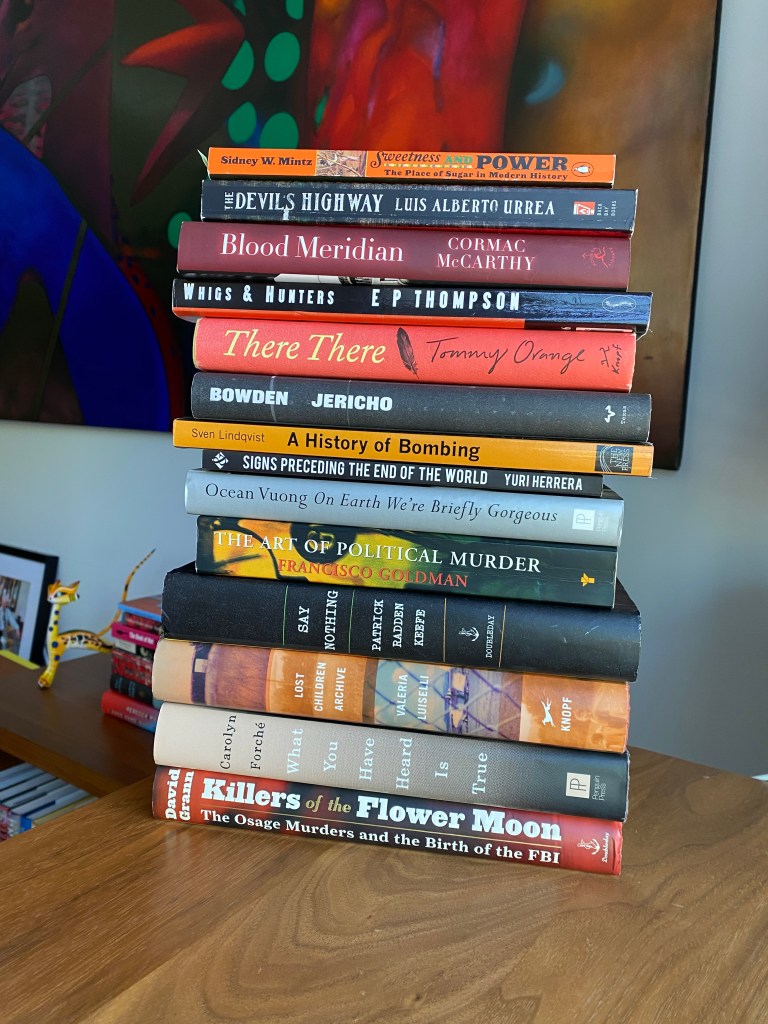
Ieva’s “bookshelf” for Exit Wounds

Mentioned in this episode:

Sidney Mintz, Sweetness and Power (1985)

Allen Feldman, Formations of Violence (1991)

Roberto Bolaño, 2666 (2004)

Yuri Herrera, Signs Preceding the End of the World (2009) tr. by Lisa Dillman, see RTB episode 48 “Transform, not Transfer: Lisa Dillman on Translation

Deborah Thomas, Political Life in the Wake of the Plantation, 2019

Cormac McCarthy Blood Meridian (1985)

Giorgio Agamben Homo Sacer (1998) and the “state of exception”

Thomas Pynchon’s Gravity’s Rainbow (1973)and the “zone”

Nathan Thrall, A Day in the Life of Abed Salama (2023)

Recallable “Books:”

Ieva suggested E.P Thompson, Whigs and Hunters: the Origin of the Black Act (1975) for its thoughtful framing of state violence and its incredible detail, and also Sven Lindqvist, A History of Bombing (2000), for the ways in which the book’s structure enacts its argument.

Elizabeth went with the documentary by Raul Paz Pastrana, Border South (2019), which also weaves together the stories of those affected, including the anthropologist Jason De León, in ways that account for the multidimensionality of human experience.

John picked the contestatory Northern Irish spaces of Anna Burns’ novel Milkman (2018)

Listen and Read Here

135.2 Recall This Story: Part 2 of Linda Schlossberg on Alice Munro’s “Miles City, Montana” (JP)

{You will want to start with Part 1 of episode 135; it can be found right here]

Linda Schlossberg, author of Life in Miniature, who teaches at Harvard, joins RTB to read and explore one of her favorite Alice Munro stories, “Miles City, Montana” in our new series, Recall This Story.

Continue reading “135.2 Recall This Story: Part 2 of Linda Schlossberg on Alice Munro’s “Miles City, Montana” (JP)”

135.1 Recall This Story: Part 1 of Linda Schlossberg reading and discussing Alice Munro’s “Miles City, Montana” (JP)

[this is the first half of the story; the second half can be found here]

Linda Schlossberg, author of Life in Miniature, who teaches at Harvard, joins RTB to read and explore one of her favorite Alice Munro stories, “Miles City, Montana” in our new series, Recall This Story.

Continue reading “135.1 Recall This Story: Part 1 of Linda Schlossberg reading and discussing Alice Munro’s “Miles City, Montana” (JP)”