Punishment makes nobody safer, imprisonment only impoverishes us as a society. And yet, we lock up our own, more and more for worse and worse reasons. What might finally inspire us to run the equation another way, and come up with a different solution?
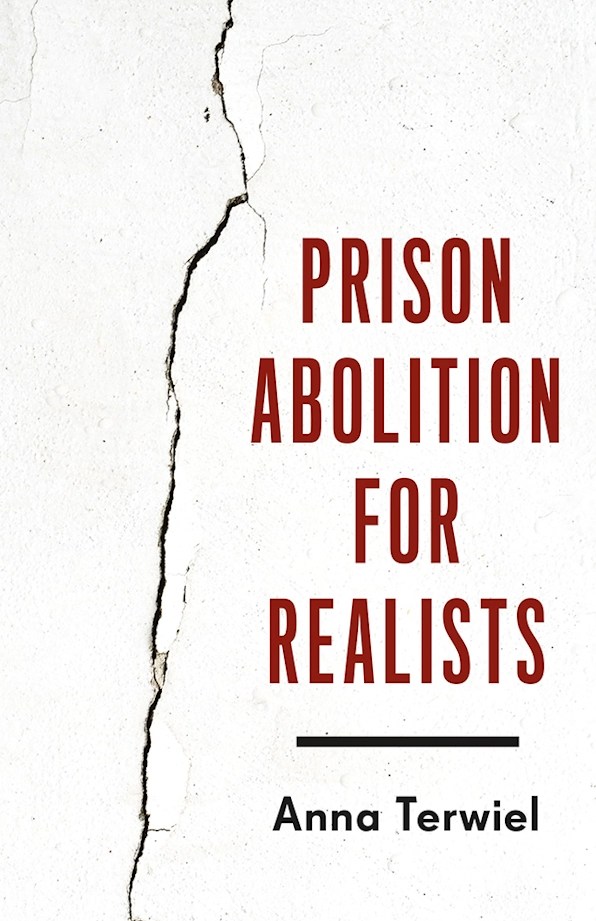
Anna Terwiel joined John to discuss her remarkable new book, Prison Abolition for Realists, which charts a path away from paranoid (as documented by Eve Sedgwick) and purity politics in favor of an abolitionism that fuses “abstract normative theorizing” with attainable worldly goals. One name for this is agonistic abolitionism; it offers, as Anna sees it a positive vision alongside its criticism of the status quo.
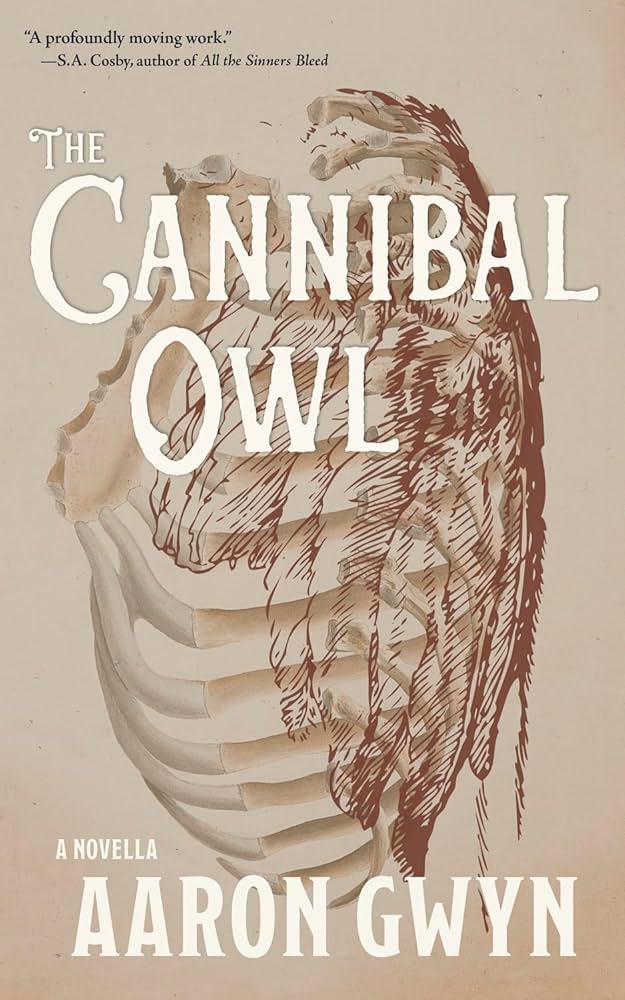
One way to grasp Gwyn’s achievement is to consider the contrast between his durably realist work and Cormac McCarthy’s 1985 Blood Meridian. Much as Aaron and Sean admire that novel, McCarthy’s characters strike them as monstrous and incredible. How about Charles Portis’s True Grit, asks John? Aaron loves it for its ventriloquizing power, and its truth-loving willingness to weave in unsettling back stories like Rooster Cogburn’s ties to Quantrill’s Rangers, an eerily modern pro-Confederate terrorist paramilitary. In NOvel Dialogue’s “signature question,” we learn why Aaron’s favorite teacher was Robert Hill, Pink-Floyd-loving drummer and perennial inspiration (audio here).
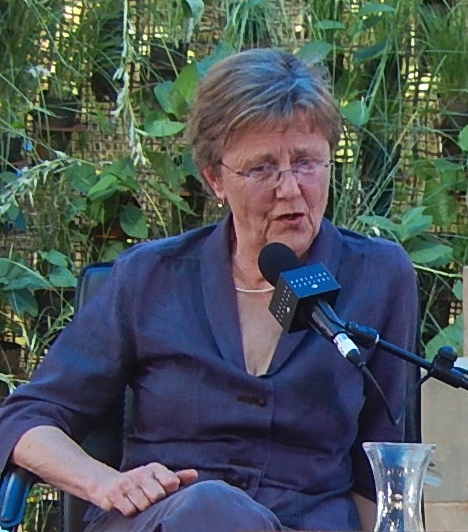
In this RTB and Novel Dialogue episode from 2021, Helen Garner sits down with John and Elizabeth McMahon, a distinguished scholar of Australian literature. Helen’s novels range from the anti-patriarchy exuberance of Monkey Grip(1977) to the heartbreaking mortality at the heart of The Spare Room (2008). She has also authored a slew of nonfiction, plus screenplays for Jane Campion’s Two Friendsand Gillian Armstrong’s wonderfully Garneresque The Last Days of Chez Nous. After a reading from John’s favorite, The Children’s Bach, the trio discusses Garner’s capacity for cutting and cutting, creating resonant, thought-inducing gaps. Garner connects that taste for excision, perhaps paradoxically, to her tendency to accumulate scraps, bits and pieces of life. She relates her father’s restlessness to her own life-total of houses inhabited (27). “Why wouldn’t I write about households?” asks Helen, “They’re just so endlessly interesting.”
Who shaped her writing? Raymond Carver: packed with power, but the pages white with omissions and excisions. Helen offers an anecdote about her own pruning that ends with her “ankle-deep in adverbs.” That’s how to escape the “fat writing” that stems for distrust of the reader. She thoughtfully compares the practical virtues of keeping notebooks for the “music” of everyday life to the nightly process of diary-writing (more analytical). John raises the question of pervasive musical metaphors in Helen’s writing, and she reports her passion for “boring pieces” and the “formal” side of Bach, which makes a listener feel that there is such a thing as meaning. “There’s something about shaping a sentence, too, which can be musical.”
Mentioned in the Episode
Marilynne Robinson, Housekeeping (the fixed people and the wandering people), Gilead, Home,
The West Wing (yes, the TV show! Helen watched it during lockdown when she couldn’t bear fiction…)
Glenn has lifetime of insights about the boundary markers and easy to miss shibboleths that define life in divided places–and in divided times. In Belfast, everyone learns to use words without being marked out: how do you avoid uttering “the one word that gets you killed”?
Ben Fountain is far more than just the author of Billy Lynn’s Long Halftime Walk, which won RTB hearts and minds (and the National Book Award) long before it became a weird Ang Lee movie.
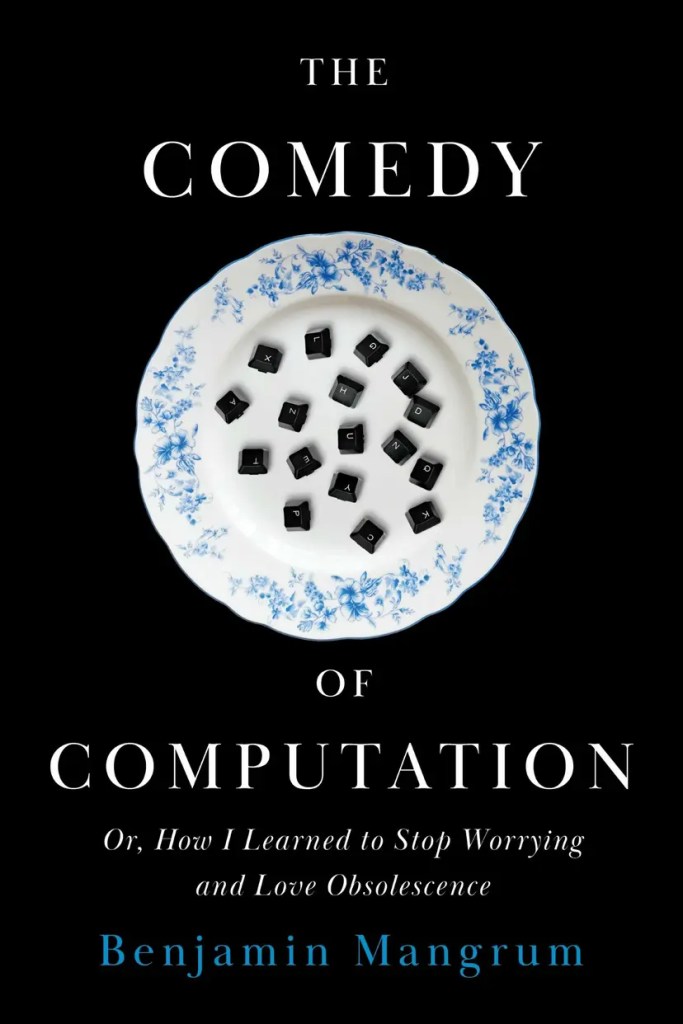
When does comedy become more than a laugh? Ben Mangrum of MIT joins RtB to discuss The Comedy of Computation: Or, How I Learned to Stop Worrying and Love Obsolescence, which in some ways is organized around “the intriguing idea that human knowledge work is our definitive feature and yet the machines we are ourselves made are going to replace us at it.” Comedyhas provided a toolbox (Charles Tilly calls them “collective repertoires”) for responding to the looming obsolescence of knowledge workers.
RtB loves the present-day shadows cast by neglected books, which can suddenly loom up out of the backlit past. So, you won’t be shocked to know that John has also been editing a Public Books column called B-Side Books. In it, around 50 writers (Ursula Le Guin was one) have made the case for un-forgetting a beloved book. Now, there is a book that collects 40 of these columns. Find it as your local bookstore, or Columbia University Press, or Bookshop, (or even Amazon).
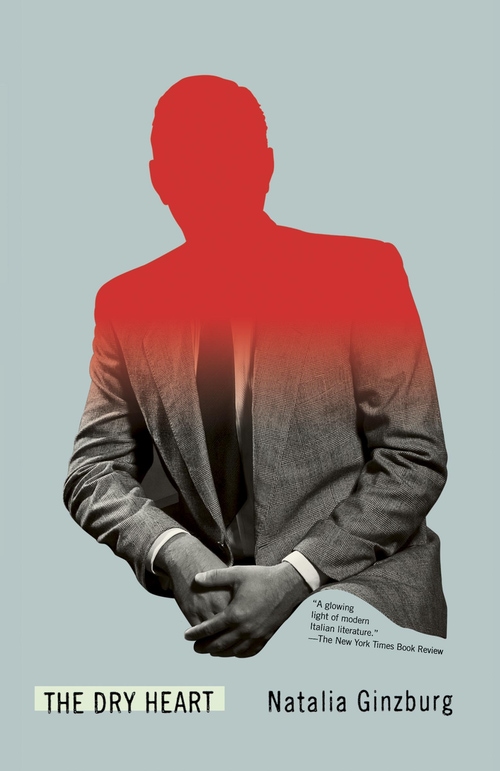
Like our podcast, B-Side Books focuses on those moments when books topple off their shelves, open up, and start bellowing at you. The one that enthralled Merve Emre (Wesleyan professor and author ofsuch terrific works as The Personality Brokers) was a novella by the luminous midcentury Italian pessimist, Natalia Ginzburg. And if you think you know precisely why a mid-century Italian writer would have a dark and bitter view of the world (already thinking of the Nazi shadows in work by Italo Calvino, Primo Levi and Giorgio Bassani) Ginzburg’s The Dry Heart will have you thinking again.
All of that, though, only prepared the ground for The Ministry for the Future, his 2020 vision of a sustained governmental and scientific rethinking of humanity’s fossil-burning, earth-warming ways. Flanked by JP, KSR’s friend and ally Elizabeth Carolyn Miller (celebrated eco-critic and UC Davis professor) asked him to reflect on the book’s impact in this conversation with our sister podcast, Novel Dialogue.
Linda Schlossberg, author of Life in Miniature, who teaches at Harvard, joins RTB to read and explore one of her favorite Alice Munro stories, “Miles City, Montana” in our new series, Recall This Story.
Linda Schlossberg, author of Life in Miniature, who teaches at Harvard, joins RTB to read and explore one of her favorite Alice Munro stories, “Miles City, Montana” in our new series, Recall This Story.