177 A Hosts’ Special: Ferry and Plotz Choose Books in Dark Times (EF, JP)

For our pandemic-era Books in Dark Times (our first ever Special Series!) Elizabeth and John discussed books that were keeping us afloat, barely afloat, way back in April 2020. Memory lane, here we come!

A book you might not think would be so comforting starts it off, Daniel Defoe’s A Journal of the Plague Year (1722) about the plague in London “during the last Great Visitation in 1665.”
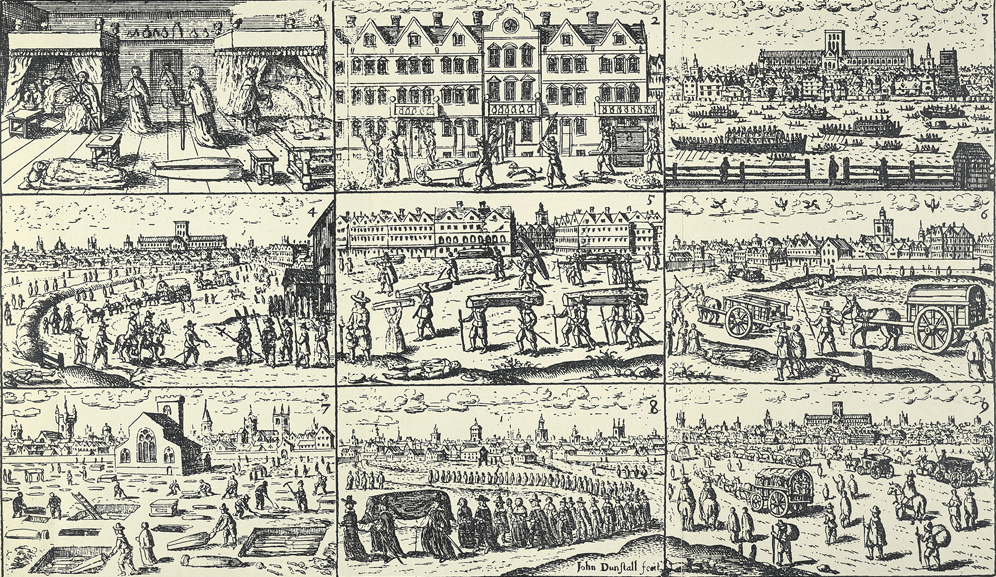
https://www.nationalarchives.gov.uk/education/resources/great-plague/#external-links

Probably based on the journals of Defoe’s uncle Henry Foe, the Journal comforts Elizabeth by its similarities to our current situation, providing a sense of continuity to our forebears. Even if that continuity is through our epidemiological vulnerabilities and our incapacity for coordinated action.

Second, because some aspects of what happened in 1665 seem so familiar, from detailed discussions of the “weekly bills” of dead in each parish and how to interpret them, to arguments over social isolation, contact tracing, the ethics of leaving London for second homes in the country, and the devastating secondary effects of lost commercial activity:

Thirdly: at least it’s not the bubonic plague.

Elizabeth’s love for the 47 novels of Anthony Trollope (or 35 of them, anyways) kicks off a final foray into the deeply comforting books of our childhood–and a discussion of how fantasy nestles into the ordinary.

Mentioned in this episode:

Daniel Defoe, The Life and Adventures of Robinson Crusoe (1719)

E. M. Forester, The Machine Stops (1909)

Anthony Trollope, The Warden (1855)

Frank Capra, It Happened One Night (1934)

Richard Llewellyn, How Green Was My Valley (1939)
Louisa May Alcott, Little Women (1868)

E. Nesbit, Five Children and It (1902), The Railway Children (1905)
Listen to the episode here or read the transcript here; Episode 26 Ferry Plotz
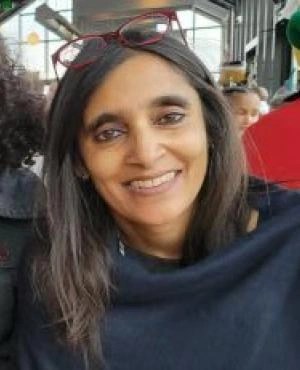
175 The Caste Pod: a Crossover episode with Ajantha Subramanian (JP)

In the spirit of Hannah Arendt’s natality principle (that new things are always and should always be being born, each one unique and endowed with limitless potential) we at RTB love it when a new podcast appears. Especially one as thoughtful and original as The Caste Pod, which assembles scholars and activists to make sense of what caste is, how it’s experienced and how it has travelled globally.

Joing us to discuss and share an extended excerpt is its widely published (check out her earlier books!) founder Ajantha Subramanian, Professor of Anthropology at CUNY Graduate Center, and producer (with Lori Allen) of the “Violent Majorities” series here at RTB.

Continue reading “175 The Caste Pod: a Crossover episode with Ajantha Subramanian (JP)”

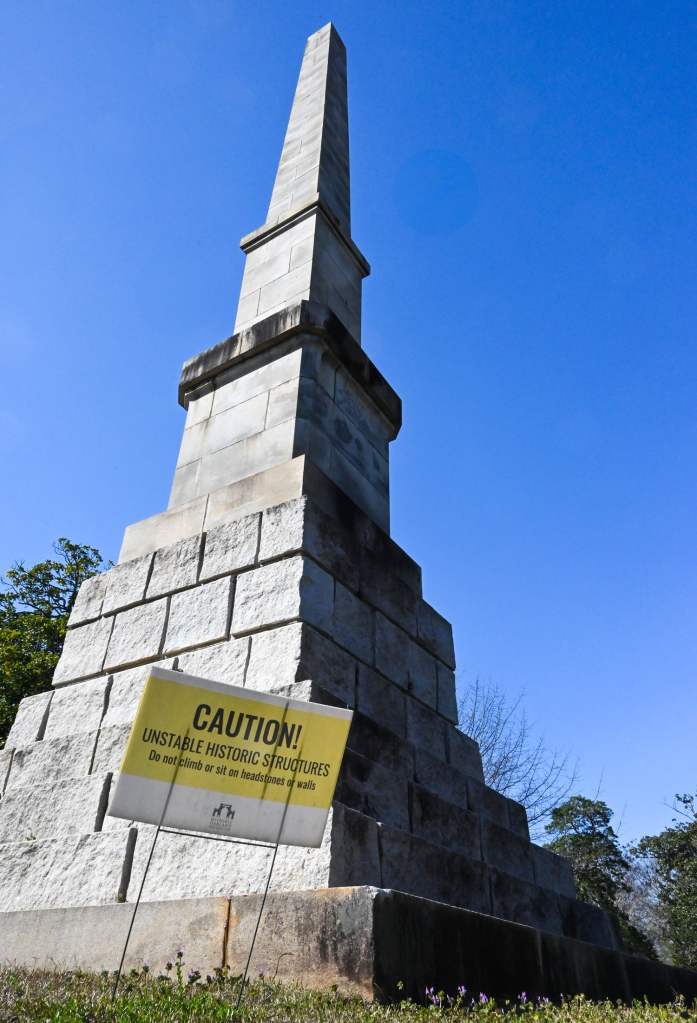
172 David Cunningham on Contesting Confederate Monuments (JP) 

David Cunningham joins John to speak about his pathbreaking article about visiting each of the 113 communities that removed or relocated Confederate symbols between 2015 and 2023. After discussing his co-authored Social Problems  article, “Contesting Commemorative Landscapes” which  first got him thinking about monument removal, he posits that “expungement, amplification, and repositioning” are three ways contemporary communities contest the monuments of the past.. The conversation from there ranges onward through various kinds of contested removal, ending with Cesar Chavez and his ongoing de-monumentalization.

David is author of  There’s Something Happening Here: The New Left, the Klan, and FBI Counterintelligence and the award-winning Klansville, U.S.A.: The Rise and Fall of the Civil Rights-Era KKK,, a member of the City of St. Louis Reparations Commission  and recently has been engaged in exploring political signalling in public art and monuments, including a forthcoming article on the political and cultural work of murals in Protestant and  Catholic communities and in the interface areas that connect them in Belfast. His earlier Recall This Book episodes include on racialized policing in the US, on January 6th , and also on the 2024 presidential election–and a conversation with Glenn Patterson, author of Lapsed Protestant  about the mural culture and politicized spaces of Belfast and Northern Ireland.  

Continue reading “172 David Cunningham on Contesting Confederate Monuments (JP) “

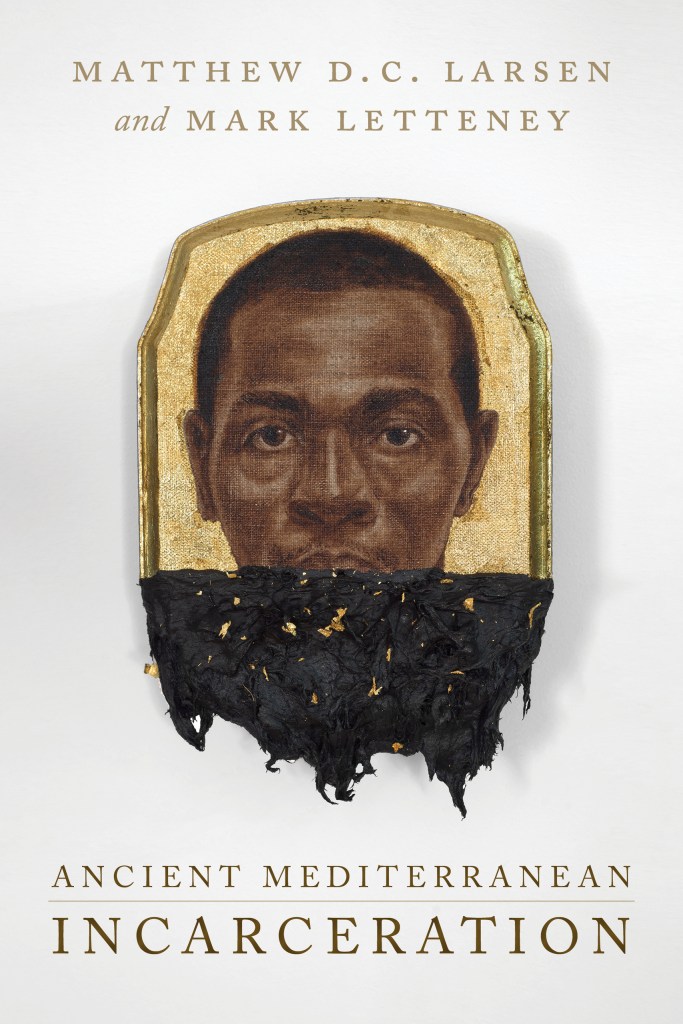
166 Imperial Depths: Mark Letteney and Matthew Larsen on the Roman Prison system (JP)

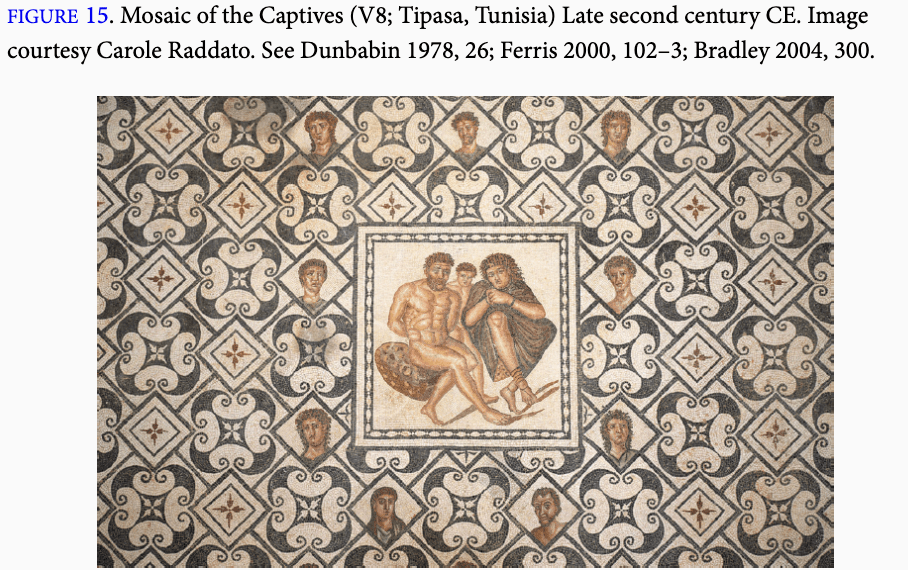
The notion of abolishing prisons strikes some as an impossible dream: could we could reasonably conceive of  a society that responded to harm without the possibility of long-term confinement in purpose-built institutions? To others,  we already have a template. Didn’t Michel Foucault long ago show us that prisons as they exist now–in all their horror, in all their commitment not just to jail people before trial  but also to imprison them afterwards–come about only in the modern episteme, concomitant with capitalism and all sorts of attendant evils? 

Actually, nope. Prisons are as old as the Romans and very likely much older than that.  In Ancient Mediterranean Incarceration (California, 2025). Mark Letteney (a U Washington historian who wrote  The Christianization of Knowledge in Late Antiquity)directs excavations in a legionary amphitheater) and   Matthew Larsen (University of Copenhagen, author of Gospels before the Book) document an ancient and durable prison system  system with five key features: Centrality, surveillance, separation depth, and punitive variability.

Their RTB conversation explores key aspects of that system and its present-day legacy or parallels. Yet it ends on a note of cautious optimism from Letteney: just because we don’t find a prison-free world in ancient Rome is no reason to give up the struggle. Whatever better solution to societal safety and rehabilitation awaits us in the future, it must be something we ourselves set out to build anew.

Mentioned

Michel Foucault’s foundational Discipline and Punish (1975)

Adam Gopknik reviews Ancient Mediterranean Incarceration in The New Yorker

The Rules of Ulpian (3rd century jurist) 

Wengrow and Graeber’s foundational and heavily debated  The Dawn of Everything (2021).

G Geltner Medieval Prison

Spencer Weinreich’s work on  solitary confinement

Erving Goffman Stigma (1963) and Asylums (1961) 

Livy (eg in his History of Rome on prisons and prisoners

Who  Would Believe a Prisoner?  Edited by Michelle Daniel Jones and Elizabeth Angeline Nelson. 

Libanius (on the abuse of Prisoners) 

Fyodor Dostoyevsky. The House of the Dead 

Samuel Delany Tales of Neveryon

Listen and read here

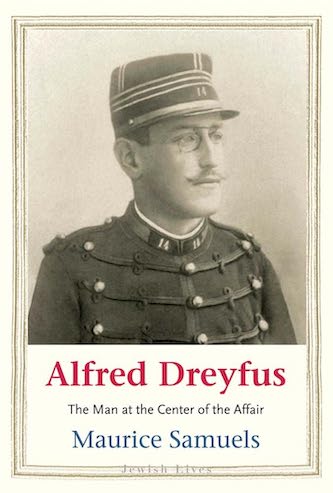
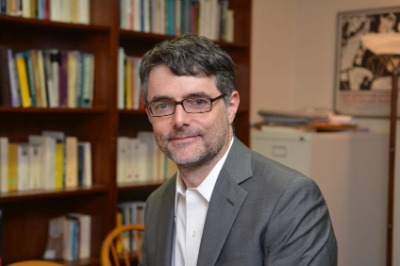
164 Maurice Samuels: Jewish Assimilation, Integration and the Dreyfus Affair (JP)

When it comes to the condition of Jews in Christian Europe, France was long known as the haven and heartland of integration and of toleration. And yet when things seemed to be going well for Jews in Western Europe and North America generlaly and France especially, the infamous fin de siecle Dreyfus affair brought to the surface some of the worst kinds of bigotry and animus–like contemporaneous Russian pogroms a premonition of the deadly looming revival of ethnic or religious divisions that had seemed a thing of the past.

Our guest today, historian Maurice Samuels, author of many fine books on French history (Inventing the Israelite: Jewish Fiction in Nineteenth-Century France (2010), and The Right to Difference: French Universalism and the Jews (2016))and director of the Yale Program for the Study of Antisemitism has written a crackerjack new book. Alfred Dreyfus: The Man at the Center of the Affair, (Yale 2024) has written a wonderful account of Dreyfus himself and how should we understand what that turmoil has ot tell us how Jews then (and perhaps today) coexisted with a mainstream secular Christian society either by way of assimilation or (not quite the same thing) by peaceful integration that preserved cultural distinctions.

The discussion ranges widely, setting the scene in the prior centuries when Jews settled all over France, and then were accorded unusual rights by the universalist vision of the French Revolution. Maurie also explains why succeeding generations in France included the ascension not only of Leon Blum the Jewish socialist (and inventor of the weekend!) who improbably led anti-fascist France during in the 1930’s–but also the other Jews who followed him as political leaders in France, right up to the present-day.

From Hannah Arendt’s Origins of Totalitarianism (1951) forward, Maurie shows, intellectuals have missed the significance of the way Dreyfus and his family integrated without assimilating. The conversation culminating in Maurie introducing John to the fascinating “Franco-French War” about what that coexistence should look like: assimilation which presumes the disappearance of a distinctive Jewish cultural identity, or integration which posits the peaceful coexistence of French citizens of various religions and cultures.

Mentioned in the episode

Karl Marx, “On the Jewish Question” (1844)

George Eliot’s (perhaps philosemitic) Daniel Deronda (1876)

Why does Yale have a Hebrew motto, אורים ותומים (light and perfection)?

The Haitian Revolution in its triumphs and tribulations is an analogy that helps explain jewish Emancipation–and also in some ways a tragic counterexample.

The horrifying Great Replacement Theory we have heard so much about in America (eg in Charlottesville in 2017) began in France; Maurie has some thoughts about that.

Michael Burns, Dreyfus: A Family Affair.

America’s racial “one drop” rule.

Pierre Birnbaum, Leon Blum: Prime Minister, Socialist, Zionist (Yale, 2015)

Marcel Proust, In Search of Lost Time.

Listen and Read Transcript here.

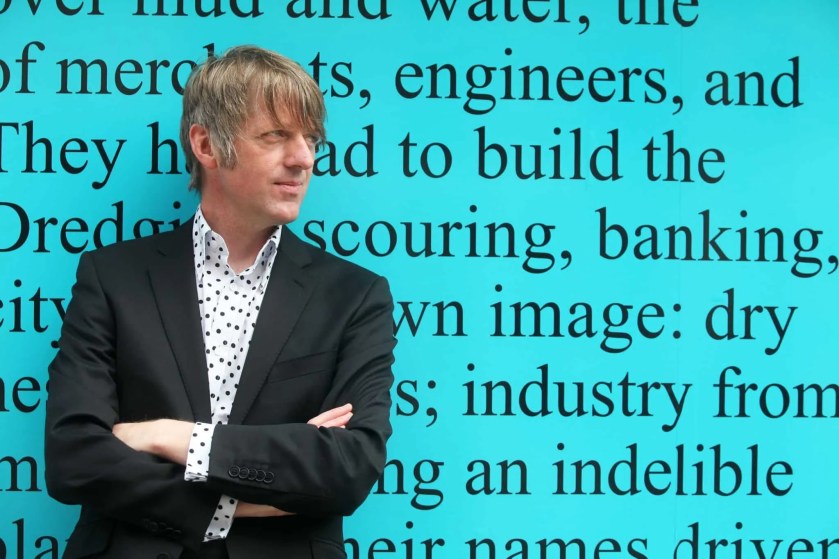
159 Glenn Patterson: You Can Choose Who You Are (JP, DC)


In Belfast, good fences can make for bad neighbors. David Cunningham (Wash U. sociologist, author of There’s Something Happening Here and Klansville, U.S.A) joins John to speak about the Troubles and their aftermath with the brilliant Northern Irish novelist/essayist/memoirist Glenn Patterson. His fiction includes The International  (1999) and Where Are We Now?  but the conversation’s main focus is his two collections of short non-fiction, Lapsed Protestant (2006) and Here’s Me Here (2016).

Glenn has lifetime of insights about the boundary markers and easy to miss shibboleths that define life in divided places–and in divided times. In Belfast, everyone learns to use words without being marked out: how do you avoid uttering “the one word that gets you killed”? 

Continue reading “159 Glenn Patterson: You Can Choose Who You Are (JP, DC)”

155 Lyndsey Stonebridge on Hannah Arendt’s Lessons on Love and Disobedience (JP)

An Arendt expert has arrived at Arendt-obsessed Recall This Book. Lyndsey Stonebridge discusses her  widely praised 2024 We Are Free to Change the World: Hannah Arendt’s Lessons in Love and Disobedience. Lesley sees both radical evil and the banality of evil at work in Nazi Germany and in the causes of suffering and death in Gaza today. She compares the moral idiocy of authoritarians (like the murderous Nazis and those who are starving Gaza)  to that of philosophers who cannot hear the echoes of what they are doing.

Lesley and John discuss Arendt’s belief in the fragile ethics of the Founding Fathers, with its checks and balances  and its politics based not on emotion but cool deliberation. Arendt could say that “The fundamental contradiction of [America] is political freedom coupled with social slavery,”” but why was she too easy on the legacy of imperial racism in America, missing its settler-colonial logic? Arendt read W. E. B. DuBois (who saw and said this) but perhaps, says Lesley, not attentively enough.

Continue reading “155 Lyndsey Stonebridge on Hannah Arendt’s Lessons on Love and Disobedience (JP)”

152 Why I Paneled: A Backwards Glance by Kristin Mahoney and Nasser Mufti (JP)

In RTB 151, you heard the Kristin, Nasser and John discussing what might happen before their Northeastern Victorian Studies Association conference actually took place. This episode, recorded a few weeks later, looks back at what actually occurred and see how it aligned with or defied the panelists’ prior expectations.

The three discuss what it means to have an emergent and residual shticks; differences between how you prepare to talk to undergraduates and your peers matter, and the three agree that going in without any expectations of your audience makes for a weaker presentation. Imaginary interlocution makes for better pre-gaming.

Continue reading “152 Why I Paneled: A Backwards Glance by Kristin Mahoney and Nasser Mufti (JP)”

149 “I have not Finished…” Rokhaya Diallo on being Black, Muslim, and frequently interrupted (Emilie Diouf, JP)

Emilie Diouf of Brandeis English, whose monograph on genocide and trauma is forthcoming,  joins John to speak with the celebrated French journalist and activist Rokhaya Diallo. Diouf places Diallo within a transnational black intellectual tradition, founded in the interwar period in the Negritude movement; it was then that Paulette, Jeanne,  and Anne Nardal’s literary salon became a meeting ground for African, Antillean, and African-American intellectuals, in the Parisian suburb of Clamart. 

The three discuss the slowly changing racial climate in France and globally; how to counter ethnonationalism; as well as the currents of dissent or disdain that threaten to disrupt even leftwing political solidarity. 

Mentioned in the Episode

Diallo has directed 8 documentaries among which her 2013 award winning film, Les Marches de la Liberté (Steps to Freedom) . She is also the author of many books, including most recently, La France tu l’aimes ou tu la fermes  or France, Love it or Shut it,  a collection of her major articles on the “struggle against oppression in France and globally.”

Ne reste pas à ta place, or Don’t try to fit in, (2016)

and forthcoming book  Le dictionnaire amoureux du féminisme  or A  Feminist Lover’s Dictionary (Editions Plon, March 2025)

Les Indivisibles: humor watchdog organization. Parody ceremony Y’a Bon Awards given to the “most racist sentences” every year.

Rokhaya Diallo

Coordination des Femmes Noir

Awa Thiam,  La Parole aux Négresses

Afrofeminism

2005 Clichy-sous-bois, a Paris banlieue, was the site of major unrest. Zyed Benna, 17, of Tunisian descent, and Bouna Traoré, 15, of Mauritanian descent, died tragically in a substation while trying to avoid detention. 

The leading French TV station, TF1, made waves (and history) by hiring Harry Roselmack in 2016

  Diallo’s own strong X/Twitter presence allows her to talk about being harassed—on Twitter/X itself!

and she has a podcast with Grace Ly, Kiffe Ta Race

Diallo’s film Les Marches de la Liberté 2013

From Paris to Ferguson  ( De Paris à Ferguson : coupables d’être noirs) 2016

African Americans in Paris: James Baldwin and Josephine Baker in the 1930s, but also Angela Davis in the 1960s being perceived as an Algerian

Faiza Guene Just Like Tomorrow (Kif kif demain)

Read and Listen to the episode here.