176 Laura Jockusch on Jewish Revenge after the Holocaust (JP)

After a great human-wrought tragedy, how are victims and their kin made right? What does it mean to take revenge, to exact vengeance, to seek redress, to go vigilante in seeking justice? What counts as the proper or sufficient retaliation or retribution–and what can or should be left to the impartial third-person mechanisms of a justice system?
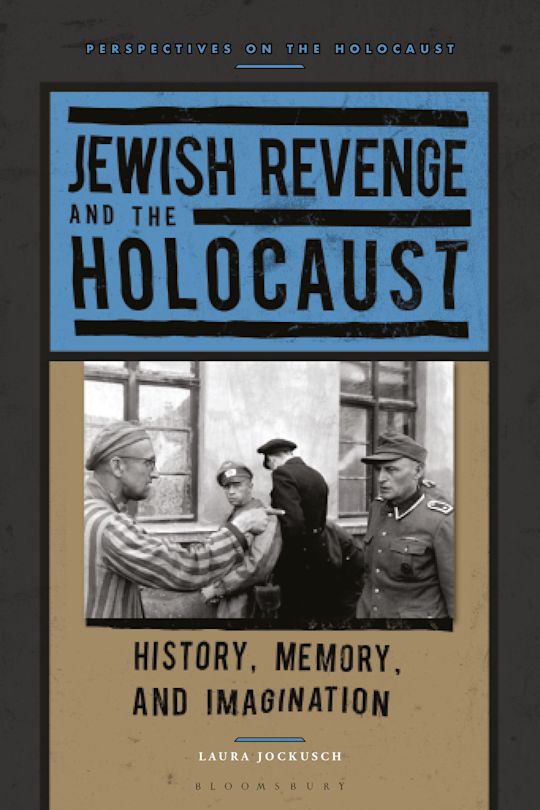
To ask about those troubling topics from a new angle, Brandeis University’s Laura Jockusch (author, previously, of Collect and Record and Jewish Honor Courts) has written about Jewish revenge on genocide perpetrators in her searching, and shocking Jewish Revenge and the Holocaust. Drawing on her great erudition and painstaking archival research, she explores how views changed during and after the war–and in following decades when justice and vengeance came to seem potentially compatible, especially if revenge could be rendered an aesthetic or imaginative phenomenon.

Mentioned in the episode

Quentin Tarantino’s Inglourious Basterds

Seekers for vengeance and also justice: Eli Wiesel and Simon Wiesenthal

The killing of Ernst Vom Rath (pretext for the Night of Broken Glass)

Aeschylus, The Oresteia (5th century B.C.)

Hannah Arendt, Eichmann in Jerusalem (1963, no episode of RTB would be complete without it…)

Bruce Robbins, Atrocity: A Literary History

Howard Zinn, A People’s History of the United States (1980)

Tony Judt Postwar (2005)

Recallable Books:

Zalman Gradovsky, The Last Consolation Vanished

Jean Amery,  At the Mind’s Limit: Contemplations by a Survivor on Auschwitz and Its Realities

Filip Müller Eyewitness Auschwitz: Three Years in the Gas Chambers

Heinrich von Kleist, Michael Kohlhass (1810)
Listen to the episode or read a transcript here.

164 Maurice Samuels: Jewish Assimilation, Integration and the Dreyfus Affair (JP)

When it comes to the condition of Jews in Christian Europe, France was long known as the haven and heartland of integration and of toleration. And yet when things seemed to be going well for Jews in Western Europe and North America generlaly and France especially, the infamous fin de siecle Dreyfus affair brought to the surface some of the worst kinds of bigotry and animus–like contemporaneous Russian pogroms a premonition of the deadly looming revival of ethnic or religious divisions that had seemed a thing of the past.

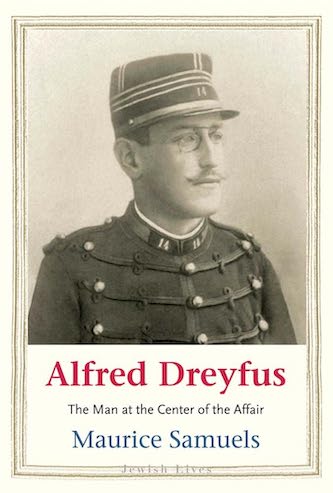
Our guest today, historian Maurice Samuels, author of many fine books on French history (Inventing the Israelite: Jewish Fiction in Nineteenth-Century France (2010), and The Right to Difference: French Universalism and the Jews (2016))and director of the Yale Program for the Study of Antisemitism has written a crackerjack new book. Alfred Dreyfus: The Man at the Center of the Affair, (Yale 2024) has written a wonderful account of Dreyfus himself and how should we understand what that turmoil has ot tell us how Jews then (and perhaps today) coexisted with a mainstream secular Christian society either by way of assimilation or (not quite the same thing) by peaceful integration that preserved cultural distinctions.

The discussion ranges widely, setting the scene in the prior centuries when Jews settled all over France, and then were accorded unusual rights by the universalist vision of the French Revolution. Maurie also explains why succeeding generations in France included the ascension not only of Leon Blum the Jewish socialist (and inventor of the weekend!) who improbably led anti-fascist France during in the 1930’s–but also the other Jews who followed him as political leaders in France, right up to the present-day.

From Hannah Arendt’s Origins of Totalitarianism (1951) forward, Maurie shows, intellectuals have missed the significance of the way Dreyfus and his family integrated without assimilating. The conversation culminating in Maurie introducing John to the fascinating “Franco-French War” about what that coexistence should look like: assimilation which presumes the disappearance of a distinctive Jewish cultural identity, or integration which posits the peaceful coexistence of French citizens of various religions and cultures.

Mentioned in the episode

Karl Marx, “On the Jewish Question” (1844)

George Eliot’s (perhaps philosemitic) Daniel Deronda (1876)

Why does Yale have a Hebrew motto, אורים ותומים (light and perfection)?

The Haitian Revolution in its triumphs and tribulations is an analogy that helps explain jewish Emancipation–and also in some ways a tragic counterexample.

The horrifying Great Replacement Theory we have heard so much about in America (eg in Charlottesville in 2017) began in France; Maurie has some thoughts about that.

Michael Burns, Dreyfus: A Family Affair.

America’s racial “one drop” rule.

Pierre Birnbaum, Leon Blum: Prime Minister, Socialist, Zionist (Yale, 2015)

Marcel Proust, In Search of Lost Time.

Listen and Read Transcript here.