In the spirit of Hannah Arendt’s natality principle (that new things are always and should always be being born, each one unique and endowed with limitless potential) we at RTB love it when a new podcast appears. Especially one as thoughtful and original as The Caste Pod, which assembles scholars and activists to make sense of what caste is, how it’s experienced and how it has travelled globally.
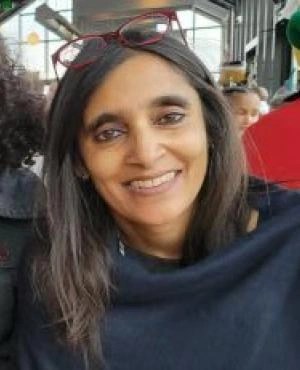
Joing us to discuss and share an extended excerpt is its widely published (check out her earlier books!) founder Ajantha Subramanian, Professor of Anthropology at CUNY Graduate Center, and producer (with Lori Allen) of the “Violent Majorities” series here at RTB.
David Cunningham joins John to speak about his pathbreaking article about visiting each of the 113 communities that removed or relocated Confederate symbols between 2015 and 2023. After discussing his co-authored Social Problems article, “Contesting Commemorative Landscapes” which first got him thinking about monument removal, he posits that “expungement, amplification, and repositioning” are three ways contemporary communities contest the monuments of the past.. The conversation from there ranges onward through various kinds of contested removal, ending with Cesar Chavez and his ongoing de-monumentalization.
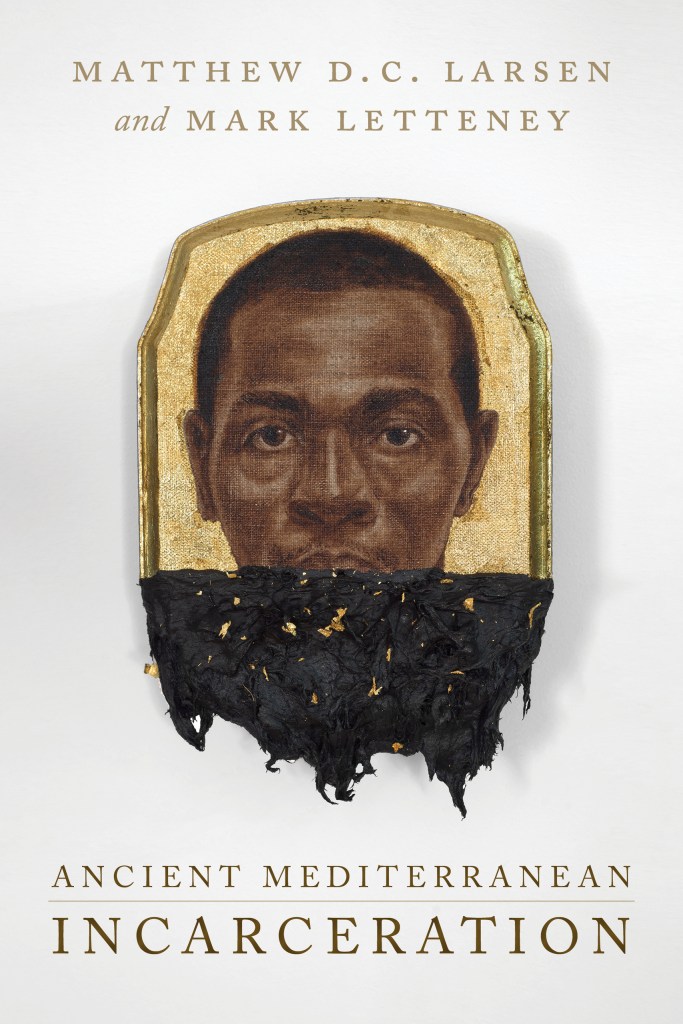
The notion of abolishing prisons strikes some as an impossible dream: could we could reasonably conceive of a society that responded to harm without the possibility of long-term confinement in purpose-built institutions? To others, we already have a template. Didn’t Michel Foucault long ago show us that prisons as they exist now–in all their horror, in all their commitment not just to jail people before trial but also to imprison them afterwards–come about only in the modern episteme, concomitant with capitalism and all sorts of attendant evils?
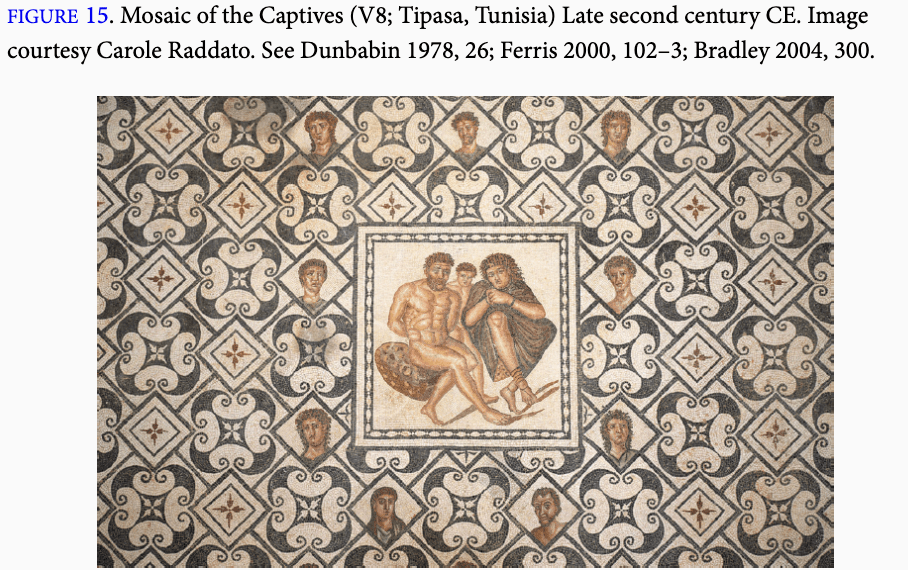
Their RTB conversation explores key aspects of that system and its present-day legacy or parallels. Yet it ends on a note of cautious optimism from Letteney: just because we don’t find a prison-free world in ancient Rome is no reason to give up the struggle. Whatever better solution to societal safety and rehabilitation awaits us in the future, it must be something we ourselves set out to build anew.
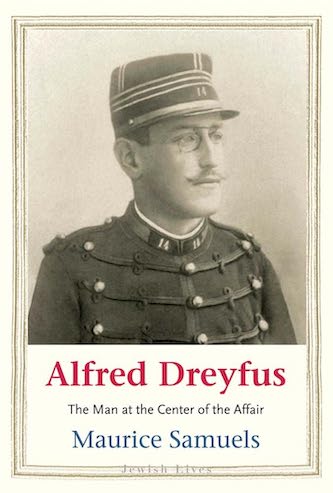
When it comes to the condition of Jews in Christian Europe, France was long known as the haven and heartland of integration and of toleration. And yet when things seemed to be going well for Jews in Western Europe and North America generlaly and France especially, the infamous fin de siecle Dreyfus affair brought to the surface some of the worst kinds of bigotry and animus–like contemporaneous Russian pogroms a premonition of the deadly looming revival of ethnic or religious divisions that had seemed a thing of the past.
The discussion ranges widely, setting the scene in the prior centuries when Jews settled all over France, and then were accorded unusual rights by the universalist vision of the French Revolution. Maurie also explains why succeeding generations in France included the ascension not only of Leon Blum the Jewish socialist (and inventor of the weekend!) who improbably led anti-fascist France during in the 1930’s–but also the other Jews who followed him as political leaders in France, right up to the present-day.
From Hannah Arendt’s Origins of Totalitarianism(1951) forward, Maurie shows, intellectuals have missed the significance of the way Dreyfus and his family integrated without assimilating. The conversation culminating in Maurie introducing John to the fascinating “Franco-French War” about what that coexistence should look like: assimilation which presumes the disappearance of a distinctive Jewish cultural identity, or integration which posits the peaceful coexistence of French citizens of various religions and cultures.
George Eliot’s (perhaps philosemitic) Daniel Deronda (1876)
Why does Yale have a Hebrew motto, אורים ותומים (light and perfection)?
The Haitian Revolution in its triumphs and tribulations is an analogy that helps explain jewish Emancipation–and also in some ways a tragic counterexample.
An Arendt expert has arrived at Arendt-obsessed Recall This Book. Lyndsey Stonebridge discusses her widely praised 2024 We Are Free to Change the World: Hannah Arendt’s Lessons in Love and Disobedience. Lesley sees both radical evil and the banality of evil at work in Nazi Germany and in the causes of suffering and death in Gaza today. She compares the moral idiocy of authoritarians (like the murderous Nazis and those who are starving Gaza) to that of philosophers who cannot hear the echoes of what they are doing.
Lesley and John discuss Arendt’s belief in the fragile ethics of the Founding Fathers, with its checks and balances and its politics based not on emotion but cool deliberation. Arendt could say that “The fundamental contradiction of [America] is political freedom coupled with social slavery,”” but why was she too easy on the legacy of imperial racism in America, missing its settler-colonial logic? Arendt read W. E. B. DuBois (who saw and said this) but perhaps, says Lesley, not attentively enough.
John joins Lori Allen and Ajantha Subramanian for the roundup episode of the second series of Violent Majorities, focusing on long-distance ethnonationalism. Looking back at their conversations with Peter Beinart on Zionism and Subir Sinha on Hindutva, Lori begins by asking whether Peter underestimates the material entanglements keeping Jewish American support for Israel in place. Ajantha wonders if a space has been opened up by Zionism’s more naked dependence on coercion and brute force. When John expresses puzzlement about the fervent ethnonationalism of minorities within a pluralistic society Lori and Ajantha point out that a sense of minority vulnerability may heighten the allures of long-distance ethnonationalism.
Lori Allen and Ajantha Subramanian continue their second series on Violent Majorities. Their previous episode featured Peter Beinart on Zionism as long-distance ethnonationalism; here they speak with Subir Sinha, who teaches at SOAS University of London, comments on Indian and European media, and is a member of a commission of inquiry exploring the 2022 unrest between Hindus and Muslims in Leicester, UK.
The catalysts he identifies for the rise of Hindu nationalism (Hindutva) include the emergence of new middle classes after economic liberalization, the rise of Islamophobia after 9/11, the 2008 crisis in capitalism, and the spread of new communications technologies.
Political anthropologists Ajantha Subramanian and Lori Allen are back to continue RTB’s Violent Majorities series with a set of three episodes on long-distance ethno-nationalism. Today, they speak with Peter Beinart (an editor at Jewish Currents and Professor of Journalism and Political Science at the City University of New York) about his just-released book,Being Jewish After the Destruction of Gaza: A Reckoning. It aims to mobilize Jewish religious ethics and teachings to reach a Jewish-American audience shaped by Zionism. Beinart seeks to debunk myths that prevent many from realizing that the moral abominations committed against Palestinians are part of the Israeli settler-colonial-nation-state project.
Avi Shlaim, is a celebrated “New Historian” whose earlier work established him as an influential historian of Middle Eastern politics and especially of Israel’s relations with the Arab world. Most recently he has turned to his own Iraqi/Israeli/British past inThree Worlds: Memoirs of an Arab-Jew–which he refers to as an “impersonal autobiography.”
Evita, Thatcher and HRC walk into a glass ceiling…In this episode, John and Elizabeth are joined by MIT anthropologist Manduhai Buyandelger to discuss women in political power in Argentina, Mongolia, the UK, the United States and beyond. At the conversation’s heart: Manduhai analyzes the legacy of “female quotas” in Soviet-era politics, as well as the narrow “lanes” that women politicians are sorted into.








 Recall This Book