155 Lyndsey Stonebridge on Hannah Arendt’s Lessons on Love and Disobedience (JP)

An Arendt expert has arrived at Arendt-obsessed Recall This Book. Lyndsey Stonebridge discusses her  widely praised 2024 We Are Free to Change the World: Hannah Arendt’s Lessons in Love and Disobedience. Lesley sees both radical evil and the banality of evil at work in Nazi Germany and in the causes of suffering and death in Gaza today. She compares the moral idiocy of authoritarians (like the murderous Nazis and those who are starving Gaza)  to that of philosophers who cannot hear the echoes of what they are doing.

Lesley and John discuss Arendt’s belief in the fragile ethics of the Founding Fathers, with its checks and balances  and its politics based not on emotion but cool deliberation. Arendt could say that “The fundamental contradiction of [America] is political freedom coupled with social slavery,”” but why was she too easy on the legacy of imperial racism in America, missing its settler-colonial logic? Arendt read W. E. B. DuBois (who saw and said this) but perhaps, says Lesley, not attentively enough.

Continue reading “155 Lyndsey Stonebridge on Hannah Arendt’s Lessons on Love and Disobedience (JP)”

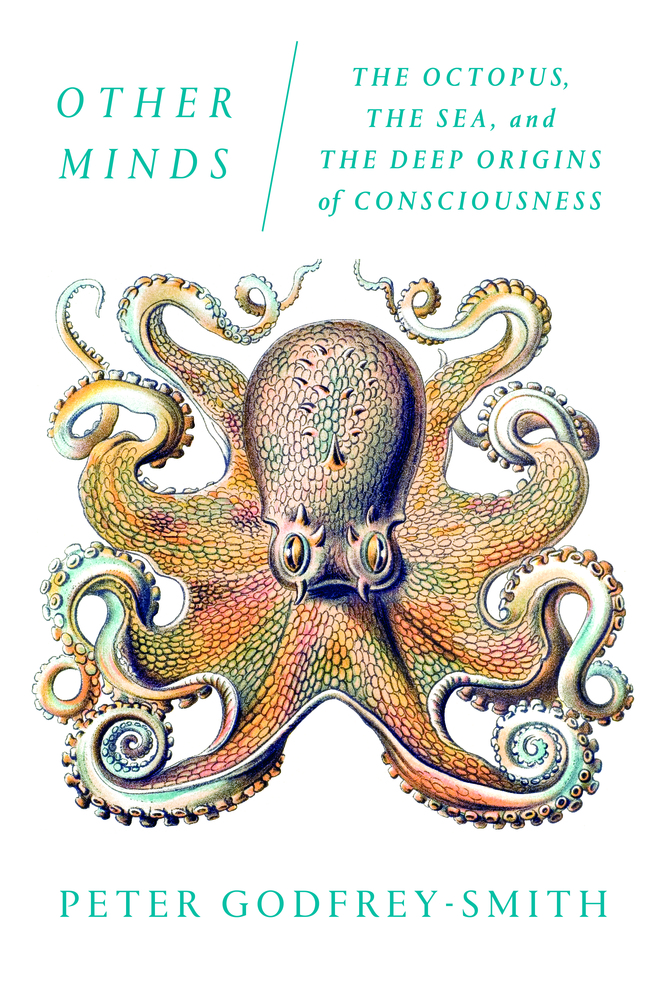
140* Octopus World: Other Minds with Peter Godfrey-Smith (EF, JP)

Peter Godfrey-Smith knows his cephalopods. His truly capacious career includes books such as Theory and Reality (2003; 2nd edition in 2020), Darwinian Populations and Natural Selection (2009)  Metazoa and most recently Living on Earth (John raves about that book here.)

Continue reading “140* Octopus World: Other Minds with Peter Godfrey-Smith (EF, JP)”

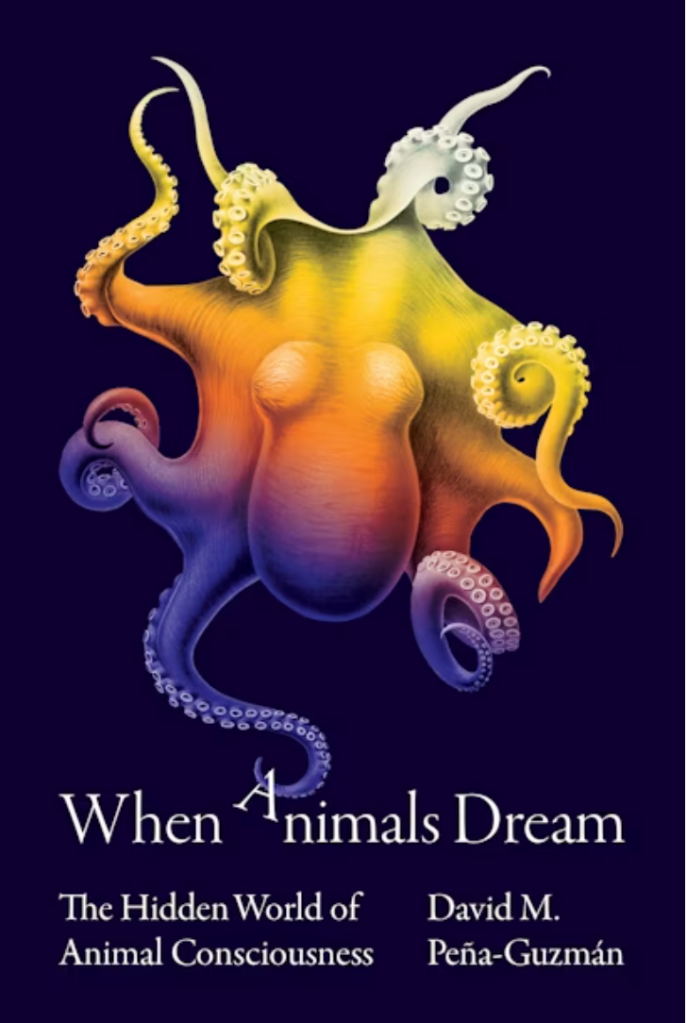
137 David Peña-Guzmán: Animals dream, which makes them morally considerable (JP)

In his marvelous new book, When Animals Dream: The Hidden World of Animal Consciousness, David Peña-Guzmán (SF State as well as the lovely philosophical podcast Overthink) offers up something new in animal studies–“a philosophical interpretation of biological subjectivity.” Although we share no linguistic schema with animals there is lots more evidence than just You Tube (octopuses, dogs, signing chimpanzees, brain scans of dreaming birds etc) to suggest oneiric behaviors and underlying mental states occur all over the animal kingdom. Here is what it means that we are not alone in our dreams…

Continue reading “137 David Peña-Guzmán: Animals dream, which makes them morally considerable (JP)”

133 Beri Marusic on Grief and other Expiring Emotions (Katie Elliott, JP)

Why is that when a loved one dies, grief seems inescapable–and then diminishes? The brilliant Edinburgh philosopher Berislav Marusic‘s “Do Reasons Expire? An Essay on Grief” begins with his grief for the unexpected and early loss of his mother: “I stopped grieving or at least the grief diminished, yet the reason didn’t really change. It’s not like that my mother stopped mattering to me or that I stopped loving her, but still this change in grief somehow seemed reasonable.” What are philosophers and the rest of us to make of this durable insight?

Continue reading “133 Beri Marusic on Grief and other Expiring Emotions (Katie Elliott, JP)”