An Arendt expert has arrived at Arendt-obsessed Recall This Book. Lyndsey Stonebridge discusses her widely praised 2024 We Are Free to Change the World: Hannah Arendt’s Lessons in Love and Disobedience. Lesley sees both radical evil and the banality of evil at work in Nazi Germany and in the causes of suffering and death in Gaza today. She compares the moral idiocy of authoritarians (like the murderous Nazis and those who are starving Gaza) to that of philosophers who cannot hear the echoes of what they are doing.
Lesley and John discuss Arendt’s belief in the fragile ethics of the Founding Fathers, with its checks and balances and its politics based not on emotion but cool deliberation. Arendt could say that “The fundamental contradiction of [America] is political freedom coupled with social slavery,”” but why was she too easy on the legacy of imperial racism in America, missing its settler-colonial logic? Arendt read W. E. B. DuBois (who saw and said this) but perhaps, says Lesley, not attentively enough.
Emilie Diouf of Brandeis English, whose monograph on genocide and trauma is forthcoming, joins John to speak with the celebrated French journalist and activist Rokhaya Diallo. Diouf places Diallo within a transnational black intellectual tradition, founded in the interwar period in the Negritude movement; it was then that Paulette, Jeanne, and Anne Nardal’s literary salon became a meeting ground for African, Antillean, and African-American intellectuals, in the Parisian suburb of Clamart.
The three discuss the slowly changing racial climate in France and globally; how to counter ethnonationalism; as well as the currents of dissent or disdain that threaten to disrupt even leftwing political solidarity.
Mentioned in the Episode
Diallo has directed 8 documentaries among which her 2013 award winning film, Les Marches de la Liberté (Steps to Freedom) . She is also the author of many books, including most recently, La France tu l’aimes ou tu la fermes or France, Love it or Shut it, a collection of her major articles on the “struggle against oppression in France and globally.”
2005 Clichy-sous-bois, a Paris banlieue, was the site of major unrest. Zyed Benna, 17, of Tunisian descent, and Bouna Traoré, 15, of Mauritanian descent, died tragically in a substation while trying to avoid detention.
The leading French TV station, TF1, made waves (and history) by hiring Harry Roselmack in 2016
John joins Lori Allen and Ajantha Subramanian for the roundup episode of the second series of Violent Majorities, focusing on long-distance ethnonationalism. Looking back at their conversations with Peter Beinart on Zionism and Subir Sinha on Hindutva, Lori begins by asking whether Peter underestimates the material entanglements keeping Jewish American support for Israel in place. Ajantha wonders if a space has been opened up by Zionism’s more naked dependence on coercion and brute force. When John expresses puzzlement about the fervent ethnonationalism of minorities within a pluralistic society Lori and Ajantha point out that a sense of minority vulnerability may heighten the allures of long-distance ethnonationalism.
Lori Allen and Ajantha Subramanian continue their second series on Violent Majorities. Their previous episode featured Peter Beinart on Zionism as long-distance ethnonationalism; here they speak with Subir Sinha, who teaches at SOAS University of London, comments on Indian and European media, and is a member of a commission of inquiry exploring the 2022 unrest between Hindus and Muslims in Leicester, UK.
The catalysts he identifies for the rise of Hindu nationalism (Hindutva) include the emergence of new middle classes after economic liberalization, the rise of Islamophobia after 9/11, the 2008 crisis in capitalism, and the spread of new communications technologies.
Ajantha Subramanian and Lori Allen turn from hosts to interlocutors in an episode that ties a bow on our Violent Majorities conversations about Indian (episode 1) and Israeli (episode 2)ethnonationalism. Along with John they discuss commonalities between Balmurli Natrajan’s charting of the “slippery slope towards a multiculturalism of caste” and Natasha Roth-Rowland‘s description of the “territorial maximalism” that has been central to Zionism. The role of overseas communities loomed large, as did the roots of ethnonationalism in the fascism of the 1920s, which survived, transmuted or merely masked over the subsequent bloody century, as other ideologies (Communism and perhaps cosmopolitan liberalism among them) waxed before waning.
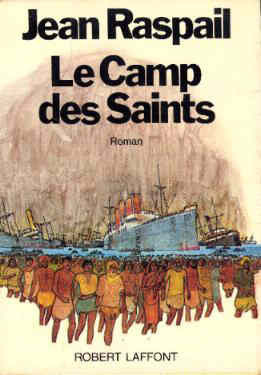
In a 2019 discussion that proves eerily prescient of politics in 2022, first discuss Jean Raspail‘s racist 1973 novel The Camp of the Saints, a book whose popularity in certain quarters since its publication might explain how Europe has gone from Thatcher to Brexit, from Vaclav Havel to Viktor Orban. How is this xenophobic screed related to science fiction of the same period–and to John Locke? Pat Buchanan, American early adapter of Raspail’s hate-mongering, figures prominently.
This new series on the Brahmin Left was inspired by Adaner and John’s bracing but terrifying interview with Thomas Piketty. Piketty maintains that Left parties have abandoned the working-class for an increasingly highly educated voter-base. This has turned (or perhaps only threatens to turn) Left parties all over the developed World (US, Western Europe, Australia/NZ etc…) from champions of egalitarianism into defenders of the privileges and interests of the educated. So, how do various scholars make sense of this ongoing realignment (or perhaps “dealignment”) from the class-based politics of the mid-20th century?
In this set of three conversations we set out to ask a set of related questions around that claim. First, is Piketty right? Second, to the extent that he is, how do we understand class dealignment in both Europe and America? Some scholars point to “post-materialist” politics; others to populist revival or ethnonationalism resurgent; others to the collapse of the trade unions which linked the working-class to the parties of the Left. Some even see in the Right’s recent successes simply the latest twist in a neoliberalism controlled by corporate elites.





 Recall This Book