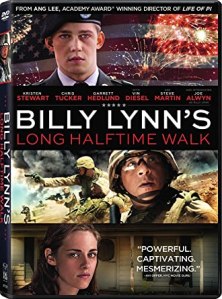
Ben Fountain is far more than just the author of Billy Lynn’s Long Halftime Walk, which won RTB hearts and minds (and the National Book Award) long before it became a weird Ang Lee movie.

Free-ranging discussion of books from the past that cast a sideways light on today's world.

Ben Fountain is far more than just the author of Billy Lynn’s Long Halftime Walk, which won RTB hearts and minds (and the National Book Award) long before it became a weird Ang Lee movie.
Most scholars are both haunted, even undone, by the task of writing papers for peers and traveling to strange campuses to deliver them. Yet we keep it up–we inflict it on our peers, we inflict it on ourselves. Why?
To answer that question, Recall This Book assembled three (if you count John) scholars of Victorian literature asked to speak at the Spring 2025 Northeastern Victorian Studies Association conference. Their discussion began with the idea that agreeing to give papers is an act of “externalized self-promising” and ranged across the reasons that floating ideas before our peers is terrifying, exhilarating and ultimately necessary.

Kristin Mahoney‘s books include Literature and the Politics of Post-Victorian Decadence (Cambridge UP, 2015) and Queer Kinship After Wilde: Transnational Decadence and the Family. Nasser Mufti ‘s first scholarly book was Civilizing War and he is currently working on a monograph about what Britain’s nineteenth century looks like from the perspective of such anti-colonial thinkers as C.L.R. James and Eric Williams. (RTB listeners don’t need to hear about John or his Arendt obsession.

Mentioned in the episode
Theosophical Society in Chennai
Jiddu Krishnamurthi in his early life was a not-quite-orphan child guru for Besant.
Eric Williams, British Historians and the West Indies on grand theorizations of race by folks like Acton
Adorno’s Minima Moralia provides Nasser with an important reminder oF the importance of “hating tradition properly.”
H G Wells, The Time Machine and its modernist aftermath eg in the opening pages of Proust’s Remembrance of Things Past and in Ford Madox Ford’s The Inheritors and The Good Soldier, which is in its own peculiar way a time-travel novel.
The three discuss Foucault’s notion of capillarity a form of productive constraint, which Nasser uses to characterize both early 20th century Orientalism, and the paradigms of postcolonialism that replaced it,
Paul Saint Amour’s chapter on Ford Madox Ford is in Tense Future.
John Guillory on the distinctions between criticism and scholarship in Professing Criticism; the rhizomatic appeal of B-Side Books.
The “hedgehog and the fox” as a distinction comes from a poem by Archilochus—and sparked Isaiah Berlin’s celebrated essay of the same name.
Pamela Fletcher the Victorian Painting of Modern Life .
Back in 2019, John spoke with the celebrated comic novelist Stephen McCauley. Nobody knows more about the comic novel than Steve–his latest is You Only Call When You’re in Trouble, but John still holds a candle for his 1987 debut, Object of My Affection, made into a charming Jennifer Aniston Paul Rudd movie. And there is no comic novelist Steve loves better than Barbara Pym, a mid-century British comic genius who found herself forgotten and unpublishable in middle age, only to roar back into print in her sixties with A Quartet in Autumn. Steve and John’s friendship over the years has been sealed by the favorite Pym lines they text back and forth to one another, so they are particularly keen to investigate why her career went in this way.

In the episode, they talk about some of these favorite sentences from Pym, and then turn to the comic novel as a genre. They talk about the difference between humorous and comic writing, the earthiness of comedy, whether comic novels should have happy or sad endings, and whether the comic novel is a precursor to, or an amoral relief from, the sitcom. They also discuss some of Steve’s fiction, including his Rain Mitchell yoga novels. In Recallable Books John recommends Pictures from an Institution by Randall Jarrell and Steve recommends After Claude by Iris Owens.
Discussed in this episode:
The Life and Opinions of Tristram Shandy, Gentleman, Laurence Sterne
Vanity Fair, William Makepeace Thackeray
Jane Eyre, Charlotte Bronte
The Adventures of Huckleberry Finn, Mark Twain
Jude the Obscure, Thomas Hardy
“The Beast in the Jungle,” Henry James
The Thurber Carnival, James Thurber
The Group, Mary McCarthy
After Claude, Iris Owens
Pictures from an Institution, Randall Jarrell
An Unsuitable Attachment, Barbara Pym
Less than Angels, Barbara Pym
The Sweet Dove Died, Barbara Pym
Portnoy’s Complaint, Philip Roth
The Sellout, Paul Beatty
My Ex-Life, Stephen McCauley
You can listen here or read here.
 Recall This Book