172 David Cunningham on Contesting Confederate Monuments (JP) 

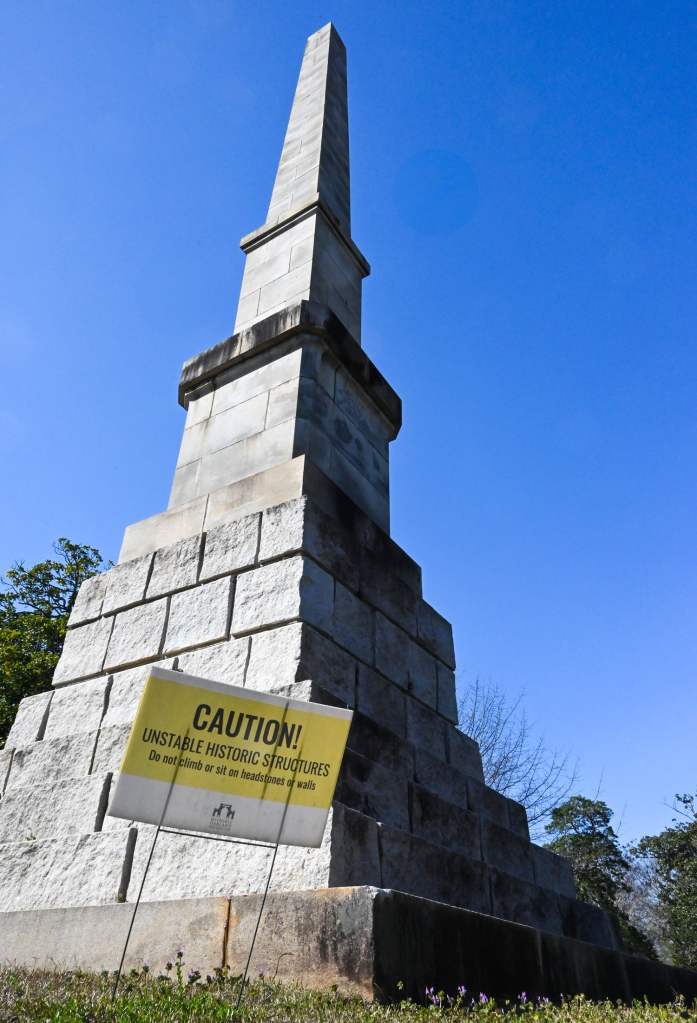
David Cunningham joins John to speak about his pathbreaking article about visiting each of the 113 communities that removed or relocated Confederate symbols between 2015 and 2023. After discussing his co-authored Social Problems  article, “Contesting Commemorative Landscapes” which  first got him thinking about monument removal, he posits that “expungement, amplification, and repositioning” are three ways contemporary communities contest the monuments of the past.. The conversation from there ranges onward through various kinds of contested removal, ending with Cesar Chavez and his ongoing de-monumentalization.
David is author of  There’s Something Happening Here: The New Left, the Klan, and FBI Counterintelligence and the award-winning Klansville, U.S.A.: The Rise and Fall of the Civil Rights-Era KKK,, a member of the City of St. Louis Reparations Commission  and recently has been engaged in exploring political signalling in public art and monuments, including a forthcoming article on the political and cultural work of murals in Protestant and  Catholic communities and in the interface areas that connect them in Belfast. His earlier Recall This Book episodes include on racialized policing in the US, on January 6th , and also on the 2024 presidential election–and a conversation with Glenn Patterson, author of Lapsed Protestant  about the mural culture and politicized spaces of Belfast and Northern Ireland.  


Listen to and Read the episode here. 

Mentioned in the episode

By David Cunmningham himself: “What Richmond got Right about taking down Confederate Monuments” and a 2023 article coauthored with Christina Simko, “Montgomery’s Monumental Truths” 

On place vs space there is wonderful work by Pierre Nora and Henri Lefebvre.

Interface  zones and the strategic cul de sacs that continue to divide Belfast neighborhoods have been brilliantly detailed and studied by various historians; eg this tour by Neil Jarman.

The lucid John Guillory article  (mentioned but not discussed) is “Monuments and Documents: On the Object of Study in the Humanities.” 

 Confederate generals whose statues were erected essentially to glorify  the KKK famously include Nathaniel Bedford Forrest. Private parks built up to collect Confederate monuments (with an underlying  anti-government bias) include North Carolina’s Valor Memorial Park, and in Texas the SS American Memorial Foundation’s military retreat space now adorned with removed Confederate statues. In Bentonville, this park glorifies a Confederate statue that has now been (dubiously) linked to Governor James H. Berry.

The MOCA/Brick reimagined MONUMENTS Exhibition includes work by Kara Walker and Bethany Collins

https://www.nps.gov/boaf/learn/historyculture/shaw.htm

Sylva North Carolina Confederate plaque debate

Kazuo Ishiguro, The Buried Giant and the Nietzschean problem of “creative forgetting.” 

The idea of Productive creative cognitive dissonance is drawn from MLK’s idea of “creative tension.”

Hajar Yazdiha, Struggle for the People’s King

How long will the Chavez National Monument last? The statue at UC Fresno is already gone…” Is The Trail of Tears a historical site the same way Confederate statues are? 

Denmark Vescey’s Garden by Ethan J. Kytle   and, Blain Roberts 
Zore Neale Hurston Their Eyes were Watching God

159 Glenn Patterson: You Can Choose Who You Are (JP, DC)


In Belfast, good fences can make for bad neighbors. David Cunningham (Wash U. sociologist, author of There’s Something Happening Here and Klansville, U.S.A) joins John to speak about the Troubles and their aftermath with the brilliant Northern Irish novelist/essayist/memoirist Glenn Patterson. His fiction includes The International  (1999) and Where Are We Now?  but the conversation’s main focus is his two collections of short non-fiction, Lapsed Protestant (2006) and Here’s Me Here (2016).

Glenn has lifetime of insights about the boundary markers and easy to miss shibboleths that define life in divided places–and in divided times. In Belfast, everyone learns to use words without being marked out: how do you avoid uttering “the one word that gets you killed”? 

Continue reading “159 Glenn Patterson: You Can Choose Who You Are (JP, DC)”

138c. What Just Happened? David Cunningham (Herbert Hoover gave us Woody Guthrie)


Welcome to the final episode of What Just Happened, a Recall This Book experiment. In it you will hear three friends of RTB reacting to the 2024 election and discussing the coming four years.David Cunningham, chair of Sociology at Washington University in St Louis, is author of Klansville, U.S.A. and There’s something happening Here: The New Left, the Klan, and FBI Counterintelligence His ongoing research includes the recent wave of conflicts around Confederate monuments and other sites of contested memory.

David’s vision of what has changed in 2024 relates to an extended analogy to the election of 1972, when the avowedly racist George (“Segregation….forever“) Wallace almost rode right-wing fury to victory.

Continue reading “138c. What Just Happened? David Cunningham (Herbert Hoover gave us Woody Guthrie)”

132* Policing and White Power with David Cunningham and Daniel Kryder


This June 2020 episode, part of a Global Policing series, was Recall this Book’s first exploration of police brutality, systemic and personal racism and Black Lives Matter. Elizabeth and John were lucky to be joined by by Daniel Kryder and David Cunningham,two scholars who have worked on these questions for decades.

Many of the mechanisms that create an oppressed and subordinated American community of color can seem subtle and indirect, despite the insidious ways they pervade housing law (The Color of Law), education (Why Are All the Black Kids Sitting TogetherSavage Inequalities) and the carceral state (The Condemnation of BlacknessThe New Jim Crow, Locking Up Our Own).

Continue reading “132* Policing and White Power with David Cunningham and Daniel Kryder”

113* David Cunningham, January 6th and Asymmetrical Policing (JP, EF)

Recall This Book first heard from the sociologist of American racism David Cunningham in Episode 36 Policing and White Power. Less than a week after the horrors of January 6th, 2021, he came back for this conversation about “asymmetrical policing” of the political right and left–and of White and Black Americans. His very first book (There’s Something Happening Here, 2004) studied the contrast between the FBI’s work in the 1960’s to wipe out left-wing and Black protests and its efforts to control and tame right-wing and white supremacist movements. That gives him a valuable perspective on the run-up to January 6th–and what may happen next.

Continue reading “113* David Cunningham, January 6th and Asymmetrical Policing (JP, EF)”

49 The Capitol Insurrection and Asymmetrical Policing: David Cunningham (EF, JP)

We first heard from the sociologist of American racism David Cunningham in Episode 36 Policing and White Power. Less than a week after the horrors of January 6th, he came back for an extended conversation about “asymmetrical policing” of the political right and left–and of White and Black Americans. His very first book (There’s Something Happening Here, 2004) studied the contrast between the FBI’s work in the 1960’s to wipe out left-wing and Black protests and its efforts to control and tame right-wing and white supremacist movements. That gives him a valuable perspective on the run-up to January 6th–and what may happen next.

Continue reading “49 The Capitol Insurrection and Asymmetrical Policing: David Cunningham (EF, JP)”

36 Policing and White Power: (EF, JP) Global Policing Series

Black lives matter. Yet for decades or centuries in America that basic truth has been ignored, denied, violently suppressed. Many of the mechanisms that create an oppressed and subordinated American community of color can seem subtle and indirect, despite the insidious ways they pervade housing law (The Color of Law), education (Why Are All the Black Kids Sitting Together, Savage Inequalities) and the carceral state (The Condemnation of Blackness, The New Jim Crow, Locking Up Our Own).

Although there is plenty of subtle racism in policing as well, there can be a brutally frontal quality to white-power policing: just look at the racial disparity in the stubbornly astronomically number of fatal shootings by police.

In this episode, we join other public discussions (including Brandeis University’s America’s Racial Reckoning: Black Lives and Black Futures in Historical, Political and Legal Context and Democracy Now’s interview with Angela Davis on abolition) of police brutality, systemic and personal racism and Black Lives Matter. We are lucky to be joined by Daniel Kryder and David Cunningham, two scholars who have worked on these questions for decades.

Continue reading “36 Policing and White Power: (EF, JP) Global Policing Series”