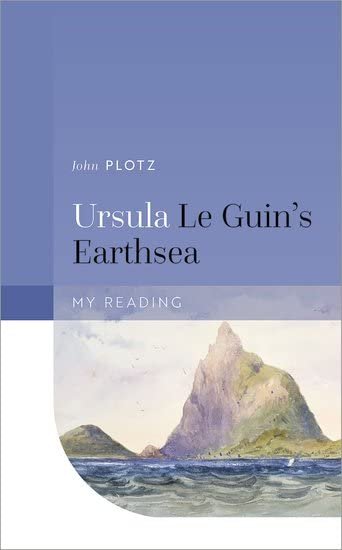
To mark the publication of John’s book Ursula Le Guin’s Earthsea (My Reading), with Oxford University Press, John and Elizabeth take to the airways to share their love of Le Guin’s “speculative anthropology,” gender politics, and goats.
And we share a delight we’ve been holding back for just this occasion, a series of clips from John’s interview with Le Guin in her hometown of Portland, Oregon, in 2015 (a longer print-only version appeared in Public Books). Since Ursula is no longer with us, having died in 2018, it’s especially poignant to listen to their conversation. Though in fact, the tone of their conversation isn’t sad at all, but friendly, generous, and ruminative.
John Plotz talked with Samuel Delany, living legend of science fiction and fantasy back in 2019. You probably know him best for breakthrough novels like Dhalgren and Trouble on Triton, which went beyond “New Wave” SF to introduce an intense and utterly idiosyncratic form of theory-rich and avant-garde stylistics to the genre. Reading him means leaving Earth, but also returning to the heady days when Greenwich Village was as caught up in the arrival of Levi-Strauss and Derrida to America as it was in a gender and sexuality revolution.
RTB loves him especially for his mind-bending Neveryon series: did you know that many consider his 1984 novella from that series, “The Tale of Plagues and Carnivals,” (set both inside the world of Neveryon and along Bleecker Street in NY) the first piece of fiction about AIDS in America?
Parmigianino – Circe and the Companions of Ulysses
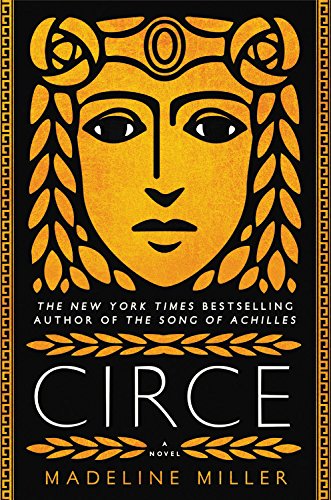
Madeline Miller has made a name for herself by retelling Greek myths; she calls it literary adaptation or mythological realism. Her 2012 debut novel The Song of Achilles (Orange prize winner), retells an episode from the Iliad. Circe, published in 2018, is a retelling and expansion of the Odyssey from the perspective of Circe.
In Homer’s Odyssey, Circe is a witch who lives on the island of Aiaia and turns visitors into beasts. She traps Odysseus’s men this way, but with his cleverness and help from the gods, Odysseus himself evades her tricks, frees his men, and wins her over. She is an important ally, telling him how to visit the underworld and return home. As the introduction to the RtB conversation with Miller puts it, though, she only has a “bit part.” Reflecting on her approach to retelling Circe’s story, Miller tells RtB, “I do feel like it’s a corrective in the sense that it’s a balancing […] We’ve had three thousand years of the male heroic tradition. Can we just pull on that a little bit, and bring the female voices up?”
Retellings are intensified stories. When you read a retelling, you read at least two stories at once, like the doubled vision of blurry eyes. Because of this, I was fascinated to see that Circe in Miller’s retelling has a similarly doubled vision of herself. She constantly sees herself as men see her, constantly hears her story as a man would tell it.
“I could imagine the stories he was telling of me, humorless, prickly, and smelling of pigs,” Circe says after sending Hermes away from her island. She is well aware of the stereotypes she inhabits, steps around, plays into and is forced into. They have become the lenses through which she views herself, and therefore limit the ways she can imagine herself being. She is haunted by the way others will tell her story.
In this rebroadcast, John and Brandeis neuroscientist Gina Turrigiano (an occasional host and perennial friend of Recall this Book) speak with Madeline Miller, author of the critically acclaimed bestseller Circe.
They discuss Circe’s place in Greek mythology and in a retelling of the Odyssey “from below” or “from the side,” the concept of “mythological realism,” and the influence of The Once and Future King on Madeline’s writing. They touch too on the sweet family aspects that show up in Homer, and on Odysseus’s changing reputation throughout time. Madeline has two totally unexpected recommendations in our Recallable Books section.
When Stephenie Meyer’s first Twilight Saga entry made it to the big screen in Catherine Hardwicke’s Twilight (2008), it dutifully included a rendition of the vampiric Cullen family’s supernaturally enhanced baseball game. The film sequence – affectionately nicknamed Vampire Baseball by fans – diverges slightly but significantly from its novel counterpart, depicting the game with a certain conscious absurdity that never devolves into self-parody. Everything from the soundtrack’s bombastic guitar riffs to the rapid, disorienting cuts offer a high-octane viewing experience unmistakably out of step with this strange permutation of what Immortal Teenage Heartthrob Edward Cullen drolly identifies as “the American pastime.” Indeed, something more complicated lurks beneath the surface of Hardwicke’s ballgame. Unlike earlier scenes that allow the Cullens to credibly perform normalcy and mortality in front of protagonist Bella Swan, the Vampire Baseball sequence highlights the conspicuous traits which remind her that her newfound friends are neither normal nor mortal at all.
John asks about hopeful visions of the radical politics of fantasy (Le Guin, but also Graeber and Wengrow’s recent work); Elizabeth stresses that fantasy’s appeal is at once childish and childlike. E. Nesbit surfaces, as she tends to in RtB conversations. The question of film TV and other visual modes comes up: is textual fantasy on the way out?





 Recall This Book