155 Lyndsey Stonebridge on Hannah Arendt’s Lessons on Love and Disobedience (JP)

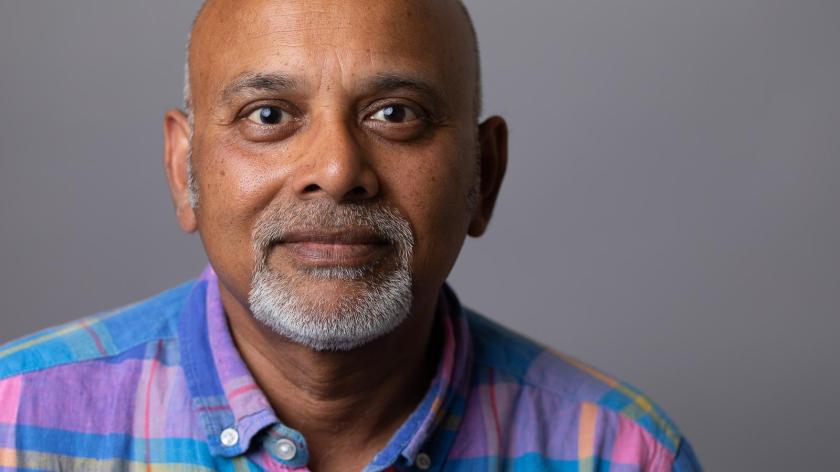
An Arendt expert has arrived at Arendt-obsessed Recall This Book. Lyndsey Stonebridge discusses her  widely praised 2024 We Are Free to Change the World: Hannah Arendt’s Lessons in Love and Disobedience. Lesley sees both radical evil and the banality of evil at work in Nazi Germany and in the causes of suffering and death in Gaza today. She compares the moral idiocy of authoritarians (like the murderous Nazis and those who are starving Gaza)  to that of philosophers who cannot hear the echoes of what they are doing.

Lesley and John discuss Arendt’s belief in the fragile ethics of the Founding Fathers, with its checks and balances  and its politics based not on emotion but cool deliberation. Arendt could say that “The fundamental contradiction of [America] is political freedom coupled with social slavery,”” but why was she too easy on the legacy of imperial racism in America, missing its settler-colonial logic? Arendt read W. E. B. DuBois (who saw and said this) but perhaps, says Lesley, not attentively enough.

Continue reading “155 Lyndsey Stonebridge on Hannah Arendt’s Lessons on Love and Disobedience (JP)”

145 Violent Majorities 2.3 Long-Distance Ethnonationalism Roundup (LA, AS, JP)

John joins Lori Allen and Ajantha Subramanian for the roundup episode of the second series of Violent Majorities, focusing on long-distance ethnonationalism. Looking back at their conversations with Peter Beinart on Zionism and Subir Sinha on Hindutva, Lori begins by asking whether Peter underestimates the material entanglements keeping Jewish American support for Israel in place. Ajantha wonders if a space has been opened up by Zionism’s  more naked dependence on coercion and brute force. When John expresses puzzlement about the fervent ethnonationalism of minorities within a pluralistic society Lori and Ajantha point out that a sense of minority vulnerability may heighten the allures of long-distance ethnonationalism.


Continue reading “145 Violent Majorities 2.3 Long-Distance Ethnonationalism Roundup (LA, AS, JP)”

144 Violent Majorities 2.2 Subir Sinha on Hindutva as Long-Distance Ethnonationalism

Lori Allen and Ajantha Subramanian continue their second series on Violent Majorities. Their previous episode featured Peter Beinart on Zionism as long-distance ethnonationalism; here they speak with Subir Sinha, who teaches at SOAS University of London, comments on Indian and European media, and is a member of a commission of inquiry exploring the 2022 unrest between Hindus and Muslims in Leicester, UK.

The catalysts he identifies for the rise of Hindu nationalism (Hindutva) include the emergence of new middle classes after economic liberalization, the rise of Islamophobia after 9/11, the 2008 crisis in capitalism, and the spread of new communications technologies. 

Continue reading “144 Violent Majorities 2.2 Subir Sinha on Hindutva as Long-Distance Ethnonationalism”

143 Violent Majorities 2.1: Peter Beinart on long-distance Israeli ethnonationalism (LA, AS) 

Political anthropologists Ajantha Subramanian and Lori Allen are back to continue RTB’s Violent Majorities series with a set of three episodes on long-distance ethno-nationalism. Today, they speak with Peter Beinart (an editor at Jewish Currents and Professor of Journalism and Political Science at the City University of New York) about his just-released book, Being Jewish After the Destruction of Gaza: A Reckoning. It aims to mobilize Jewish religious ethics and teachings to reach a Jewish-American audience shaped by Zionism. Beinart seeks to debunk myths that prevent many from realizing that the moral abominations committed against Palestinians are part of the Israeli settler-colonial-nation-state project. 

Continue reading “143 Violent Majorities 2.1: Peter Beinart on long-distance Israeli ethnonationalism (LA, AS) “

141 The Hyphen Unites: Avi Shlaim on Arab-Jewish Life (Yuval Evri, JP)

Avi Shlaim, is a celebrated “New Historian” whose earlier work established him as an influential historian of Middle Eastern politics and especially of Israel’s relations with the Arab world. Most recently he has turned to his own Iraqi/Israeli/British past in Three Worlds: Memoirs of an Arab-Jew–which he refers to as an “impersonal autobiography.”

He speaks today to John and his  Brandeis colleague Yuval Evri, the Marash and Ocuin Chair in Ottoman, Mizrahi and Sephardic Jewish Studies. Yuval’s  2020 The Return to Al-Andalus: Disputes Over Sephardic Culture and Identity Between Arabic and Hebrew explores how fluidity in such categories as the “Arab-Jew” becomes a source of resistance to exclusive claims of ownership of land, texts, traditions, or languages.

Continue reading “141 The Hyphen Unites: Avi Shlaim on Arab-Jewish Life (Yuval Evri, JP)”

9 Women in Political Power; with Manduhai Buyandelger


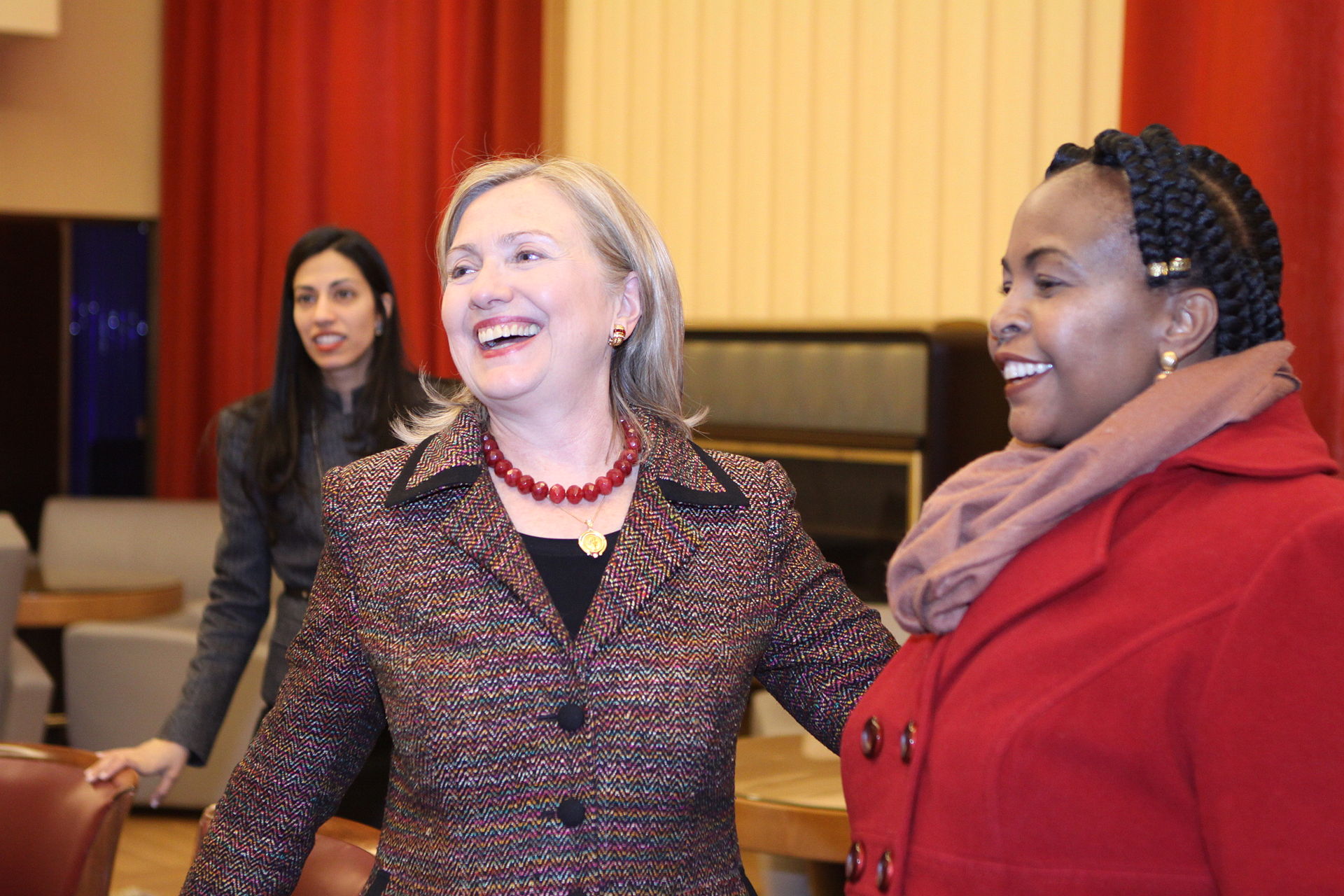
Secretary_Clinton_With_South_African_Foreign_Minister_Nkoane-Mashabane

Evita, Thatcher and HRC walk into a glass ceiling…In this episode, John and Elizabeth are joined by MIT anthropologist Manduhai Buyandelger to discuss women in political power in Argentina, Mongolia, the UK, the United States and beyond.  At the conversation’s heart: Manduhai analyzes  the legacy  of “female quotas”  in Soviet-era politics, as well as the narrow “lanes” that women politicians are sorted into.

For starters, Elizabeth discusses Santa Evita, Tomás Eloy Martínez’s riff on what happened to Evita Perón’s body before and after her death, and how much she looked, eventually, like Grace Kelly. Continue reading “9 Women in Political Power; with Manduhai Buyandelger”