159 Glenn Patterson: You Can Choose Who You Are (JP, DC)


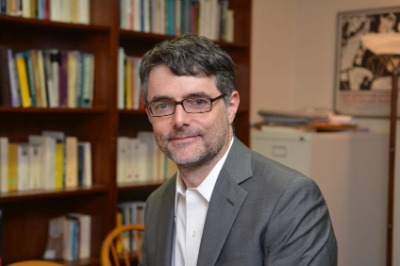
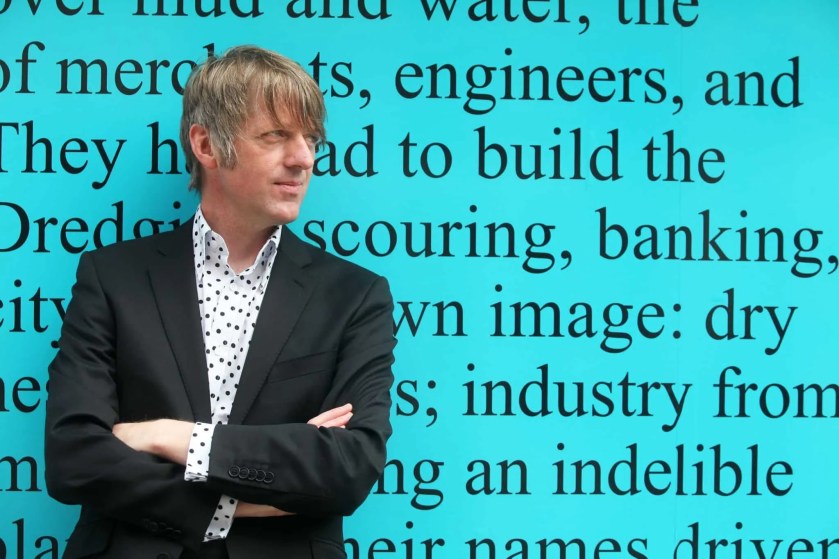
In Belfast, good fences can make for bad neighbors. David Cunningham (Wash U. sociologist, author of There’s Something Happening Here and Klansville, U.S.A) joins John to speak about the Troubles and their aftermath with the brilliant Northern Irish novelist/essayist/memoirist Glenn Patterson. His fiction includes The International  (1999) and Where Are We Now?  but the conversation’s main focus is his two collections of short non-fiction, Lapsed Protestant (2006) and Here’s Me Here (2016).

Glenn has lifetime of insights about the boundary markers and easy to miss shibboleths that define life in divided places–and in divided times. In Belfast, everyone learns to use words without being marked out: how do you avoid uttering “the one word that gets you killed”? 

But Troubles that go cold also have a way of heating up again, if we forget, as Glenn puts it, that you can choose who you are. China Mieville’s brilliant novel The City and the City is, says Glenn, an allegory for places like Belfast itself, where you have to learn to “unsee” residents of “the other city” even in shared areas.  That kind of unseeing, in fiction and in real life, leads to distorted mental maps.

Glenn sees the so-called “softening” of the peace walls as among the most pernicious occurrences of the last 40 years, since softening coupled with notion that you simply belong to one of two “communities” is what makes real traffic, real conversation, harder to achieve. He and David agree that all over the world, in ways the echo Belfast although it is rarely spelled out, all sorts of invisible architectural extensions of the security and segregation apparatus hover unobtrusively. Glenn also riffs on the names people dream up for what might lie beyond a Belfast wall’s other side, spinning off writer Colin Carberry‘s proposal: Narnia.

Mentioned in the Episode

“Love poetry: the RUC and Me” was Glenn’s first nonfiction piece back inthe late 1980s.

Robert McLiam Wilson: Glenn’s friend and fellow Troubles novelist, whose work includes Ripley Bogle (1989).

Eoin Macnamie‘s work includes Resurrection Man  (1994).

“The C-word” (2014) Glenn’s wonderful essay on the trouble that starts when the word “community” gets subdivided into “communities.”

Padraic Fiacc, sometimes called ”the Poet oft he Troubles”  finally has a blue historical marker. That makes Glenn ask why are there are so many “blue plaques” for combatants, so few for non-combatants? 

The interface zones and the strategic cul de sacs that continue to divide Belfast neighborhoods have been brilliantly detailed and studied by various historians; eg this tour by Neil Jarman,

Glenn compares Civil Rights in Northern Ireland in the 1960s with the US Civil Rights movement and with Paris 1968; the 70’s bombing campaigns lines up with the actions of the Red Army Faction in Germany.

Recallable Books

Glennn says his inspiration to write on partition comes from reading Salman Rushdie’s Shame and Midnight’s Children. He also praises John Dos Passos USA trilogy.

David interested in the long tail of a conflict and aingles out Glenn Patterson’s own novel, The Northern Bank Job  as well as Eoin McNamee The Bureau.

In spired by Glenn’s account of how resident learn to see and unsee portions of Belfast, John praises Kevin Lynch’s 1960 The Image of the City.

Read transcript and Listen to the episode here.

155 Lyndsey Stonebridge on Hannah Arendt’s Lessons on Love and Disobedience (JP)

An Arendt expert has arrived at Arendt-obsessed Recall This Book. Lyndsey Stonebridge discusses her  widely praised 2024 We Are Free to Change the World: Hannah Arendt’s Lessons in Love and Disobedience. Lesley sees both radical evil and the banality of evil at work in Nazi Germany and in the causes of suffering and death in Gaza today. She compares the moral idiocy of authoritarians (like the murderous Nazis and those who are starving Gaza)  to that of philosophers who cannot hear the echoes of what they are doing.

Lesley and John discuss Arendt’s belief in the fragile ethics of the Founding Fathers, with its checks and balances  and its politics based not on emotion but cool deliberation. Arendt could say that “The fundamental contradiction of [America] is political freedom coupled with social slavery,”” but why was she too easy on the legacy of imperial racism in America, missing its settler-colonial logic? Arendt read W. E. B. DuBois (who saw and said this) but perhaps, says Lesley, not attentively enough.

Continue reading “155 Lyndsey Stonebridge on Hannah Arendt’s Lessons on Love and Disobedience (JP)”

149 “I have not Finished…” Rokhaya Diallo on being Black, Muslim, and frequently interrupted (Emilie Diouf, JP)

Emilie Diouf of Brandeis English, whose monograph on genocide and trauma is forthcoming,  joins John to speak with the celebrated French journalist and activist Rokhaya Diallo. Diouf places Diallo within a transnational black intellectual tradition, founded in the interwar period in the Negritude movement; it was then that Paulette, Jeanne,  and Anne Nardal’s literary salon became a meeting ground for African, Antillean, and African-American intellectuals, in the Parisian suburb of Clamart. 

The three discuss the slowly changing racial climate in France and globally; how to counter ethnonationalism; as well as the currents of dissent or disdain that threaten to disrupt even leftwing political solidarity. 

Mentioned in the Episode

Diallo has directed 8 documentaries among which her 2013 award winning film, Les Marches de la Liberté (Steps to Freedom) . She is also the author of many books, including most recently, La France tu l’aimes ou tu la fermes  or France, Love it or Shut it,  a collection of her major articles on the “struggle against oppression in France and globally.”

Ne reste pas à ta place, or Don’t try to fit in, (2016)

and forthcoming book  Le dictionnaire amoureux du féminisme  or A  Feminist Lover’s Dictionary (Editions Plon, March 2025)

Les Indivisibles: humor watchdog organization. Parody ceremony Y’a Bon Awards given to the “most racist sentences” every year.

Rokhaya Diallo

Coordination des Femmes Noir

Awa Thiam,  La Parole aux Négresses

Afrofeminism

2005 Clichy-sous-bois, a Paris banlieue, was the site of major unrest. Zyed Benna, 17, of Tunisian descent, and Bouna Traoré, 15, of Mauritanian descent, died tragically in a substation while trying to avoid detention. 

The leading French TV station, TF1, made waves (and history) by hiring Harry Roselmack in 2016

  Diallo’s own strong X/Twitter presence allows her to talk about being harassed—on Twitter/X itself!

and she has a podcast with Grace Ly, Kiffe Ta Race

Diallo’s film Les Marches de la Liberté 2013

From Paris to Ferguson  ( De Paris à Ferguson : coupables d’être noirs) 2016

African Americans in Paris: James Baldwin and Josephine Baker in the 1930s, but also Angela Davis in the 1960s being perceived as an Algerian

Faiza Guene Just Like Tomorrow (Kif kif demain)

Read and Listen to the episode here.

145 Violent Majorities 2.3 Long-Distance Ethnonationalism Roundup (LA, AS, JP)

John joins Lori Allen and Ajantha Subramanian for the roundup episode of the second series of Violent Majorities, focusing on long-distance ethnonationalism. Looking back at their conversations with Peter Beinart on Zionism and Subir Sinha on Hindutva, Lori begins by asking whether Peter underestimates the material entanglements keeping Jewish American support for Israel in place. Ajantha wonders if a space has been opened up by Zionism’s  more naked dependence on coercion and brute force. When John expresses puzzlement about the fervent ethnonationalism of minorities within a pluralistic society Lori and Ajantha point out that a sense of minority vulnerability may heighten the allures of long-distance ethnonationalism.


Continue reading “145 Violent Majorities 2.3 Long-Distance Ethnonationalism Roundup (LA, AS, JP)”

144 Violent Majorities 2.2 Subir Sinha on Hindutva as Long-Distance Ethnonationalism

Lori Allen and Ajantha Subramanian continue their second series on Violent Majorities. Their previous episode featured Peter Beinart on Zionism as long-distance ethnonationalism; here they speak with Subir Sinha, who teaches at SOAS University of London, comments on Indian and European media, and is a member of a commission of inquiry exploring the 2022 unrest between Hindus and Muslims in Leicester, UK.

The catalysts he identifies for the rise of Hindu nationalism (Hindutva) include the emergence of new middle classes after economic liberalization, the rise of Islamophobia after 9/11, the 2008 crisis in capitalism, and the spread of new communications technologies. 

Continue reading “144 Violent Majorities 2.2 Subir Sinha on Hindutva as Long-Distance Ethnonationalism”

143 Violent Majorities 2.1: Peter Beinart on long-distance Israeli ethnonationalism (LA, AS) 

Political anthropologists Ajantha Subramanian and Lori Allen are back to continue RTB’s Violent Majorities series with a set of three episodes on long-distance ethno-nationalism. Today, they speak with Peter Beinart (an editor at Jewish Currents and Professor of Journalism and Political Science at the City University of New York) about his just-released book, Being Jewish After the Destruction of Gaza: A Reckoning. It aims to mobilize Jewish religious ethics and teachings to reach a Jewish-American audience shaped by Zionism. Beinart seeks to debunk myths that prevent many from realizing that the moral abominations committed against Palestinians are part of the Israeli settler-colonial-nation-state project. 

Continue reading “143 Violent Majorities 2.1: Peter Beinart on long-distance Israeli ethnonationalism (LA, AS) “

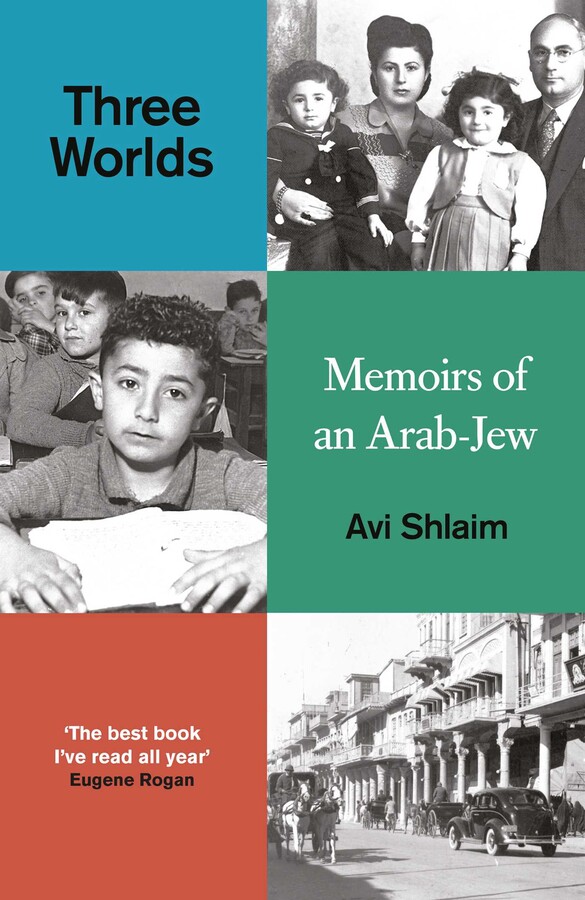
141 The Hyphen Unites: Avi Shlaim on Arab-Jewish Life (Yuval Evri, JP)

Avi Shlaim, is a celebrated “New Historian” whose earlier work established him as an influential historian of Middle Eastern politics and especially of Israel’s relations with the Arab world. Most recently he has turned to his own Iraqi/Israeli/British past in Three Worlds: Memoirs of an Arab-Jew–which he refers to as an “impersonal autobiography.”

He speaks today to John and his  Brandeis colleague Yuval Evri, the Marash and Ocuin Chair in Ottoman, Mizrahi and Sephardic Jewish Studies. Yuval’s  2020 The Return to Al-Andalus: Disputes Over Sephardic Culture and Identity Between Arabic and Hebrew explores how fluidity in such categories as the “Arab-Jew” becomes a source of resistance to exclusive claims of ownership of land, texts, traditions, or languages.

Continue reading “141 The Hyphen Unites: Avi Shlaim on Arab-Jewish Life (Yuval Evri, JP)”

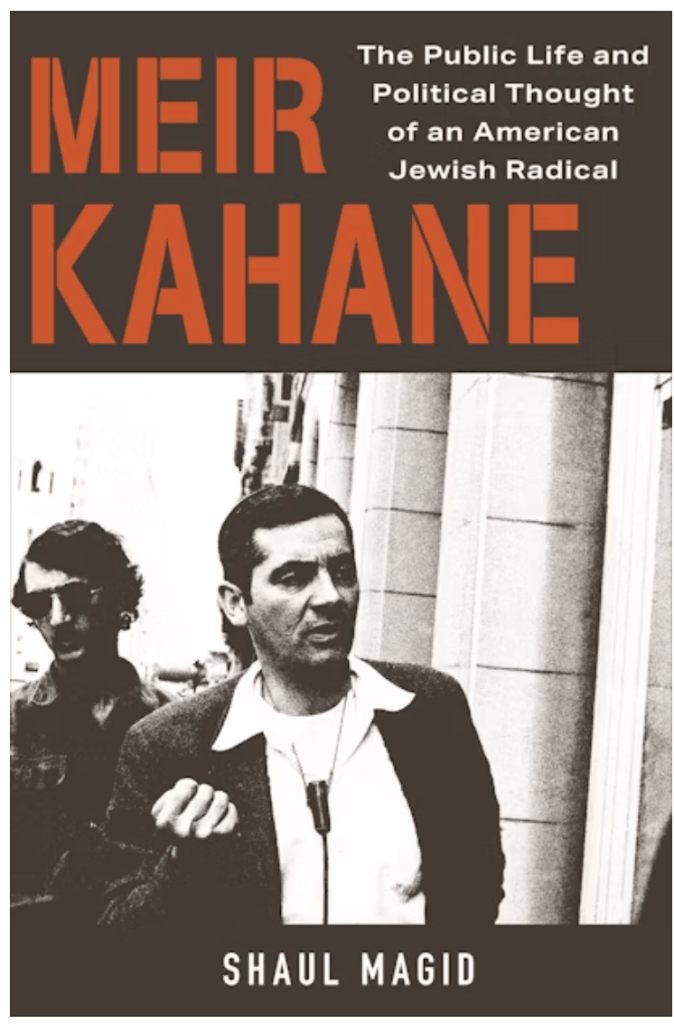
131 Shaul Magid on the Jewish Radicalism of Meir Kahane (JP, Eugene Sheppard)

“For Kahane, the greatest enemy of the Jews was not the black nationalist, the greatest enemy of the Jews was not the Arabs. The greatest enemy of the Jews was liberalism.”

Shaul Magid, Distinguished Fellow in Jewish Studies at Dartmouth College and Rabbi of the Fire Island Synagogue, is a celebrated and brilliant scholar of radical and dissident Judaism in America. He joins John and his Brandeis colleague Eugene Sheppard to discuss his book on Jewish Defense League Founder and the surprising American origins of Jewish radicalism not of the left but of the right.

Continue reading “131 Shaul Magid on the Jewish Radicalism of Meir Kahane (JP, Eugene Sheppard)”

124 The Reeducation of Race with Sonali Thakkar (JP)

NYU professor Sonali Thakkar’s brilliant first book, The Reeducation of Race, begins as a mystery of sorts. When and why did the word “equality” get swapped out of the 1950 UNESCO Statement on Race, to be replaced by “educability, plasticity”? She and John sit down to discuss how that switcheroo allowed for a putative anti-racism that nonetheless preserved a sotto voce concept of race.

They discuss the founding years of UNESCO and how it came to be that Jews were defined as the most plastic of races, and “Blackness” came to be seen as a stubbornly un-plastic category. The discussion ranges to include entwinement and interconnectedness, and Edward Said’s notion of the “contrapuntal” analysis of the mutual implication of seemingly unrelated historical developments. Sonali’s “Recallable Book” shines a spotlight on Aime Cesaire’s Discourse on Colonialism–revised in 1955 to reflect ongoing debates about race and plasticity.

Continue reading “124 The Reeducation of Race with Sonali Thakkar (JP)”

121* Ajantha Subramanian on the Caste of Merit (EF,JP)

Before she became the host and star of Violent Majorities, the RTB series on Israeli and Indian ethnonationalism, Ajantha Subramanian sat down with Elizabeth and John to discuss  The Caste of Merit: Engineering Education in India. It is much more than simply an historical and ethnographic study of the elite Indian Institutes of Technology. Ajantha talked to JP and EF about the language of “merit” and the ways in which it can conceal the continuing relevance of caste (and class, and race) privilege–in India, yes, but also in American and other meritocratic democracies as well.

Continue reading “121* Ajantha Subramanian on the Caste of Merit (EF,JP)”

120 Violent Majorities Roundup (Ajantha, Lori, JP)

Ajantha Subramanian and Lori Allen turn from hosts to interlocutors in an episode that ties a bow on our Violent Majorities conversations about Indian (episode 1) and Israeli (episode 2)ethnonationalism. Along with John they discuss commonalities between Balmurli Natrajan’s charting of the “slippery slope towards a multiculturalism of caste” and Natasha Roth-Rowland‘s description of the “territorial maximalism” that has been central to Zionism. The role of overseas communities loomed large, as did the roots of ethnonationalism in the fascism of the 1920s, which survived, transmuted or merely masked over the subsequent bloody century, as other ideologies (Communism and perhaps cosmopolitan liberalism among them) waxed before waning.

Continue reading “120 Violent Majorities Roundup (Ajantha, Lori, JP)”

119 Violent Majorities, Indian and Israeli Ethnonationalism. Episode 2: Natasha Roth-Rowland (with Lori, Ajantha)

“What is mainstream shifts to the right every generation.”

Natasha Roth-Rowland is a writer and researcher at Diaspora Alliance, a former editor at +972 Magazine,  and an expert on the Jewish far right. She joins anthropologists Lori Allen and Ajantha Subramanian midway through a three-part RTB series, “Violent Majorities: Indian and Israeli Ethnonationalism.” Listen to episode 1 here.

The three discuss the transnational formation of the Jewish far right over the 20th and 21st centuries, the gradual movement of far right actors into the heart of the Israeli state, and the shared investment in territorial maximalism, racial supremacy, and natalism across the Zionist ideological spectrum.

Continue reading “119 Violent Majorities, Indian and Israeli Ethnonationalism. Episode 2: Natasha Roth-Rowland (with Lori, Ajantha)”

118 Violent Majorities, Indian and Israeli Ethnonationalism. Episode 1: Balmurli Natrajan (with Lori Allen and Ajantha Subramanian)

“The Slippery Slope to a Multiculturalism of Caste”

Professor Balmurli Natrajan has long studied questions of caste, nationalism and fascism in the Indian context: his many works include a 2011 book, The Culturalization of Caste in India. He joins anthropologists Lori Allen and Ajantha Subramanian to kick off a three-part RTB series, “Violent Majorities: Indian and Israeli Ethnonationalism.”

The three discuss the ideological bases of Indian ethnonationalism, including its historical links to European fascism, the role of caste as both a conduit and impediment to suturing a Hindu majority, the overlaps and differences between the mobilization work of the Hindu Right in India and the U.S., and possibilities for countering India’s slide towards fascism. 

Continue reading “118 Violent Majorities, Indian and Israeli Ethnonationalism. Episode 1: Balmurli Natrajan (with Lori Allen and Ajantha Subramanian)”