Punishment makes nobody safer, imprisonment only impoverishes us as a society. And yet, we lock up our own, more and more for worse and worse reasons. What might finally inspire us to run the equation another way, and come up with a different solution?
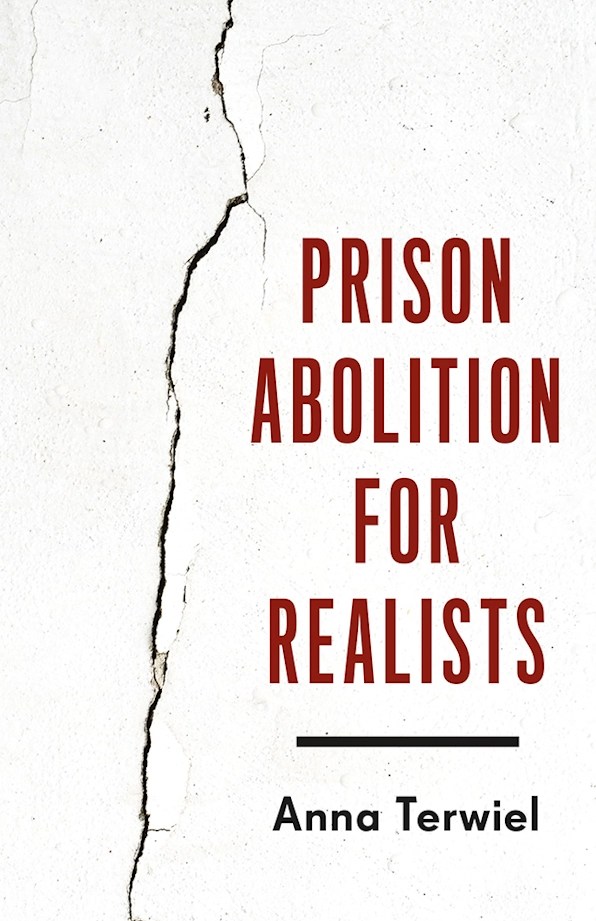
Anna Terwiel joined John to discuss her remarkable new book, Prison Abolition for Realists, which charts a path away from paranoid (as documented by Eve Sedgwick) and purity politics in favor of an abolitionism that fuses “abstract normative theorizing” with attainable worldly goals. One name for this is agonistic abolitionism; it offers, as Anna sees it a positive vision alongside its criticism of the status quo.
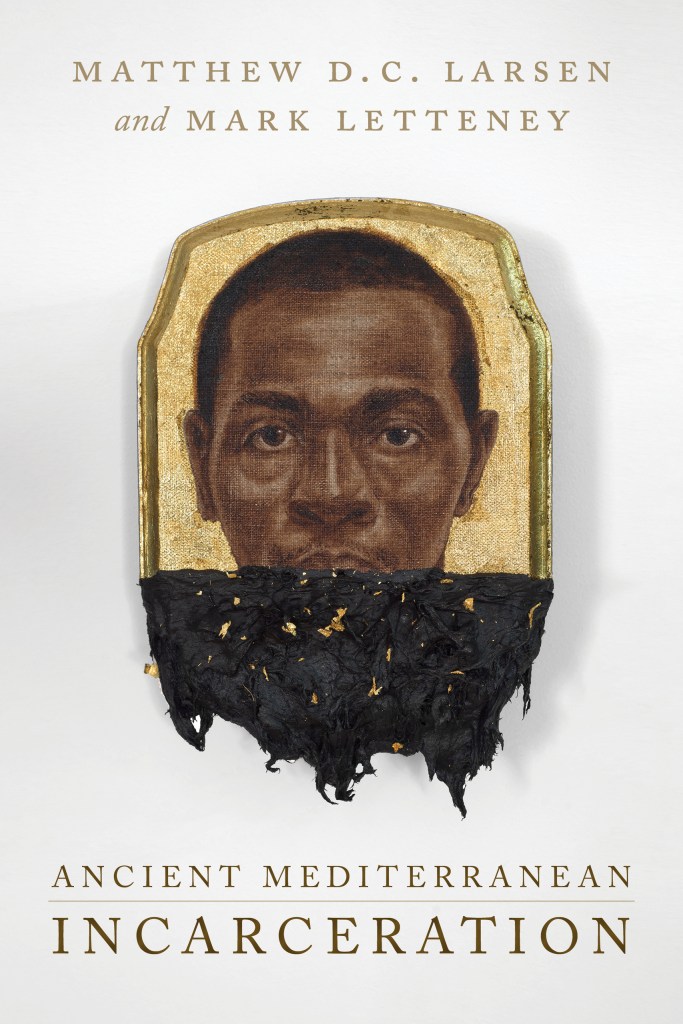
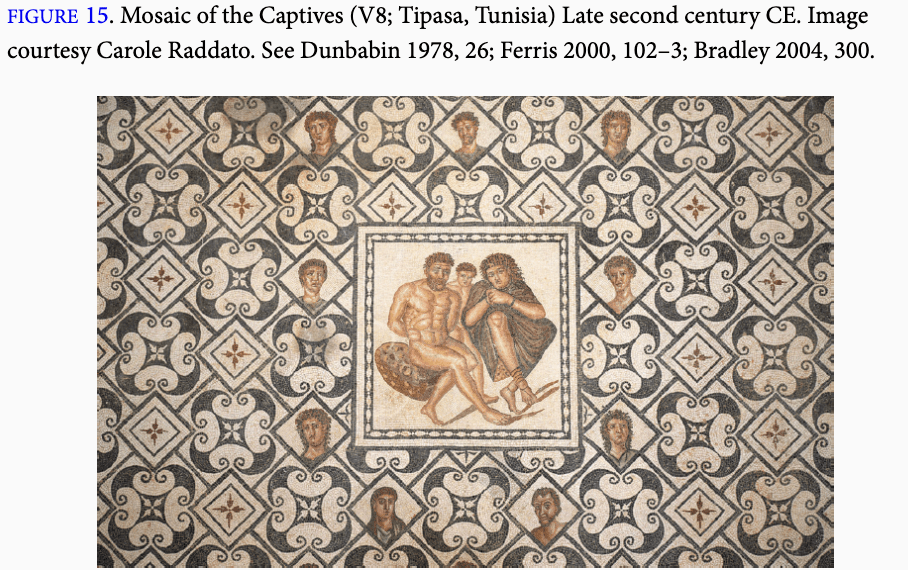
The notion of abolishing prisons strikes some as an impossible dream: could we could reasonably conceive of a society that responded to harm without the possibility of long-term confinement in purpose-built institutions? To others, we already have a template. Didn’t Michel Foucault long ago show us that prisons as they exist now–in all their horror, in all their commitment not just to jail people before trial but also to imprison them afterwards–come about only in the modern episteme, concomitant with capitalism and all sorts of attendant evils?
Their RTB conversation explores key aspects of that system and its present-day legacy or parallels. Yet it ends on a note of cautious optimism from Letteney: just because we don’t find a prison-free world in ancient Rome is no reason to give up the struggle. Whatever better solution to societal safety and rehabilitation awaits us in the future, it must be something we ourselves set out to build anew.
This June 2020 episode, part of a Global Policing series, was Recall this Book’s first exploration of police brutality, systemic and personal racism and Black Lives Matter. Elizabeth and John were lucky to be joined by by Daniel Kryder and David Cunningham,two scholars who have worked on these questions for decades.
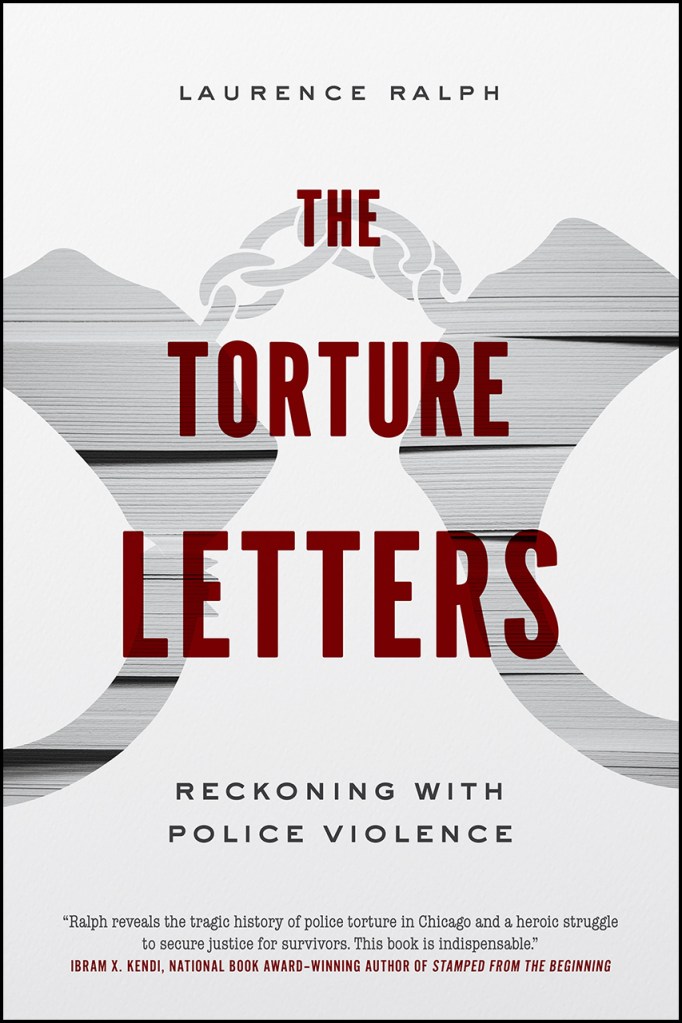
In the third episode of our Global Policing series, Elizabeth and John spoke back in 2020 with anthropologist Laurence Ralph about The Torture Letters: Reckoning with Police Violence. The book relates the decades-long history in which hundreds of people (mostly Black men) were tortured by the Chicago Police. Fascinatingly, it is framed as a series of open letters that explore the layers of silence and complicity that enabled torture and the activist movements that have helped to uncover this history and implement forms of collective redress and repair. Elizabeth and John ask Laurence about that genre choice, and he unpacks his thinking about responsibility, witnessing, trauma and channels of activism. Arendt’s “banality of evil” briefly surfaces.
“People are always reckoning. People are always trying, no matter how overwhelming the odds may be, people are always trying to fight back.”
Recall This Book first heard from the sociologist of American racism David Cunningham in Episode 36 Policing and White Power. Less than a week after the horrors of January 6th, 2021, he came back for this conversation about “asymmetrical policing” of the political right and left–and of White and Black Americans. His very first book (There’s Something Happening Here, 2004) studied the contrast between the FBI’s work in the 1960’s to wipe out left-wing and Black protests and its efforts to control and tame right-wing and white supremacist movements. That gives him a valuable perspective on the run-up to January 6th–and what may happen next.
Continuing our conversation on the events at the Capitol and the end of the Trump era, John and Elizabeth spoke with Brandeis historian Greg Childs. He is an expert in Latin American political movements and public space; his Seditious Spaces: Race, Freedom, and the 1798 Conspiracy in Bahia, Brazil is forthcoming from Cambridge. His historical and hemispheric perspective helped bring out the differences between calling an event “sedition,” “seditious conspiracy” and “insurrection,” the new “Lost Cause” that many of those attacking the Capitol seem to hold on to and the particularities of Whiteness in the United States, as compared to elsewhere in the Americas. Greg even proposes a new word for what happened January 6th: counterinsurgency.
We first heard from the sociologist of American racism David Cunningham in Episode 36 Policing and White Power. Less than a week after the horrors of January 6th, he came back for an extended conversation about “asymmetrical policing” of the political right and left–and of White and Black Americans. His very first book (There’s Something Happening Here, 2004) studied the contrast between the FBI’s work in the 1960’s to wipe out left-wing and Black protests and its efforts to control and tame right-wing and white supremacist movements. That gives him a valuable perspective on the run-up to January 6th–and what may happen next.
In the third episode of our Global Policing series, Elizabeth and John speak with anthropologist Laurence Ralph about his 2020 book The Torture Letters: Reckoning with Police Violence. The book relates the decades-long history in which hundreds of people (mostly Black men) were tortured by the Chicago Police. Fascinatingly, it is framed as a series of open letters that explore the layers of silence and complicity that enabled torture and the activist movements that have helped to uncover this history and implement forms of collective redress and repair. Elizabeth and John ask Laurence about that genre choice, and he unpacks his thinking about responsibility, witnessing, trauma and channels of activism. Arendt’s “banality of evil” briefly surfaces.
In the third episode of our Global Policing series, Elizabeth and John speak with anthropologist Laurence Ralph about his 2020 book The Torture Letters: Reckoning with Police Violence. The book relates the decades-long history in which hundreds of people (mostly Black men) were tortured by the Chicago Police. Fascinatingly, it is framed as a series of open letters that explore the layers of silence and complicity that enabled torture and the activist movements that have helped to uncover this history and implement forms of collective redress and repair. Elizabeth and John ask Laurence about that genre choice, and he unpacks his thinking about responsibility, witnessing, trauma and channels of activism. Arendt’s “banality of evil” briefly surfaces.
The Black Lives Matter movement and the policing-related deaths of George Floyd, Breonna Taylor, Ahmaud Arbery and others have struck a nerve worldwide. Our“Global Policing” series aims to capture the protests over systemic racism and policing in their various national forms.
Picture taken from journalist Zeynep Kuray’s Twitter account.
In Turkey, for example, a June 19 article in the English edition of DuvaR. news magazine reported that Footage of the detentions of five individuals detained at pro-Kurdish Peoples’ Democratic Party’s (HDP) press conference in Istanbul reveal shouts from the civilians begging the police to stop pressing on their backs and telling them that their chest hurts…reminiscent of the recent police killing of black Minneapolis resident George Floyd, remembered with his words “I can’t breathe!
Although there is plenty of subtle racism in policing as well, there can be a brutally frontal quality to white-power policing: just look at the racial disparity in the stubbornly astronomically number of fatal shootings by police.