159 Glenn Patterson: You Can Choose Who You Are (JP, DC)


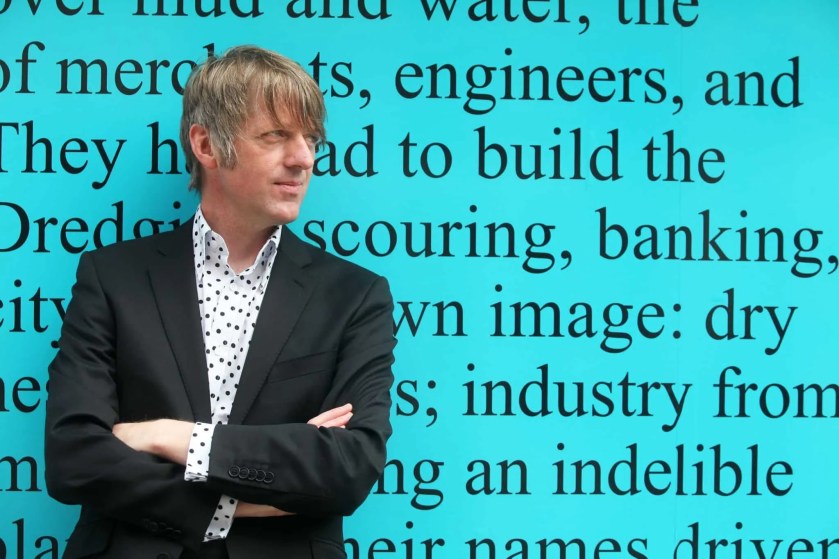
In Belfast, good fences can make for bad neighbors. David Cunningham (Wash U. sociologist, author of There’s Something Happening Here and Klansville, U.S.A) joins John to speak about the Troubles and their aftermath with the brilliant Northern Irish novelist/essayist/memoirist Glenn Patterson. His fiction includes The International  (1999) and Where Are We Now?  but the conversation’s main focus is his two collections of short non-fiction, Lapsed Protestant (2006) and Here’s Me Here (2016).

Glenn has lifetime of insights about the boundary markers and easy to miss shibboleths that define life in divided places–and in divided times. In Belfast, everyone learns to use words without being marked out: how do you avoid uttering “the one word that gets you killed”? 

But Troubles that go cold also have a way of heating up again, if we forget, as Glenn puts it, that you can choose who you are. China Mieville’s brilliant novel The City and the City is, says Glenn, an allegory for places like Belfast itself, where you have to learn to “unsee” residents of “the other city” even in shared areas.  That kind of unseeing, in fiction and in real life, leads to distorted mental maps.

Glenn sees the so-called “softening” of the peace walls as among the most pernicious occurrences of the last 40 years, since softening coupled with notion that you simply belong to one of two “communities” is what makes real traffic, real conversation, harder to achieve. He and David agree that all over the world, in ways the echo Belfast although it is rarely spelled out, all sorts of invisible architectural extensions of the security and segregation apparatus hover unobtrusively. Glenn also riffs on the names people dream up for what might lie beyond a Belfast wall’s other side, spinning off writer Colin Carberry‘s proposal: Narnia.

Mentioned in the Episode

“Love poetry: the RUC and Me” was Glenn’s first nonfiction piece back inthe late 1980s.

Robert McLiam Wilson: Glenn’s friend and fellow Troubles novelist, whose work includes Ripley Bogle (1989).

Eoin Macnamie‘s work includes Resurrection Man  (1994).

“The C-word” (2014) Glenn’s wonderful essay on the trouble that starts when the word “community” gets subdivided into “communities.”

Padraic Fiacc, sometimes called ”the Poet oft he Troubles”  finally has a blue historical marker. That makes Glenn ask why are there are so many “blue plaques” for combatants, so few for non-combatants? 

The interface zones and the strategic cul de sacs that continue to divide Belfast neighborhoods have been brilliantly detailed and studied by various historians; eg this tour by Neil Jarman,

Glenn compares Civil Rights in Northern Ireland in the 1960s with the US Civil Rights movement and with Paris 1968; the 70’s bombing campaigns lines up with the actions of the Red Army Faction in Germany.

Recallable Books

Glennn says his inspiration to write on partition comes from reading Salman Rushdie’s Shame and Midnight’s Children. He also praises John Dos Passos USA trilogy.

David interested in the long tail of a conflict and aingles out Glenn Patterson’s own novel, The Northern Bank Job  as well as Eoin McNamee The Bureau.

In spired by Glenn’s account of how resident learn to see and unsee portions of Belfast, John praises Kevin Lynch’s 1960 The Image of the City.

Read transcript and Listen to the episode here.

158* Ben Fountain in Dark Times (JP)

Ben Fountain is far more than just the author of Billy Lynn’s Long Halftime Walk, which won RTB hearts and minds (and the National Book Award) long before it became a weird Ang Lee movie.

Continue reading “158* Ben Fountain in Dark Times (JP)”

157 Mangrum’s Comical Computation (JP)


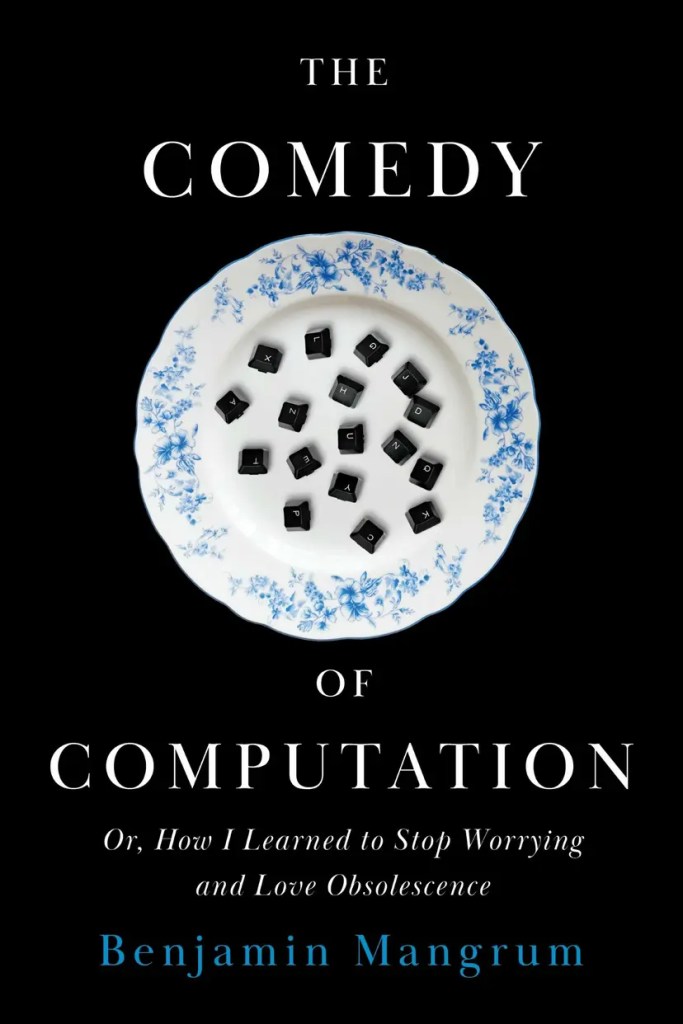
When does comedy become more than a laugh? Ben Mangrum of MIT joins RtB to discuss The Comedy of Computation: Or, How I Learned to Stop Worrying and Love Obsolescence, which in some ways is organized around “the intriguing idea that human knowledge work is our definitive feature and yet the machines we are ourselves made are going to replace us at it.” Comedyhas provided a toolbox (Charles Tilly calls them “collective repertoires”) for responding to the looming obsolescence of knowledge workers.

Continue reading “157 Mangrum’s Comical Computation (JP)”

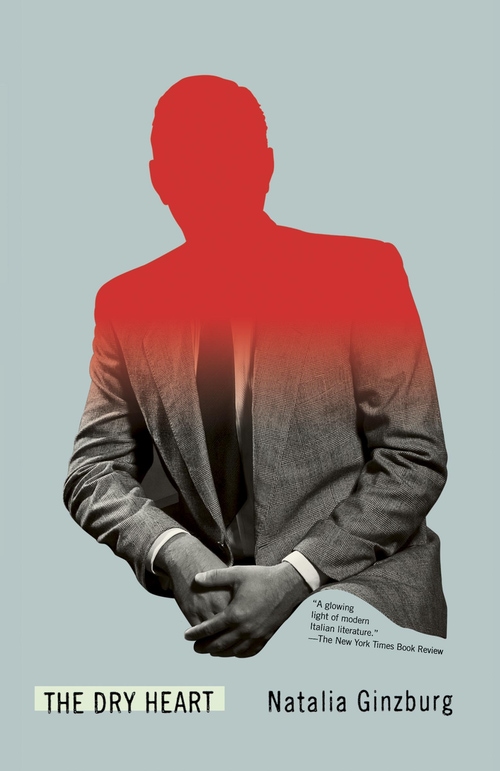
156* Recall This B-Side: Merve Emre on Natalia Ginzburg’s “The Dry Heart”

RtB loves the present-day shadows cast by neglected books, which can suddenly loom up out of the backlit past. So, you won’t be shocked to know that John has also been editing a Public Books column called B-Side Books. In it, around 50 writers (Ursula Le Guin was one) have made the case for un-forgetting a beloved book. Now, there is a book that collects 40 of these columns. Find it as your local bookstore, or Columbia University Press, or Bookshop, (or even Amazon).

Like our podcast, B-Side Books focuses on those moments when books topple off their shelves, open up, and start bellowing at you. The one that enthralled Merve Emre (Wesleyan professor and author ofsuch terrific works as  The Personality Brokers) was a novella by the luminous midcentury Italian pessimist, Natalia Ginzburg. And if you think you know precisely why a mid-century Italian writer would have a dark and bitter view of the world (already thinking of the Nazi shadows in work by Italo Calvino, Primo Levi and Giorgio Bassani) Ginzburg’s The Dry Heart will have you thinking again.

Continue reading “156* Recall This B-Side: Merve Emre on Natalia Ginzburg’s “The Dry Heart””

154* Planetary Boundaries are Non-Negotiable: Kim Stanley Robinson (Elizabeth Miller, JP)

With influential series on California, on the terraforming of Mars, and on human civilization as reshaped by rising tides,  Kim Stanley Robinson  has established a conceptual space as dedicated to sustainability as his own beloved Village Homes in Davis, California.

All of that, though, only prepared the ground for The Ministry for the Future, his 2020 vision of a sustained governmental and scientific rethinking of humanity’s fossil-burning, earth-warming ways. Flanked by JP, KSR’s friend and ally Elizabeth Carolyn Miller (celebrated eco-critic and UC Davis professor) asked him to reflect on the book’s impact in this conversation with our sister podcast, Novel Dialogue.

Continue reading “154* Planetary Boundaries are Non-Negotiable: Kim Stanley Robinson (Elizabeth Miller, JP)”

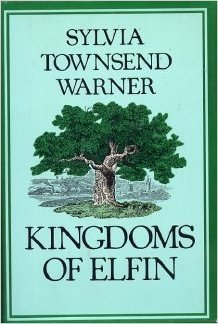
139 Recall This Story: Ivan Kreilkamp on Sylvia Townsend Warner’s “Foxcastle” (JP)

Ivan Kreilkamp, Indiana University English professor and no stranger to Recall This Book, is the author of two books on Victorian literature and one about Jennifer Egan. For this episode of Recall This Story, Ivan reads Sylvia Townsend Warner‘s “Foxcastle. It was first published in The New Yorker in 1975 and became the final story in her final book, Kingdoms of Elfin.

Continue reading “139 Recall This Story: Ivan Kreilkamp on Sylvia Townsend Warner’s “Foxcastle” (JP)”

135.2 Recall This Story: Part 2 of Linda Schlossberg on Alice Munro’s “Miles City, Montana” (JP)

{You will want to start with Part 1 of episode 135; it can be found right here]

Linda Schlossberg, author of Life in Miniature, who teaches at Harvard, joins RTB to read and explore one of her favorite Alice Munro stories, “Miles City, Montana” in our new series, Recall This Story.

Continue reading “135.2 Recall This Story: Part 2 of Linda Schlossberg on Alice Munro’s “Miles City, Montana” (JP)”

135.1 Recall This Story: Part 1 of Linda Schlossberg reading and discussing Alice Munro’s “Miles City, Montana” (JP)

[this is the first half of the story; the second half can be found here]

Linda Schlossberg, author of Life in Miniature, who teaches at Harvard, joins RTB to read and explore one of her favorite Alice Munro stories, “Miles City, Montana” in our new series, Recall This Story.

Continue reading “135.1 Recall This Story: Part 1 of Linda Schlossberg reading and discussing Alice Munro’s “Miles City, Montana” (JP)”