On a blustery fall morning back in 2019, RTB welcomed Christine Walley, anthropologist and author of Exit Zero: Family and Class in Postindustrial Chicago. In the early 1980s Chris’s father, along with thousands of other steel workers, lost his job when the mills in Southeastern Chicago closed. The book is part of a multimodal project, including the documentary film, “Exit Zero: An Industrial Family Story,” (with director Chris Boebel) and an NEH-funded digitization project of the Southeastern Chicago Historical Museum, a community-based archive of materials related to the neighborhood.
Author: plotznik
100 Nuclear Ghosts: Ryo Morimoto (EF, JP)
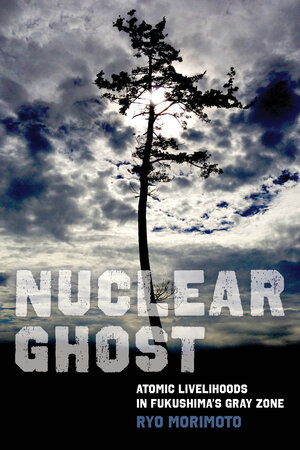
John and Elizabeth explore spectral radiation with Ryo Morimoto, Assistant Professor of Anthropology at Princeton University. His new book Nuclear Ghost: Atomic Livelihoods in Fukushima’s Grey Zone is based on several years of fieldwork in coastal Fukushima after the triple disaster of earthquake, tsunami, and nuclear accident. Ryo’s book shows how residents of the region live with and through the “nuclear ghost” that resides with them.

The trio discuss ways that residents acclimatize themselves to the presence of radiation, efforts to live their lives in ways not only shaped by catastrophe and irradiation, and the Geiger counter as a critical object.
Continue reading “100 Nuclear Ghosts: Ryo Morimoto (EF, JP)”99* Gael McGill Visualizes Data (JP)

What’s a picture worth? How about the picture that allows scientists to grasp what’s actually going on in a cell–or on the spiky outside of an invading virus? Gael McGill, Director of Molecular Visualization at the Center for Molecular and Cellular Dynamics at Harvard Medical School is founder and CEO of Digizyme and has spent his career exploring and developing different modes for visualizing evidence.
Continue reading “99* Gael McGill Visualizes Data (JP)”98 Horton’s Cosmic Zoom Room (EF, JP)
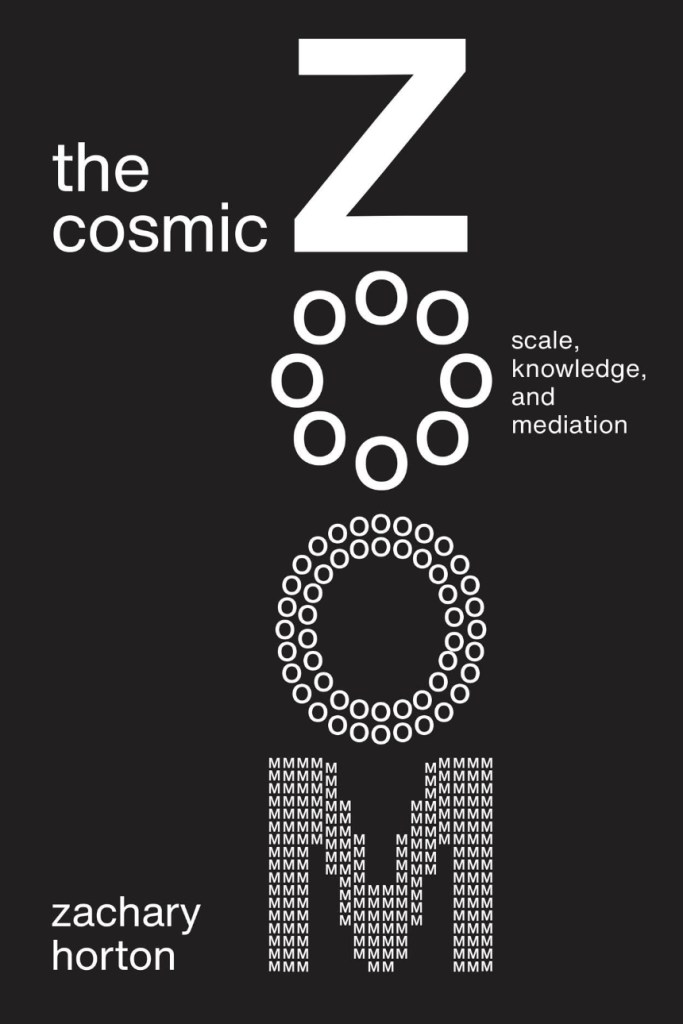
Today we welcome Zachary Horton, Associate Professor of Literature and director of the Vibrant Media Lab at University of Pittsburgh; game designer, filmmaker and camera designer. Out of all these endeavors, he came to talk about his book The Cosmic Zoom Scale, Knowledge, and Mediation .

97* Lorraine Daston Books In Dark Times (JP)

Our Books in Dark Times series offered John this 2021 chance to speak with Lorraine Daston of the Max Planck Institute for the History of Science. Her list of publications outstrips our capacity to mention here; John particularly admires her analysis of “epistemic virtues” such as truth to nature and objectivity in her 2007 Objectivity (coauthored with Peter Galison).
Continue reading “97* Lorraine Daston Books In Dark Times (JP)”96 Lorraine Daston Rules the World (EF, JP)
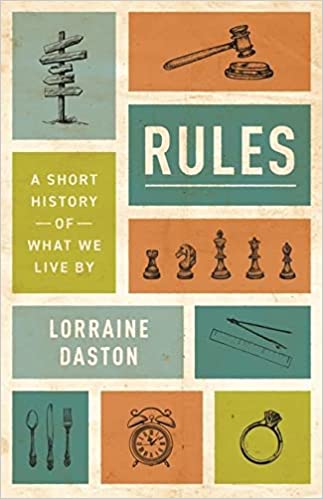
Historian of science Lorraine Daston‘s wonderful new book, Rules: A Short History of What We Live By is just out from Princeton University Press. Daston’s earlier pathbreaking works include Against Nature, Classical Probability in the Enlightenment and many co-authored books, including Objectivity (with Peter Galison) which introduced the idea of historically changeable “epistemic virtues.”

In this conversation, Daston–Raine to her friends–shows that rules are never as thin (as abstract and context-free) as they pretend to be. True, we love a rule that seems to brook no exceptions: by the Renaissance, even God is no longer allowed to make exceptions in the form of miracles. Yet throughout history, Raine shows, islands of standardized stability are less stable than they seem. What may feel like oppressively general norms and standards are actually highly protected ecotopes within which thin rules can arise. Look for instance at the history of sidewalks (Raine has)!
Continue reading “96 Lorraine Daston Rules the World (EF, JP)”95* Kim Stanley Robinson, Books in Dark Times (JP)
Kim Stanley Robinson, SF novelist of renown, has three marvelous trilogies: The Three Californias, Science in the Capital and Red Mars, Green Mars and Blue Mars. But lately it is The Ministry for the Future, his “science fiction nonfiction novel” (Jonathan Lethem) that has politicians, Eurocrats and the rest of us pondering how policy might fight climate change.

In this Books in Dark Times conversation from the RTB vaults (you can also read a longer version that appeared as an article in our partner Public Books) Stan and John start out with Stan’s emerging from the Grand Canyon into the pandemic moment of late March, 2020. Then they discuss Stan’s sense that SF is the realism of the day and his take on “cognitive estrangement.” Finally, they happen upon a shared admiration for the great epic SF poet, Frederick Turner. Small fact connecting him to RTB-land: he completed a literature PhD directed by Frederic Jameson with a dissertation-turned-book on the novels of Phillip K. Dick.
Continue reading “95* Kim Stanley Robinson, Books in Dark Times (JP)”94 Elizabeth Kolbert on the Nature of the Future (GT, JP,NS, HY)
How should we humans respond to our ongoing human-made climate catastrophe? To answer that question, we turned to prize-winning climate reporter Elizabeth Kolbert, who visited Brandeis this Fall as part of the New Student Book Forum.

The topic was Under a White Sky, her recent book that documents the responses to the climate crisis ranging from a form of climate engineering that shoots reflective particles into the air to cool the atmosphere, to negative emission technologies that capture and inject carbon dioxide underground.
Continue reading “94 Elizabeth Kolbert on the Nature of the Future (GT, JP,NS, HY)”93* Quinn Slobodian on Ethnonationalism since 1973 (JP, EF)
What’s the relationship between immigration, globalization and demographics? And what is woke particularism?
John and Elizabeth turn for answers to Quinn Slobodian, professor of history at Wellesley College and author, most recently, of Globalists: The End of Empire and the Birth of Neoliberalism.

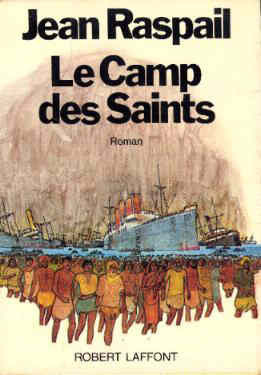
In a 2019 discussion that proves eerily prescient of politics in 2022, first discuss Jean Raspail‘s racist 1973 novel The Camp of the Saints, a book whose popularity in certain quarters since its publication might explain how Europe has gone from Thatcher to Brexit, from Vaclav Havel to Viktor Orban. How is this xenophobic screed related to science fiction of the same period–and to John Locke? Pat Buchanan, American early adapter of Raspail’s hate-mongering, figures prominently.
Continue reading “93* Quinn Slobodian on Ethnonationalism since 1973 (JP, EF)”92 Janet McIntosh on “Let’s Go Brandon,” QAnon and alt-right language (EF, JP)
John and Elizabeth talk with Brandeis linguistic anthropologist Janet McIntosh about the language of US alt-right movements. Janet’s current book project on language in the military has prompted thoughts about the “implausible deniability” of “Let’s Go Brandon”–a phrase that “mocks the idea we have to mince words.”

The three of them unpack the “regimentation” of the phrase, the way it rubs off on associated signs, and discusses what drill sergeants on Parris Island really do say. They speculates on the creepy, Dark Mirror-esque similarity between the deciphering of “Q-drops” and academic critique. Turning back to her work on basic training, Janet unpacks the power of “semiotic callousing.”
Continue reading “92 Janet McIntosh on “Let’s Go Brandon,” QAnon and alt-right language (EF, JP)”91* Leah Price on Children’s Books: Turning Back the Clock on “Adulting” (EF, JP)
What do children love most about books? Leaving their mark on inviting white spaces? Or that enchanting feeling when a book marks them as its own, taking them off to where the wild things are? Back in 2021, Elizabeth and John invited illustrious and illuminating book historian Leah Price to decode childhood reading past and present. The conversation explores the tactile and textual properties of great children’s books and debate adult fondness for juvenile literature. Leah asks if identifying with a literary character is a sign of virtuous imagination, or of craziness and laziness. She also schools John on what makes a good association copy, and reveals her son’s magic words when he wants her to tell a story: Read it!
Continue reading “91* Leah Price on Children’s Books: Turning Back the Clock on “Adulting” (EF, JP)”90 Virtual Reality as Immersive Enclosure, with Paul Roquet (EF, JP)
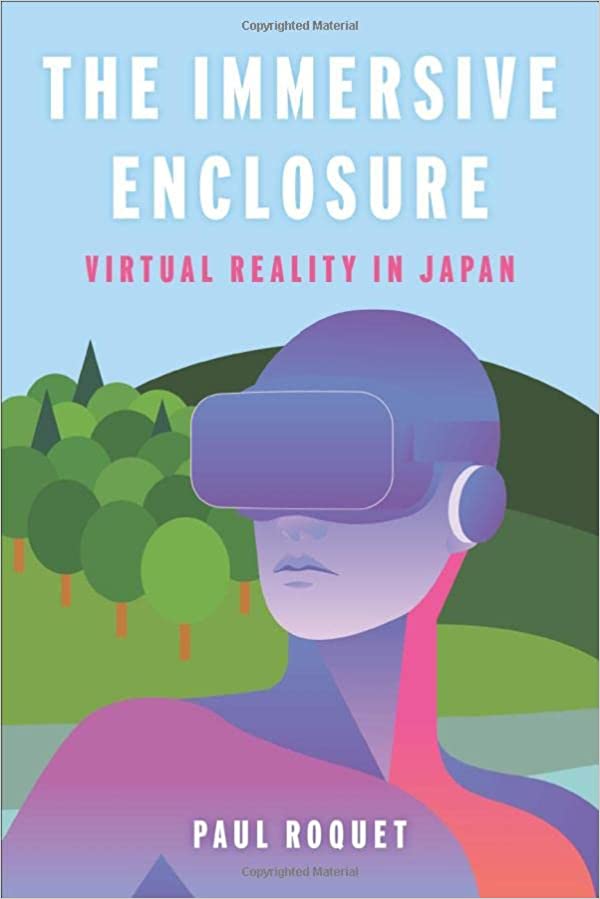
Paul Roquet is an MIT associate professor in media studies and Japan studies; his earlier work includes Ambient Media. His recent mind-bending book The Immersive Enclosure prompted John and Elizabeth to invite him to discuss the history of “head-mounted media” and the perceptual implications of virtual reality.

Paul, Elizabeth and John discuss the appeal of leaving actuality aside and how the desire to shut off immediate surroundings shapes VR’s rollout in Japan. The discussion covers perceptual scale-change as part of VR’s appeal–is this true of earlier forms of artwork as well? We explore moral panic around VR in Japan and the U.S., recap the history of early VR headset adapters on trains (including Brookline’s D-line!) and learn about the geneaologies various Japanese words for “virtual” and their antonyms. Paul wonders if the ephemerality of the views glimpsed in a rock garden served as guiding paradigm for how VR is experienced.
Continue reading “90 Virtual Reality as Immersive Enclosure, with Paul Roquet (EF, JP)”89* Charles Yu with Chris Fan: The Work of Inhabiting a Role (Novel Dialogue Crossover, JP)
Charles Yu won the 2020 National Book Award for Interior Chinatown but some of us became fans a decade earlier, with How to Live Safely in a Science Fictional Universe (2010). That novel brilliantly uses SF conventions to uncover the kind of self-deceptive infilling that we all do every day, the little stories we tell ourselves to make our world seem predictable and safe when it’s anything but. In this crossover episode, which originally aired on Novel Dialogue, where critics and novelists sit down together in peace, He speaks with John and with science-fiction scholar Chris Fan, Assistant Professor at UC Irvine, senior editor and co-founder of Hyphen magazine.
Continue reading “89* Charles Yu with Chris Fan: The Work of Inhabiting a Role (Novel Dialogue Crossover, JP)”88 Underwater Eye: Margaret Cohen explores the Film Aquatic (JP)
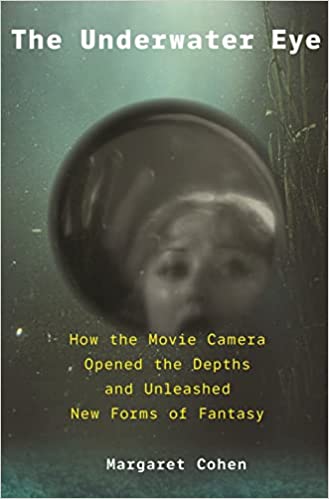
Margaret Cohen joins John to discuss The Underwater Eye, which explores “How the Movie Camera Opened the Depths and Unleashed New Realms of Fantasy.” Margaret’s earlier prizewinning books include The Novel and the Sea and The Sentimental Education of the Novel, but this project brings her places even her frequent surfing forays hadn’t yet reached. She charts the rise of “wet for wet” filming both in the ocean itself and in various surrogates, exploring the implications of entering a domain that humans can explore and come to know, but never master.

*87 In Focus: Mike Leigh (JP)
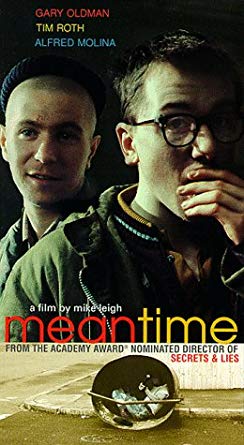
In nearly 50 years of filmmaking, British director Mike Leigh has ranged from comic portrayals of ordinary life amid the social breakdowns of Thatcher’s Britain (Life is Sweet, High Hopes) to gritty renditions of working-class constraint and bourgeois hypocrisy (Meantime, Abigail’s Party, Hard Labour) to period films that reveal the “profoundly trivial” elements of artistic life even two centuries in the past (Topsy-Turvy, Mr. Turner). (if you want to skip all intro, here is the audio.)

Leigh contains multitudes. What Roland Barthes says about the novels of Marcel Proust is true of Mike Leigh films as well: you notice different things every time you return to them.
Continue reading “*87 In Focus: Mike Leigh (JP)”86 Dana Stevens Keaton (JP EF)
Dana Stevens joins Elizabeth and John to discuss Camera Man: Buster Keaton, the Dawn of Cinema and the Invention of the Twentieth Century. Her fantastic new book serves as occasion to revel in the work and working world of Buster Keaton, that “solemn, beautiful, perpetually airborne man.” Although packed with fascinating tidbits from Keaton’s life, Camera Man is much more than just a biography. It performs its own airborne magic, lightly traversing topics like the crackdown on the use of children in vaudeville, the fluidity of roles before and behind the camera in early Hollywood and the doors that were briefly (ever so briefly) opened for female directors.

Among other treats, Dana unpacks one of Keaton’s early great “two-reelers” One Week ( a spoof of brisk upbeat industrial films) and his parodic “burlesques” e.g. of Lillian Gish.
Continue reading “86 Dana Stevens Keaton (JP EF)”*85 Pu Wang and JP unpack their Cixin Liu interview
Our first August rebroadcast was John and Pu’s 2019 interview with SF superstar Cixin Liu (you may want to re-listen to that episode before this one!). Here, they reflect on the most significant things that Liu had said, and to ponder the political situation for contemporary Chinese writers who come to the West to discuss their work.

They consider whether our world is like a cabinet in a basement, and what kind of optimism or pessimism might be available to science fiction writers, and extend the conversation from their interview about world building, realism, and film. They compare the interview to a recent profile of Liu in The New Yorker, and ponder the advantages and disadvantages of pressing writers to weigh in on the hot-button topics of the day (hint: RTB made the right choice!).
Continue reading “*85 Pu Wang and JP unpack their Cixin Liu interview”*84 Cixin Liu (JP, Pu Wang)
John and Pu Wang, a Brandeis professor of Chinese literature, spoke with science-fiction genius Cixin Liu back in 2019. His most celebrated works include The Three Body Problem, The Dark Forest, and Death’s End.

When he visited Brandeis to receive an honorary degree, Liu paid a visit to the RTB lair to record this interview. Liu spoke in Chinese and Pu translated his remarks in this English version of the interview (the original Chinese conversation is at 刘慈欣访谈中文版 Episode 14c).
Continue reading “*84 Cixin Liu (JP, Pu Wang)”*83 Plotz and Ferry on Zadie Smith
In this 2019 conversation, rebroadcast now to follow up RTB 82, Elizabeth and John try their best to unpack Zadie Smith’s take on sincerity, authenticity and human sacredness; the “golden ticket” dirty secret behind our hypocritical academic meritocracy; surveillance capitalism as the “biggest capital grab of human experience in history;” and her genealogy of the novel. If we had to sum the day up with a few adjectives (and we do): funny, provocative, resplendent, chill, generous, cantankerous.
Continue reading “*83 Plotz and Ferry on Zadie Smith”*82 Zadie Smith in Focus (JP)
In this 2019 episode, John interviews the celebrated British writer Zadie Smith. Zadie’s horror at the idea of rereading her own novels opens the show; she can more easily imagine rewriting one (as John’s beloved Willa Cather once did) than having to go through them all again. From there the conversation quickly moves through Brexit (oh, the inhumanity!) and what it means to be a London–no, a Northwest London–writer before arriving at her case against identity politics. That case is bolstered by a discussion of Hannah Arendt on the difference between who and what a person is. As Zadie puts it, “When you say my people, you can[‘t] know for certain who those people are by looking at them and by hearing what they have to say. I think what fiction as a kind of philosophy always assumed is that what people make manifest is not all that people are. There’s a great part of human selves which are hidden, unknown to the self, obscure, and that’s the part that fiction is interested in.”