147 Ieva Jusionyte on U.S. Guns in Mexico: Exit Wounds [EF, JP]

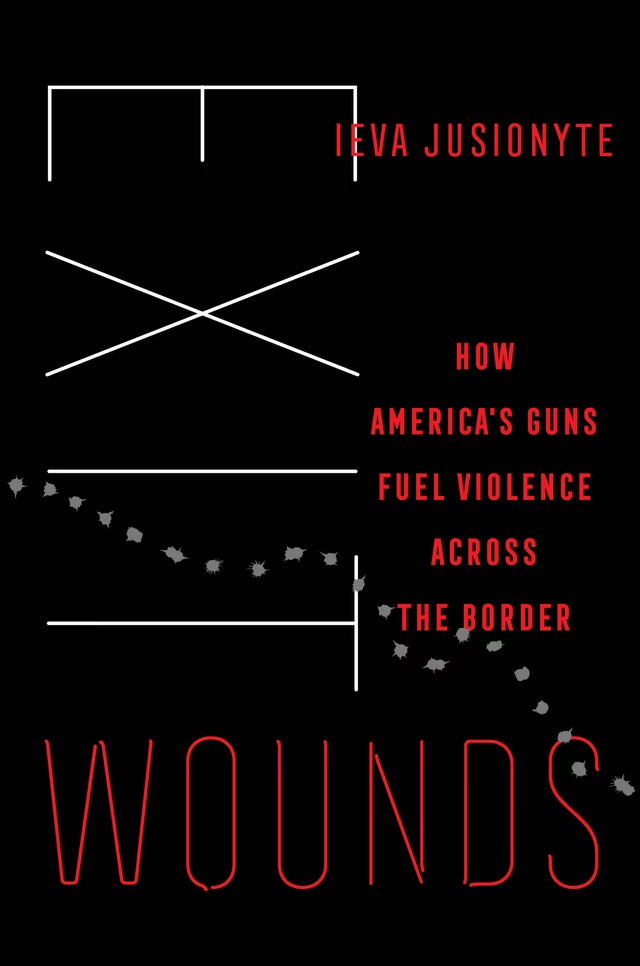
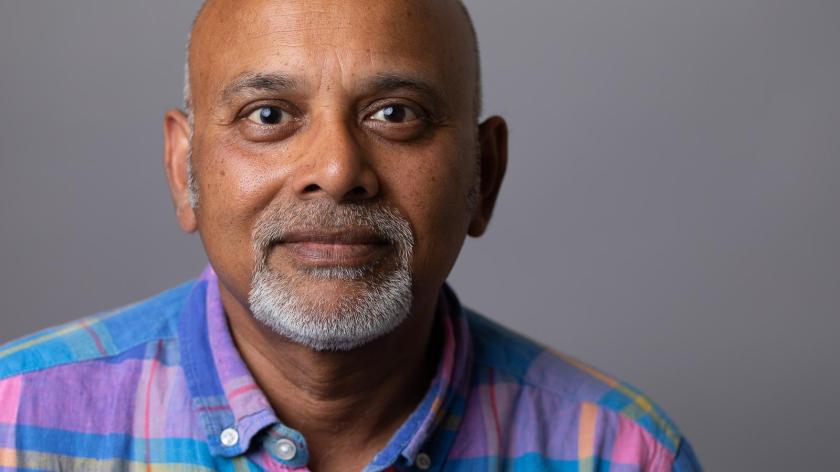
John and Elizabeth had the chance to talk with Ieva Jusionyte, anthropologist, journalist, emergency medical technician. Her award-winning books include Exit Wounds, which uses anthropological and journalistic methods to follow guns purchased in the United States through organized crime scenes in Mexico, and their legal, social and personal repercussions.
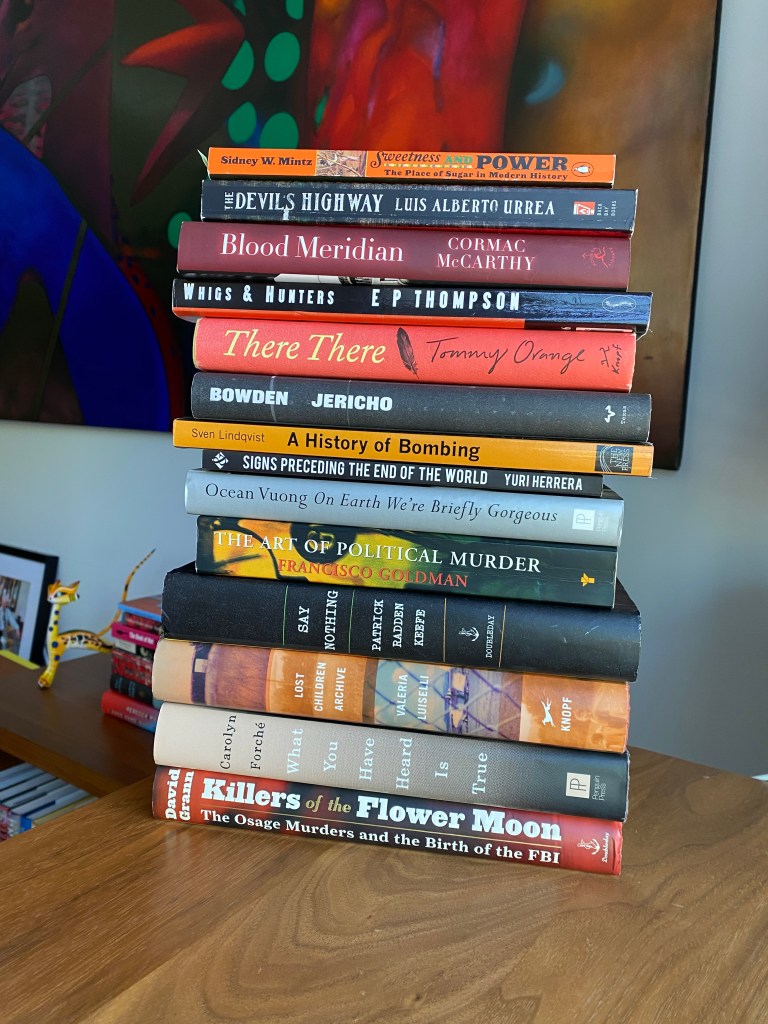
In addition to hearing how Ieva researched the topic, balancing structural understandings of how guns become entangled with people on both sides of the border with an emphasis on individual stories, we also talked about how language captures and fails to capture violence, the ways violence and the fear of violence organize space, and the importance of a humble, responsive, and empathetic approach to speaking with people touched by gun violence.

Ieva’s “bookshelf” for Exit Wounds

Mentioned in this episode:

Sidney Mintz, Sweetness and Power (1985)

Allen Feldman, Formations of Violence (1991)

Roberto Bolaño, 2666 (2004)

Yuri Herrera, Signs Preceding the End of the World (2009) tr. by Lisa Dillman, see RTB episode 48 “Transform, not Transfer: Lisa Dillman on Translation

Deborah Thomas, Political Life in the Wake of the Plantation, 2019

Cormac McCarthy Blood Meridian (1985)

Giorgio Agamben Homo Sacer (1998) and the “state of exception”

Thomas Pynchon’s Gravity’s Rainbow (1973)and the “zone”

Nathan Thrall, A Day in the Life of Abed Salama (2023)

Recallable “Books:”

Ieva suggested E.P Thompson, Whigs and Hunters: the Origin of the Black Act (1975) for its thoughtful framing of state violence and its incredible detail, and also Sven Lindqvist, A History of Bombing (2000), for the ways in which the book’s structure enacts its argument.

Elizabeth went with the documentary by Raul Paz Pastrana, Border South (2019), which also weaves together the stories of those affected, including the anthropologist Jason De León, in ways that account for the multidimensionality of human experience.

John picked the contestatory Northern Irish spaces of Anna Burns’ novel Milkman (2018)
Listen and Read Here

144 Violent Majorities 2.2 Subir Sinha on Hindutva as Long-Distance Ethnonationalism

Lori Allen and Ajantha Subramanian continue their second series on Violent Majorities. Their previous episode featured Peter Beinart on Zionism as long-distance ethnonationalism; here they speak with Subir Sinha, who teaches at SOAS University of London, comments on Indian and European media, and is a member of a commission of inquiry exploring the 2022 unrest between Hindus and Muslims in Leicester, UK.

The catalysts he identifies for the rise of Hindu nationalism (Hindutva) include the emergence of new middle classes after economic liberalization, the rise of Islamophobia after 9/11, the 2008 crisis in capitalism, and the spread of new communications technologies. 

Continue reading “144 Violent Majorities 2.2 Subir Sinha on Hindutva as Long-Distance Ethnonationalism”

129* Vince Brown, Vectors ( EF, JP)

The largest slave uprising in the 18th century British Caribbean was also a node of the global conflict called the Seven Year’s War, though it isn’t usually thought of that way. In the first few days of the quarantine and our current geopolitical and epidemiological shitshow, John and Elizabeth spoke with Vincent Brown, who had recently published Tacky’s Revolt: The Story of an Atlantic Slave War (Belknap, 2019), centered on a group of enslaved West Africans, known under the term “Coromantees” who were the chief protagonists in this war.

Continue reading “129* Vince Brown, Vectors ( EF, JP)”

121* Ajantha Subramanian on the Caste of Merit (EF,JP)

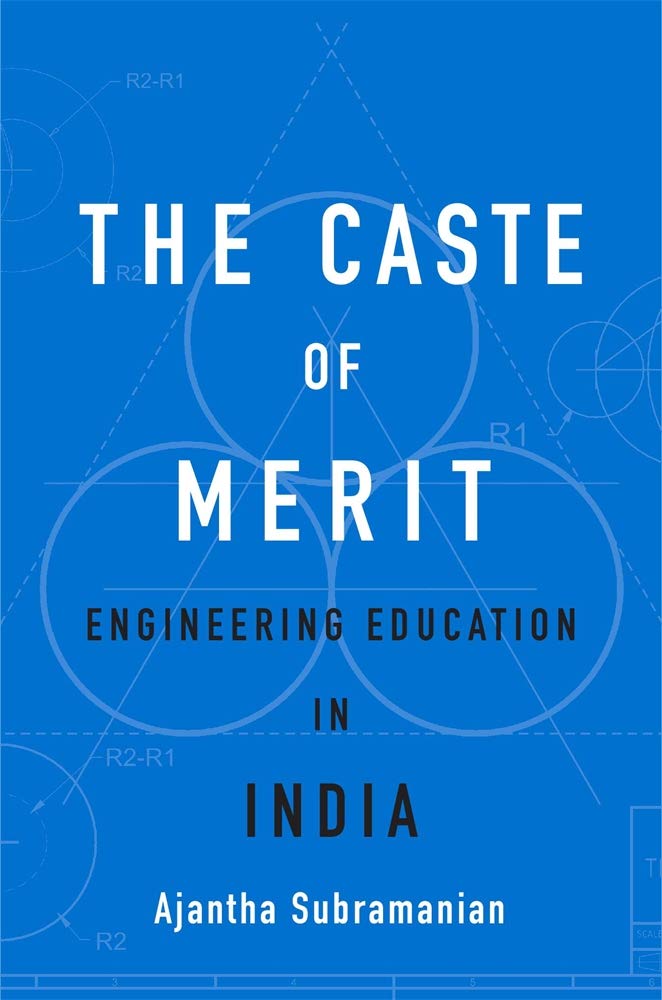
Before she became the host and star of Violent Majorities, the RTB series on Israeli and Indian ethnonationalism, Ajantha Subramanian sat down with Elizabeth and John to discuss  The Caste of Merit: Engineering Education in India. It is much more than simply an historical and ethnographic study of the elite Indian Institutes of Technology. Ajantha talked to JP and EF about the language of “merit” and the ways in which it can conceal the continuing relevance of caste (and class, and race) privilege–in India, yes, but also in American and other meritocratic democracies as well.

Continue reading “121* Ajantha Subramanian on the Caste of Merit (EF,JP)”

120 Violent Majorities Roundup (Ajantha, Lori, JP)

Ajantha Subramanian and Lori Allen turn from hosts to interlocutors in an episode that ties a bow on our Violent Majorities conversations about Indian (episode 1) and Israeli (episode 2)ethnonationalism. Along with John they discuss commonalities between Balmurli Natrajan’s charting of the “slippery slope towards a multiculturalism of caste” and Natasha Roth-Rowland‘s description of the “territorial maximalism” that has been central to Zionism. The role of overseas communities loomed large, as did the roots of ethnonationalism in the fascism of the 1920s, which survived, transmuted or merely masked over the subsequent bloody century, as other ideologies (Communism and perhaps cosmopolitan liberalism among them) waxed before waning.

Continue reading “120 Violent Majorities Roundup (Ajantha, Lori, JP)”

119 Violent Majorities, Indian and Israeli Ethnonationalism. Episode 2: Natasha Roth-Rowland (with Lori, Ajantha)

“What is mainstream shifts to the right every generation.”

Natasha Roth-Rowland is a writer and researcher at Diaspora Alliance, a former editor at +972 Magazine,  and an expert on the Jewish far right. She joins anthropologists Lori Allen and Ajantha Subramanian midway through a three-part RTB series, “Violent Majorities: Indian and Israeli Ethnonationalism.” Listen to episode 1 here.

The three discuss the transnational formation of the Jewish far right over the 20th and 21st centuries, the gradual movement of far right actors into the heart of the Israeli state, and the shared investment in territorial maximalism, racial supremacy, and natalism across the Zionist ideological spectrum.

Continue reading “119 Violent Majorities, Indian and Israeli Ethnonationalism. Episode 2: Natasha Roth-Rowland (with Lori, Ajantha)”

116 “We are all latecomers”: Martin Puchner’s Culture (JP, EF)

RTB listeners already know the inimitable Martin Puchner (Professor of English and Theater at Harvard, editor of more than one Norton Anthology,  and author of many prizewinning books) from that fabulous RTB episode about his “deep history” of literature and literacy, The Written World.  And you know his feelings about P. G. Wodehouse from his Books in Dark Times confessions.

Continue reading “116 “We are all latecomers”: Martin Puchner’s Culture (JP, EF)”

112 Earthsea, and other realms: Ursula Le Guin as social inactivist (EF, JP, [UKL])

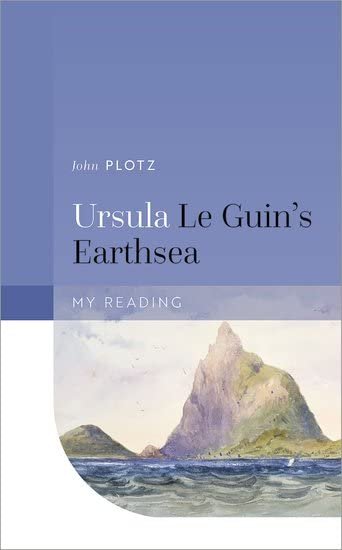
To mark the publication of John’s book Ursula Le Guin’s Earthsea (My Reading), with Oxford University Press, John and Elizabeth take to the airways to share their love of Le Guin’s “speculative anthropology,” gender politics, and goats.

And we share a delight we’ve been holding back for just this occasion, a series of clips from John’s interview with Le Guin in her hometown of Portland, Oregon, in 2015 (a longer print-only version appeared in Public Books). Since Ursula is no longer with us, having died in 2018, it’s especially poignant to listen to their conversation. Though in fact, the tone of their conversation isn’t sad at all, but friendly, generous, and ruminative.

Continue reading “112 Earthsea, and other realms: Ursula Le Guin as social inactivist (EF, JP, [UKL])”

101* Chris Walley on Deindustrialization (EF, JP)


On a blustery fall morning back in 2019, RTB welcomed Christine Walley, anthropologist and author of Exit Zero: Family and Class in Postindustrial Chicago. In the early 1980s Chris’s father, along with thousands of other steel workers, lost his job when the mills in Southeastern Chicago closed. The book is part of a multimodal project, including the documentary film, “Exit Zero: An Industrial Family Story,” (with director Chris Boebel) and an NEH-funded digitization project of the Southeastern Chicago Historical Museum, a community-based archive of materials related to the neighborhood.

Continue reading “101* Chris Walley on Deindustrialization (EF, JP)”

100 Nuclear Ghosts: Ryo Morimoto (EF, JP)

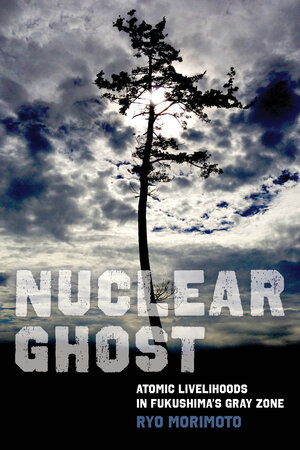
John and Elizabeth explore spectral radiation with Ryo Morimoto, Assistant Professor of Anthropology at Princeton University. His new book Nuclear Ghost: Atomic Livelihoods in Fukushima’s Grey Zone is based on several years of fieldwork in coastal Fukushima after the triple disaster of earthquake, tsunami, and nuclear accident. Ryo’s book shows how residents of the region live with and through the “nuclear ghost” that resides with them.

The trio discuss ways that residents acclimatize themselves to the presence of radiation, efforts to live their lives in ways not only shaped by catastrophe and irradiation, and the Geiger counter as a critical object.

Continue reading “100 Nuclear Ghosts: Ryo Morimoto (EF, JP)”

92 Janet McIntosh on “Let’s Go Brandon,” QAnon and alt-right language (EF, JP)

John and Elizabeth talk with Brandeis linguistic anthropologist Janet McIntosh about the language of US alt-right movements. Janet’s current book project on language in the military has prompted thoughts about the “implausible deniability” of “Let’s Go Brandon”–a phrase that “mocks the idea we have to mince words.”

The three of them unpack the “regimentation” of the phrase, the way it rubs off on associated signs, and discusses what drill sergeants on Parris Island really do say. They speculates on the creepy, Dark Mirror-esque similarity between the deciphering of “Q-drops” and academic critique. Turning back to her work on basic training, Janet unpacks the power of “semiotic callousing.”

Continue reading “92 Janet McIntosh on “Let’s Go Brandon,” QAnon and alt-right language (EF, JP)”

77* Polynesia, Sea of Islands: with Christina Thompson (EF, JP)

John and Elizabeth talk cultural renewal with Christina Thompson in this rebroadcast of a 2019 Recall this Book conversation. Her Sea People: The Puzzle of Polynesia both relates the history of Polynesia, and explores how histories of Polynesia are constructed.

Tupaia's_map,_c._1769
Tupaia’s map

The discussion considers various moments of cultural contact between Polynesian and European thinkers and doers. Those range from the chart Tupaia drew for Captain Cook during the “first contact” era (above) to the moment ijn 1976 when the Hokule’a‘s traveled from Hawaii to Tahiti in a triumphant reconstruction of ancient Polynesian wayfinding. Thompson has fascinating thoughts on how the work of David Lewis, Brian Finney and the Bishop Planetarium served as invaluable background to the navigational achievements of Mau Pialug and Nainoa Thompson.

Continue reading “77* Polynesia, Sea of Islands: with Christina Thompson (EF, JP)”

70 Recall this Buck 5: “Studying Up” with Daniel Souleles (EF, JP)

John and Elizabeth continue their conversation with Daniel Souleles, anthropologist at the Copenhagen Business School and author of Songs of Profit, Songs of Loss: Private Equity, Wealth, and Inequality (Lincoln : University of Nebraska Press 2019). Dan’s work fits into a newish approach in anthropology of researching people with greater power and influence than the researchers themselves. That’s sometimes called “studying up” and Dan and Elizabeth (who’s writing a book about gold, after all!) have both thought a lot about it.

Continue reading “70 Recall this Buck 5: “Studying Up” with Daniel Souleles (EF, JP)”

Points of Comparison in Time: Methods in the Anthropology of Finance

by Aneil Tripathy

As a fellow anthropologist of finance, I especially enjoyed this month’s Recall this Book conversation with Dan Souleles.  His trajectory—from studying monks to private equity mavens!–proves anthropologists can help us make sense of the inequality that the world of finance produces. Building on comparisons with other powerful groups in the anthropological record, such as Inka accountants, Dan’s eye-opening book, Songs of Profit, Songs of Loss, and his subsequent research, emphasizes the diversity of groups within finance. He explores the particularities of private equity investors as well as theorizes on how to compare accounting across the anthropological record, from the present day to that of the Inka.

This analysis of diversity in finance is integral to my own research as an anthropologist of finance in the world of climate finance, a sector of financial markets promoted as financing/refinancing projects that have climate and environmental benefits. In my research, I study different forms of expertise and work amongst climate-finance practitioners: among them bankers, accountants, and policymakers.  Climate change itself is defined by the time horizons of our new Anthropocene era. Some may seem distant (when will the last amphibian vanish?) while others (2 degrees Celsius rise, anyone?) now loom terrifyingly near. In climate finance, geological climate time interacts with the profit-and-loss time horizons familiar from accountancy and Wall Street quarterly reports.  Understanding what type of time climate-finance practitioners focus on  turns out to be crucial to unpacking their assumptions—and their actions.

Continue reading “Points of Comparison in Time: Methods in the Anthropology of Finance”

69 Recall this Buck 4: Daniel Souleles on private equity (JP, EF)

In this installment of our Recall this Buck series, John and Elizabeth talk with Daniel Souleles, anthropologist at the Copenhagen Business School and author of Songs of Profit, Songs of Loss: Private Equity, Wealth, and Inequality (Lincoln : University of Nebraska Press 2019). Dan’s work explores the world of private equity “guys” (who are indeed mostly guys) and the ways they are “suspended in webs of significance [they themselves have] spun” as Clifford Geertz puts it.

Further, he explores the ways we are all suspended in these webs through the immense buying and managing power of private equity firms. Private equity investors buy out publicly traded companies, often through enormous debt (which is why these deals used to be called “leveraged buyouts” or LBOs), manage the companies and then sell them. They argue they are creating value by cutting fat in management; typically workers bear the brunt of the debt while executives–and the private equity firm and lawyers and others servicing the deal–receive hefty payments.

Continue reading “69 Recall this Buck 4: Daniel Souleles on private equity (JP, EF)”

40 Global Policing 1: Hayal Akarsu on Turkish Community Policing (EF, JP)

The Black Lives Matter movement and the policing-related deaths of George Floyd, Breonna Taylor, Ahmaud Arbery and others have struck a nerve worldwide. Our “Global Policing” series aims to capture the protests over systemic racism and policing in their various national forms.

Picture taken from journalist Zeynep Kuray’s Twitter account.

In Turkey, for example, a June 19 article in the English edition of DuvaR. news magazine reported that

Footage of the detentions of five individuals detained at pro-Kurdish Peoples’ Democratic Party’s (HDP) press conference in Istanbul reveal shouts from the civilians begging the police to stop pressing on their backs and telling them that their chest hurts…reminiscent of the recent police killing of black Minneapolis resident George Floyd, remembered with his words “I can’t breathe!

Continue reading “40 Global Policing 1: Hayal Akarsu on Turkish Community Policing (EF, JP)”

34 The Caribbean and Vectors of Warfare: Vincent Brown (EF, JP)

Simon’s March, September 1760, “Slave Revolt in Jamaica, 1760-1761, A Cartographic Narrative”

The largest slave uprising in the 18th century British Caribbean was also a node of the global conflict called the Seven Year’s War, though it isn’t usually thought of that way. In the first few days of the quarantine and our current geopolitical and epidemiological shitshow, John and Elizabeth spoke with Vincent Brown, who recently published Tacky’s Revolt: The Story of an Atlantic Slave War (Belknap, 2019), centered on a group of enslaved West Africans, known under the term “Coromantees” who were the chief protagonists in this war.

Tracing the vectors of this war within the Caribbean, the North Atlantic, and West Africa, Vince shows us how these particular enslaved Africans, who are caught in the gears of one of human history’s most dehumanizing institutions, constrained by repressive institutions, social-inscribed categories of differences and brutal force, operate tactically within and across space in complex and cosmopolitan ways.

Continue reading “34 The Caribbean and Vectors of Warfare: Vincent Brown (EF, JP)”

22 Ajantha Subramanian: Meritocracy, Caste, and Class (EF, JP)

Ajantha Subramanian‘s new book The Caste of Merit: Engineering Education in India is much more than simply an historical and ethnographic study of the elite Indian Institutes of Technology. John and Elizabeth speak with Ajantha about the language of “merit” and the ways in which it can conceal the continuing relevance of caste (and class, and race) privilege–in India, yes, but also in American and other meritocratic democracies as well.

Our wide-ranging discussion explored how inequality gets reproduced, passed on and justified. We talked about some of the ways caste–often framed as a fundamentally “Eastern” form of difference–not only seems to have a lot in common with race, but also shares a history through colonial, plantation-based capitalism. This may explain some of the ways “merit” has also made race (and class) disparities invisible in the United States. This topic surfaced during our discussion of the ways in which dominant groups excoriate the “identity politics” of those seeking greater access to privileged domains, and claim their own independence from “ascriptive” identities while silently relying on the privilege and other hidden advantages of particular racial or caste-based forms of belonging.

Continue reading “22 Ajantha Subramanian: Meritocracy, Caste, and Class (EF, JP)”