What’s a picture worth? How about the picture that allows scientists to grasp what’s actually going on in a cell–or on the spiky outside of an invading virus? Gael McGill, Director of Molecular Visualization at the Center for Molecular and Cellular Dynamics at Harvard Medical School is founder and CEO of Digizyme and has spent his career exploring and developing different modes for visualizing evidence.
Kim Stanley Robinson, SF novelist of renown, has three marvelous trilogies: The Three Californias, Science in the Capital and Red Mars, Green Mars and Blue Mars. But lately it is The Ministry for the Future, his “science fiction nonfiction novel” (Jonathan Lethem) that has politicians, Eurocrats and the rest of us pondering how policy might fight climate change.
In this Books in Dark Times conversation from the RTB vaults (you can also read a longer version that appeared as an article in our partner Public Books) Stan and John start out with Stan’s emerging from the Grand Canyon into the pandemic moment of late March, 2020. Then they discuss Stan’s sense that SF is the realism of the day and his take on “cognitive estrangement.” Finally, they happen upon a shared admiration for the great epic SF poet, Frederick Turner. Small fact connecting him to RTB-land: he completed a literature PhD directed by Frederic Jameson with a dissertation-turned-book on the novels of Phillip K. Dick.
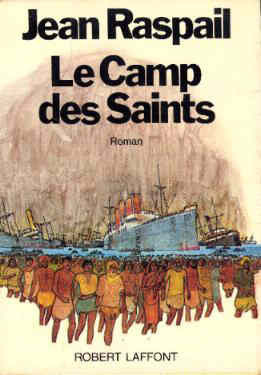
In a 2019 discussion that proves eerily prescient of politics in 2022, first discuss Jean Raspail‘s racist 1973 novel The Camp of the Saints, a book whose popularity in certain quarters since its publication might explain how Europe has gone from Thatcher to Brexit, from Vaclav Havel to Viktor Orban. How is this xenophobic screed related to science fiction of the same period–and to John Locke? Pat Buchanan, American early adapter of Raspail’s hate-mongering, figures prominently.
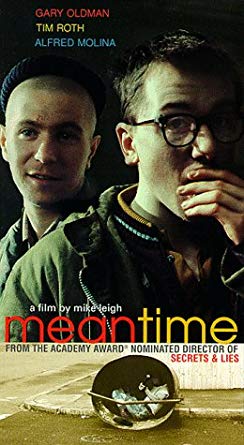
In nearly 50 years of filmmaking, British director Mike Leigh has ranged from comic portrayals of ordinary life amid the social breakdowns of Thatcher’s Britain (Life is Sweet, High Hopes) to gritty renditions of working-class constraint and bourgeois hypocrisy (Meantime, Abigail’s Party, Hard Labour) to period films that reveal the “profoundly trivial” elements of artistic life even two centuries in the past (Topsy-Turvy, Mr. Turner). (if you want to skip all intro, here is the audio.)
Leigh contains multitudes. What Roland Barthes says about the novels of Marcel Proust is true of Mike Leigh films as well: you notice different things every time you return to them.
Our first August rebroadcast was John and Pu’s 2019 interview with SF superstar Cixin Liu (you may want to re-listen to that episode before this one!). Here, they reflect on the most significant things that Liu had said, and to ponder the political situation for contemporary Chinese writers who come to the West to discuss their work.
In the original interview, Pu leans forward to fine-tune a translation….
They consider whether our world is like a cabinet in a basement, and what kind of optimism or pessimism might be available to science fiction writers, and extend the conversation from their interview about world building, realism, and film. They compare the interview to a recent profile of Liu in The New Yorker, and ponder the advantages and disadvantages of pressing writers to weigh in on the hot-button topics of the day (hint: RTB made the right choice!).
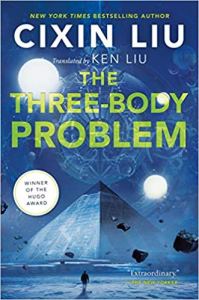
John and Pu Wang, a Brandeis professor of Chinese literature, spoke with science-fiction genius Cixin Liu back in 2019. His most celebrated works include The Three Body Problem, The Dark Forest, and Death’s End.
When he visited Brandeis to receive an honorary degree, Liu paid a visit to the RTB lair to record this interview. Liu spoke in Chinese and Pu translated his remarks in this English version of the interview (the original Chinese conversation is at 刘慈欣访谈中文版 Episode 14c).
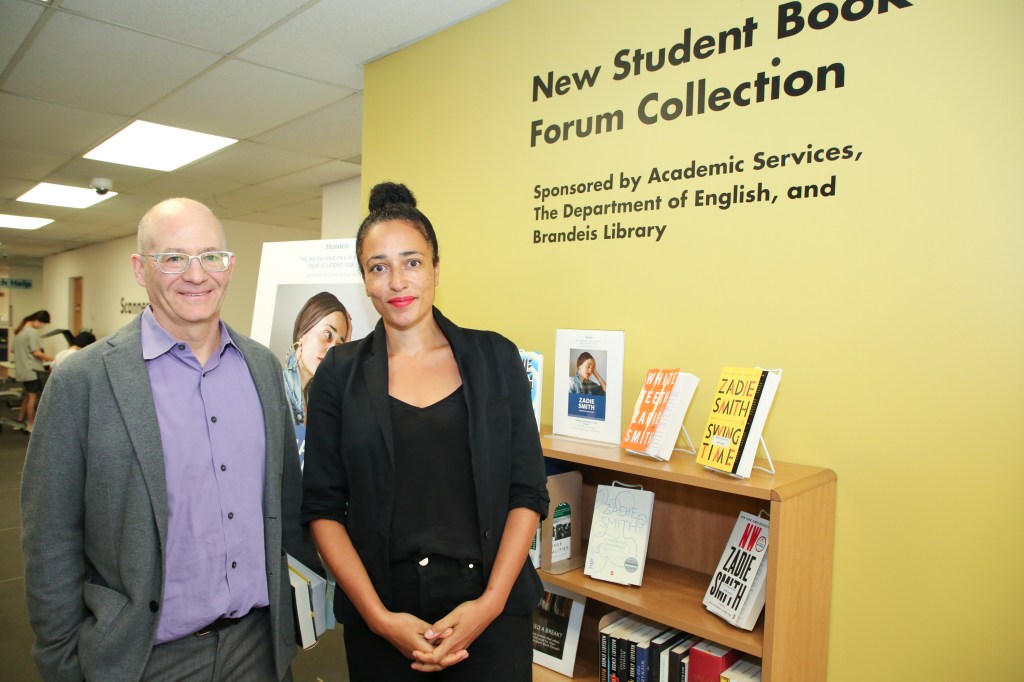
In this 2019 episode, John interviews the celebrated British writer Zadie Smith. Zadie’s horror at the idea of rereading her own novels opens the show; she can more easily imagine rewriting one (as John’s beloved Willa Cather once did) than having to go through them all again. From there the conversation quickly moves through Brexit (oh, the inhumanity!) and what it means to be a London–no, a Northwest London–writer before arriving at her case against identity politics. That case is bolstered by a discussion of Hannah Arendt on the difference between who and what a person is. As Zadie puts it, “When you say my people, you can[‘t] know for certain who those people are by looking at them and by hearing what they have to say. I think what fiction as a kind of philosophy always assumed is that what people make manifest is not all that people are. There’s a great part of human selves which are hidden, unknown to the self, obscure, and that’s the part that fiction is interested in.”
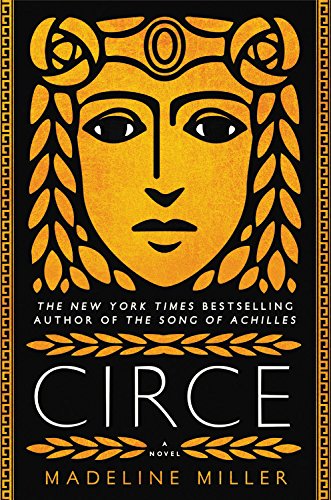
In this rebroadcast, John and Brandeis neuroscientist Gina Turrigiano (an occasional host and perennial friend of Recall this Book) speak with Madeline Miller, author of the critically acclaimed bestseller Circe.
They discuss Circe’s place in Greek mythology and in a retelling of the Odyssey “from below” or “from the side,” the concept of “mythological realism,” and the influence of The Once and Future King on Madeline’s writing. They touch too on the sweet family aspects that show up in Homer, and on Odysseus’s changing reputation throughout time. Madeline has two totally unexpected recommendations in our Recallable Books section.
John and Elizabeth talk cultural renewal with Christina Thompson in this rebroadcast of a 2019 Recall this Book conversation. Her Sea People: The Puzzle of Polynesia both relates the history of Polynesia, and explores how histories of Polynesia are constructed.
Tupaia’s map
The discussion considers various moments of cultural contact between Polynesian and European thinkers and doers. Those range from the chart Tupaia drew for Captain Cook during the “first contact” era (above) to the moment ijn 1976 when the Hokule’a‘s traveled from Hawaii to Tahiti in a triumphant reconstruction of ancient Polynesian wayfinding. Thompson has fascinating thoughts on how the work of David Lewis, Brian Finney and the Bishop Planetarium served as invaluable background to the navigational achievements of Mau Pialug and Nainoa Thompson.
This July 2021 conversation (the asterisk in 75* indicates a rebroadcast) features Brandeis poet Elizabeth Bradfield, and the poet Sean Hill, author of Blood Ties and Brown Liquor (2008) and Dangerous Goods (2014).
Sean read his “Musica Universalis in Fairbanks,” (it appeared in the Alaska Quarterly Review) and then, like someone seated in an archive turning over the pages of aged and delicate documents, unfolded his ideas about birds, borders, houses and “who was here before me.”