61 Brahmin Left 1: Matt Karp on class dealignment (AU, JP)

This new series on the Brahmin Left was inspired by our bracing but terrifying interview with Thomas Piketty. So what even is the Brahmin Left? There seems to be little disagreement that a major realignment (or, rather, a “dealignment”) from the class-based politics of the mid-20th century is underway all over Europe and North America–and perhaps worldwide. Some scholars point to “post-materialist” politics; others to populist revival or ethno-nationalism resurgent; others to the collapse of the trade unions which linked the working-class to the parties of the Left. Some even see in the Right’s recent successes simply the latest twist in a neoliberalism controlled by corporate elites.

Piketty’s explanation, though, centers on the rise of the Brahmin Left. He maintains that Left parties have abandoned the working-class for an increasingly highly educated voter-base. This has turned Left parties from champions of egalitarianism into defenders of the privileges and interests of the educated.

Continue reading “61 Brahmin Left 1: Matt Karp on class dealignment (AU, JP)”

59 Recall This B-Side #4: Pardis Dabashi on “My Uncle Napoleon” (JP)

Iraj Pezeshkzad‘s My Uncle Napoleon is a slapstick and at times goofy love story, but it is also in the best tradition of sly anti-imperial satire. Scholar Pardis Dabashi came to it late, but she has all the convert’s zeal as she links it to a literary tradition that’s highly theoretical, but also delightfully far-flung. Plus, it makes her parents laugh….

Pardis’s talk with John is our last “Recall this B-Side,” drawn from the column John edits at  B-Side Books  and the book that collects 40 of these columns. It has been an unalloyed pleasure to spend June with this set of acoustic variations on the theme.

Continue reading “59 Recall This B-Side #4: Pardis Dabashi on “My Uncle Napoleon” (JP)”

58 Recall this B-Side #3: Caleb Crain on Daisy Ashford’s “The Young Visiters” (JP)

John’s favorite avocation is editing a Public Books column called B-Side Books, where writers resurrect beloved but neglected books. Now comes a book that collects 40 of these columns (the Washington Post review was a big thumbs-up, and John talked about the B-side concept on  Five Books).  

This week’s B-Sider is celebrated American novelist Caleb Crain (Necessary Errors and Overthrow). When not photographing cowbirds and orioles for his brilliantly titled Steamboats are Ruining Everything, Caleb took time to read and report on the best novel ever written by an under-10, The Young Visiters.

Continue reading “58 Recall this B-Side #3: Caleb Crain on Daisy Ashford’s “The Young Visiters” (JP)”

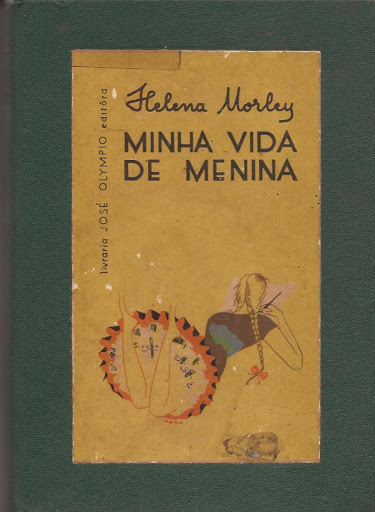
57 Recall this B-side #2: Elizabeth Ferry on “The Diary of ‘Helena Morley'” (JP)

Given this podcast’s love of neglected books, you won’t be shocked to know that John has a side-hustle–in which Elizabeth plays a significant part. He edits a Public Books column called B-Side Books, where writers like Namwali Serpell and Ursula Le Guin sing praises to a beloved but neglected book. Now, there is a book that collects 40 of these columns (Washington Post review; interview with John about the B-side concept on Five Books).  Find it as your local bookstore, or Columbia University Press, or Bookshop, (or even Amazon).

Continue reading “57 Recall this B-side #2: Elizabeth Ferry on “The Diary of ‘Helena Morley’” (JP)”

56 Recall This B-Side #1: Merve Emre on Natalia Ginzburg’s “The Dry Heart”

RtB loves the present-day shadows cast by neglected books, which can suddenly loom up out of the backlit past. So, you won’t be shocked to know that John has also been editing a Public Books column called B-Side Books. In it, around 50 writers (Ursula Le Guin was one) have made the case for un-forgetting a beloved book. Now, there is a book that collects 40 of these columns. Find it as your local bookstore, or Columbia University Press, or Bookshop, (or even Amazon).

Like our podcast, B-Side Books focuses on those moments when books topple off their shelves, open up, and start bellowing at you. The one that buttonholed Merve Emre (Oxford literature professor and author most recently of The Personality Brokers) was a novella by the luminous midcentury Italian pessimist, Natalia Ginzburg. And if you think you know precisely why a mid-century Italian writer would have a dark and bitter view of the world (already thinking of the Nazi shadows in work by Italo Calvino, Primo Levi and Giorgio Bassani) Ginzburg’s The Dry Heart will have you thinking again.

Continue reading “56 Recall This B-Side #1: Merve Emre on Natalia Ginzburg’s “The Dry Heart””

June is all about Forgotten Favorites: Introducing “Recall This B-Side”

You know how obsessed we at RtB are with books that are dredged up dripping out of the past, still coming in as hot as the day they were printed. Whether it is the 1968 Kerner Commission Report as prelude to the long hot Pandemic Summer of 2020 or Thomas Piketty using long-ignored tax records of slave societies in indicting present-day inequality regimes, the podcast is built around a simple premise. When old books topple off their shelves, open up, and start speaking–pay attention, pal!

So, you won’t be shocked to know that we actively seek out other ways to amplify those whispers from the stacks. For about four years now, John has been editing a column called B-Side Books at the journal Public Books. If you’re old enough to recall buying those little 45 rpm records (say, “Salad Days” by Minor Threat, in memory yet green) then you know the column is named after the obscure “flip side” that accompanies the song marketed to be a hit.

Continue reading “June is all about Forgotten Favorites: Introducing “Recall This B-Side””

54 Crossover Month #3: Novel Dialogue with Helen Garner (Elizabeth McMahon, JP)


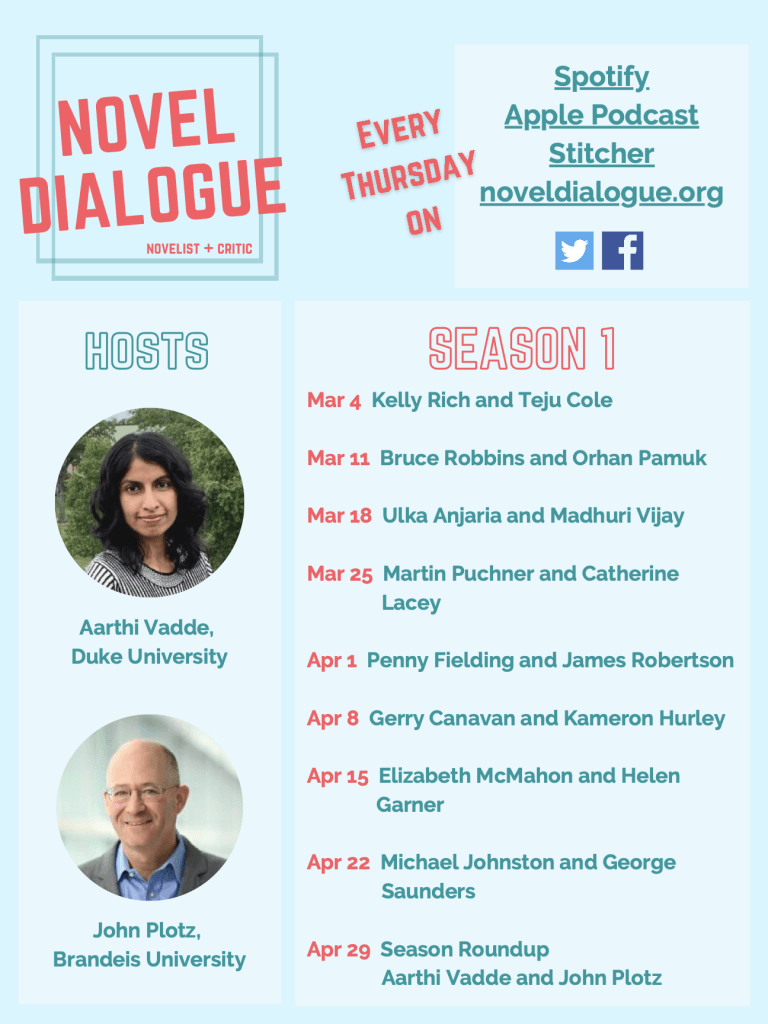
Crossover Month continues with a scintillating Australian fiction episode from Novel Dialogue, a new podcast hosted by the awesome Aarthi Vadde of Duke, and RTB’s own JP. If you like what you hear, please share the love by recommending it to friends, tagging @noveldialogue in your tweets, and subscribing to it via Apple Podcasts, Spotify or Stitcher.

Continue reading “54 Crossover Month #3: Novel Dialogue with Helen Garner (Elizabeth McMahon, JP)”

53 Crossover Month #2: Novel Dialogue (Orhan Pamuk, Bruce Robbins, JP)

Crossover Month continues with something completely different, and only a little bit incestuous. Novel Dialogue is a new podcast hosted by the awesome Aarthi Vadde of Duke, and RTB’s own JP. John and Aarthi serve as the third wheel (or if you prefer the social lubricant) for a scholar and a novelist who sit down each week to explore the making of novels, and what to make of them. If you like what you hear, please share the love by recommending it to friends, tagging @noveldialogue in your tweets, and subscribing to it via Apple Podcasts  Spotify or Stitcher

Continue reading “53 Crossover Month #2: Novel Dialogue (Orhan Pamuk, Bruce Robbins, JP)”

52 Crossover Month #1: “High Theory” and the Pastoral (Kim, Saronik, JP)

Kim Adams and Saronik Bosu share an office at the English department of NYU–and now they also share High Theory a podcast where you can “get high on the substance of theory.” Their lovable podcast always identifies a single manageable topic and asks three magic questions (what is your quest? is not one of them). Today that topic is “the pastoral”; in a role reversal, John asks the three questions of Saronik and Kim.

Topics covered include the joys of sharing an office, and the irony that podcasts mimic the very social face-to-face intimacy that they actually displace. John admits RtB’s informal motto, “After the conference, the bar” is blatantly cribbed from the cry of the Paris ’68ers: sous les pave, la plage (under the pavement, the beach).

Continue reading “52 Crossover Month #1: “High Theory” and the Pastoral (Kim, Saronik, JP)”

51 Recall This Buck 3: Thomas Piketty on Inequality and Ideology (Adaner, JP)

Is Thomas Piketty the world’s most famous economic historian ? A superstar enemy of plutocratic capitalism who wrote a pathbreaking bestseller, Capital in the 21st Century? Or simply a debonair and generous French intellectual happy to talk redistributive justice? Join John and Adaner Usmani (star of RTB’s episode 44: Racism as idea, Racism as Power Relation) to find out.

Why did we invite him? John thinks nobody is better than Piketty at mapping and explaining the nature and origin of the glaring and growing inequality that everywhere defines wealth distribution in the 21st century—both between societies and within them. His recent magnum opus, Capital and Ideology. ask what sorts of stories societies (and individuals within those societies) tell themselves so as to tolerate such inequality—and the poverty and misery it produces. Or even to see that inequality as part of the natural order of things.

Continue reading “51 Recall This Buck 3: Thomas Piketty on Inequality and Ideology (Adaner, JP)”

49 The Capitol Insurrection and Asymmetrical Policing: David Cunningham (EF, JP)

We first heard from the sociologist of American racism David Cunningham in Episode 36 Policing and White Power. Less than a week after the horrors of January 6th, he came back for an extended conversation about “asymmetrical policing” of the political right and left–and of White and Black Americans. His very first book (There’s Something Happening Here, 2004) studied the contrast between the FBI’s work in the 1960’s to wipe out left-wing and Black protests and its efforts to control and tame right-wing and white supremacist movements. That gives him a valuable perspective on the run-up to January 6th–and what may happen next.

Continue reading “49 The Capitol Insurrection and Asymmetrical Policing: David Cunningham (EF, JP)”

47 Glimpsing COVID: Gael McGill on Data Visualization (GT, JP)

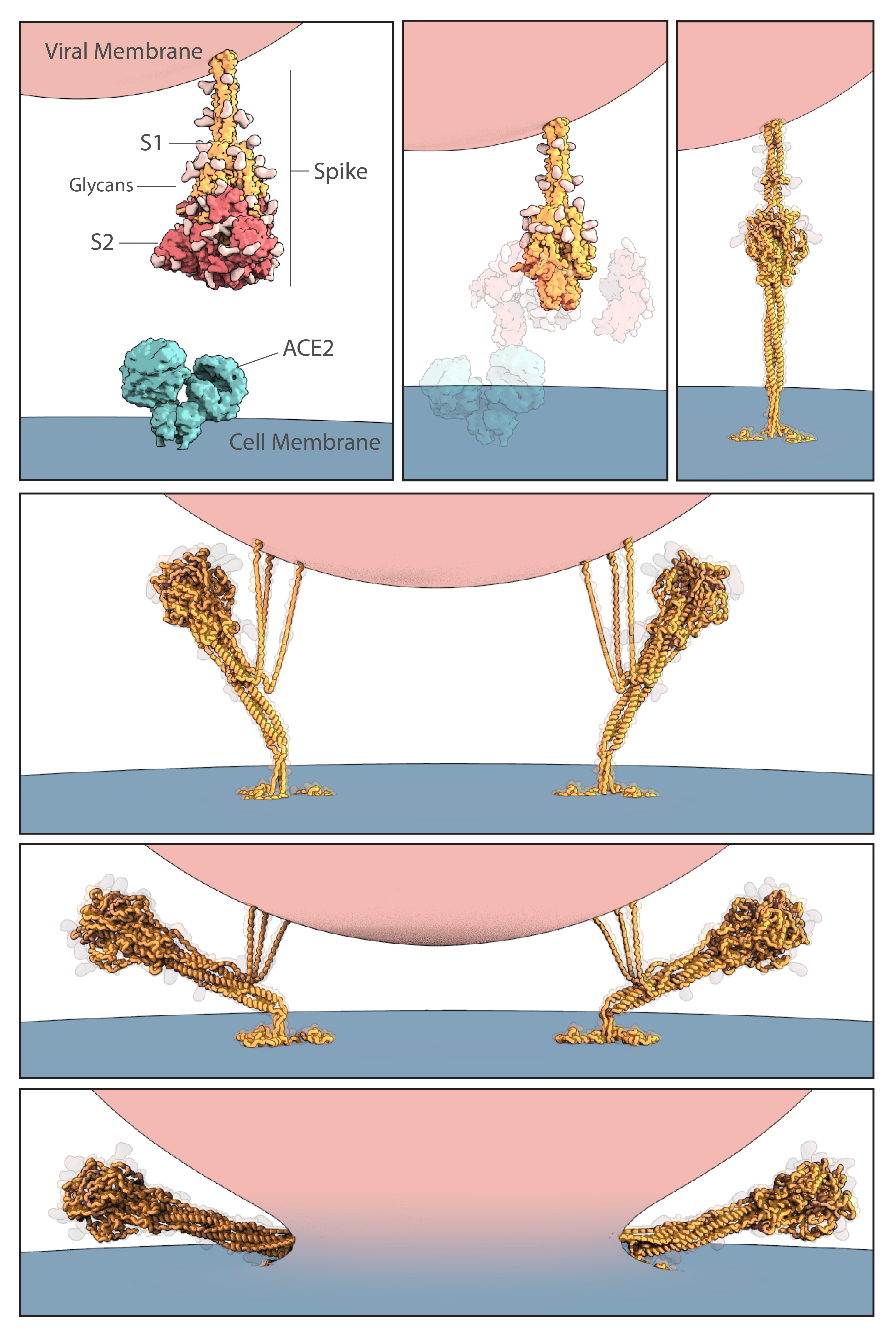
What’s a picture worth? How about the picture that allows scientists to grasp what’s actually going on in a cell–or on the spiky outside of an invading virus? Gael McGill, Director of Molecular Visualization at the Center for Molecular and Cellular Dynamics at Harvard Medical School is founder and CEO of Digizyme and has spent his career exploring and developing different modes for visualizing evidence.

For this scientific conversation, John is joined once again by Brandeis neuroscientist Gina Turrigiano (think ep 4 Madeline Miller; think ep 2 Addiction!). And because Gael’s work proves that a picture can be worth far more than a thousand words, our RTB post is more picturesque than usual. Start by checking out Digizyme‘s image of the spike protein attaching the SARS-CoV2 virus to a hapless cell and fusing their membranes:

Or maybe you’d rather click through to watch a gorgeous video Gael and his team have created?

Continue reading “47 Glimpsing COVID: Gael McGill on Data Visualization (GT, JP)”

46 Leah Price on Children’s Books: Turning Back the Clock on “Adulting” (EF, JP)

What do children love most about books? Leaving their mark on inviting white spaces? Or that enchanting feeling when a book marks them as its own, taking them off to where the wild things are? To understand childhood reading past and present, Elizabeth and John talk with the illustrious and illuminating book historian Leah Price. They explore the tactile and textual properties of great children’s books and debate adult fondness for juvenile literature. Leah asks if identifying with a literary character is a sign of virtuous imagination, or of craziness and laziness. She also schools John on what makes a good association copy, and reveals her son’s magic words when he wants her to tell a story: Read it!

For many years an English Professor at Harvard, Leah is founder and director of the Rutgers Initiative for the Book, and she tweets at @LeahAtWhatPrice. Her What We Talk About When We Talk About Books recently won Phi Beta Kappa’s Christian Gauss Award.

Sometime around the turn of the millennium, the concern about distinguishing between juvenile and adult books seemed to shift from moral panic about speeding up sexual maturity to worry about turning back the clock on what we now call adulting through the mainstreaming of young adult literature.

Continue reading “46 Leah Price on Children’s Books: Turning Back the Clock on “Adulting” (EF, JP)”

44 Adaner Usmani: Racism as idea, Racism as power relation (EF, JP)

racism, mass incarceration, Southern plantation economy,
and W.E.B. Du Bois

Do we understand racism as the primary driving engine of American inequality? Or do we focus instead on the indirect ways that frequently hard-to-discern class inequality and inegalitarian power relations can produce racially differentiated outcomes? Adaner Usmani, Assistant Professor of Sociology and Social Studies at Harvard and on the editorial board at Catalyst joins Elizabeth and John to wrestle with the subtle and complex genealogy of Southern plantation economy and its racist legacy.

Continue reading “44 Adaner Usmani: Racism as idea, Racism as power relation (EF, JP)”

43 Sanjay Krishnan on V. S. Naipaul: To make the Deformation the Formation (JP)

“My subject was not my inward self, but…the worlds within me.”

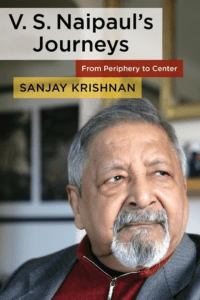
Sanjay Krishnan, Boston University English professor and Conrad scholar, has written a marvelous new book about that grumpiest of Nobel laureates, V. S Naipaul’s Journeys. Krishnan sees the “Contrarian and unsentimental” Trinidad-born but globe-trotting novelist and essayist as early and brilliant at noticing the unevenness with which the blessings and curses of modernity were distributed in the era of decolonization. Centrally, Naipaul realized and reckoned with the always complex and messy question of the minority within postcolonial societies.

He talks with John about Naipaul’s early focus on postcolonial governments, and how unusual it was in the late 1950’s for colonial intellectuals to focus on “the discomfiting aspects of postcolonial life….and uneven consequences of the global transition into modernity.” Most generatively of all, Sanjay insists that the “troublesome aspect is what gives rise to what’s most positive in Naipaul.”

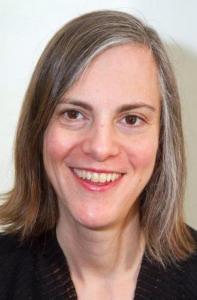
Photo of Sanjay Krishnan by Cydney Scott for Boston University Photography
Continue reading “43 Sanjay Krishnan on V. S. Naipaul: To make the Deformation the Formation (JP)”

42 Recall This Buck 2: Peter Brown on wealth, charity and managerial bishops in early Christianity (JP)

Our Recall This Buck series began by speaking with Christine Desan of Harvard Law School about how key ideas—and the actual currency, physical coins and bills— underlying the modern monetary system get “invisibilized” with that system’s success, so that seeing money clearly is both harder and more vital. Today, illustrious Princeton historian Peter Brown narrates the emergence, in the 3rd and 4th century AD, of striking new ideas about charity and how to include the poor inside a religious community.

Continue reading “42 Recall This Buck 2: Peter Brown on wealth, charity and managerial bishops in early Christianity (JP)”

41 RTB Books in Dark Times 13: Lorraine Daston, Historian of Science (JP)

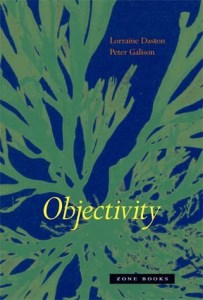
In this final episode of Books in Dark Times, John chews the bibliographic fat with Lorraine Daston of the Max Planck Institute for the History of Science in Berlin. Her list of publications outstrips our capacity to mention here; John particularly admires her analysis of “epistemic virtues” such as truth to nature and objectivity in her 2007 Objectivity (coauthored with Peter Galison).

Although she “came of age in an era of extreme contextualism” Daston is anything but time-bound. She starts things off in John’s wheelhouse with Henry James, before moving on to Pliny the Younger–no, not the scientist, the administrator! Then she makes a startling flanking maneuver to finish with contemporary Polish poetry. John puffs to keep up…

Continue reading “41 RTB Books in Dark Times 13: Lorraine Daston, Historian of Science (JP)”

39 RTB Books in Dark Times 12: Carlo Rotella (JP)

Carlo Rotella of Boston College is author of six books, among them the amazing Good With Their Hands: Boxers, Bluesmen, and Other Characters from the Rust Belt (University of California Press, 2002) and most recently The World Is Always Coming to an End:  Pulling Together and Apart in a Chicago Neighborhood (University of Chicago Press, 2019). What is he reading in the darkness? He starts by praising sagas, makes a case for stories of disagreeableness and plugs a remarkable book about preaching, deception, and the urge to belong.

Continue reading “39 RTB Books in Dark Times 12: Carlo Rotella (JP)”

38 Beth Blum on Self-Help from Carnegie to Today (JP)

Beth Blum, Assistant Professor of English at Harvard, is the author of The Self-Help Compulsion (Columbia University Press 2019). Learn how self-help went from its Victorian roots (worship greatness!) to the ingratiating unctuous style prescribed by the other-directed Dale Carnegie (everyone loves the sound of their own name) before arriving at the “neo-stoical” self-help gurus of today, who preach male and female versions of “stop apologizing!” You’ll laugh, you’ll cry, you’ll either help yourself or learn how to stop caring.

Continue reading “38 Beth Blum on Self-Help from Carnegie to Today (JP)”

37 RTB Books In Dark Times 11: Elizabeth Bradfield (JP)

Elizabeth Bradfied is editor of Broadsided Press, professor of creative writing at Brandeis, naturalist, photographer–and most of all an amazing poet (“Touchy” for example just appeared in The Atlantic). Her books include Interpretive Work, Approaching Ice, Once Removed, and Toward Antarctica. She lives on Cape Cod, travels north every summer to guide people into Arctic climes, birdwatches. She is in and of and for our whole natural world.

So, is it poetry sustaining her now? Or does she (she does!) have other sources of inspiration?

Continue reading “37 RTB Books In Dark Times 11: Elizabeth Bradfield (JP)”