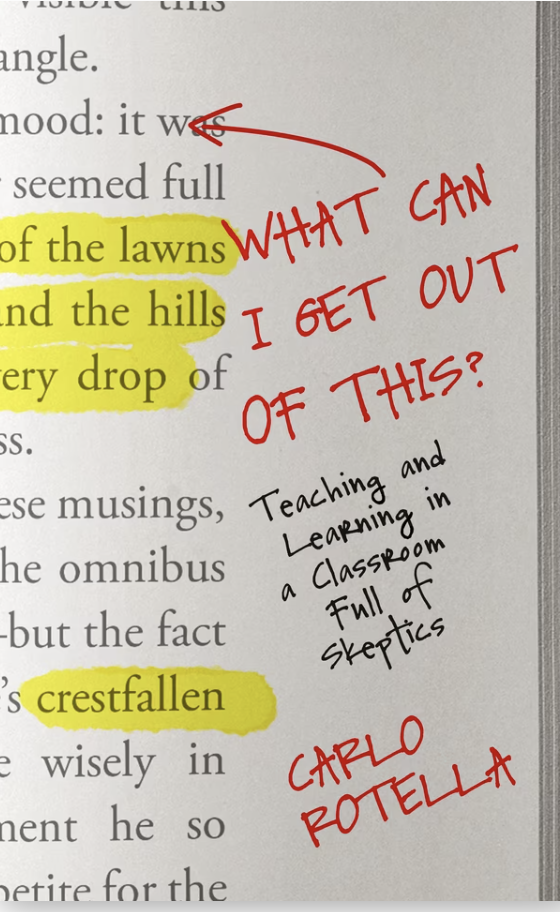
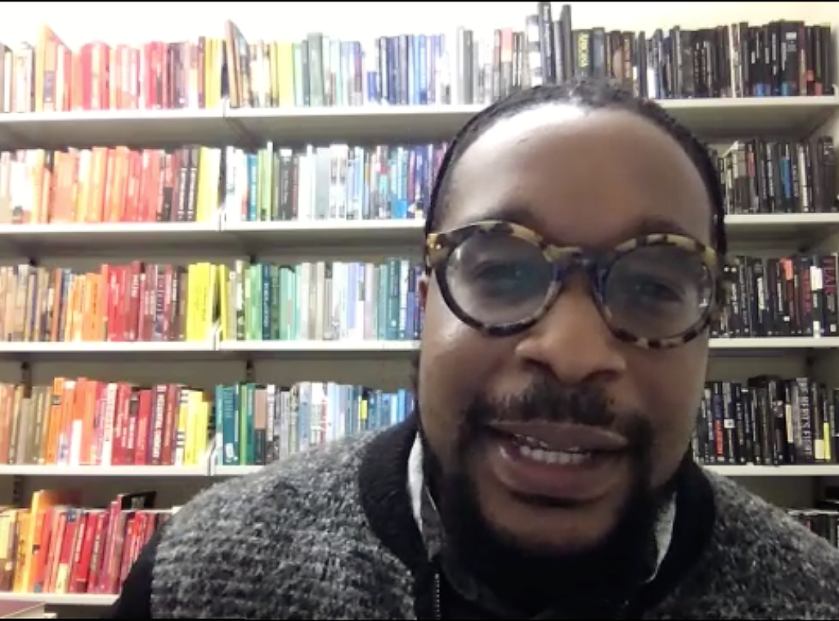
Carlo is always worth listening to, in dark days… and darker ones, too. He starts by praising sagas, makes a case for stories of disagreeableness and plugs a remarkable book about preaching, deception, and the urge to belong.
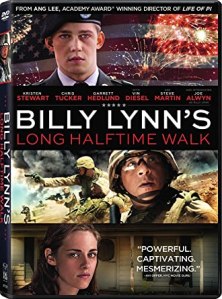
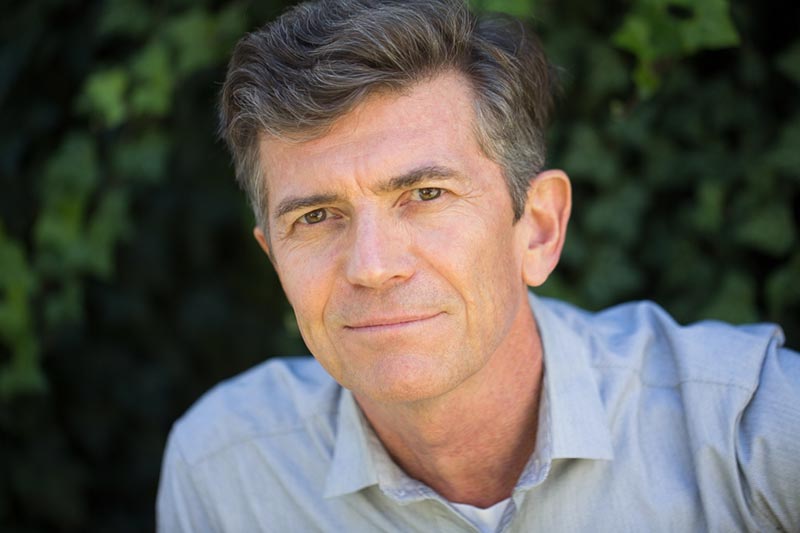
Ben Fountain is far more than just the author of Billy Lynn’s Long Halftime Walk, which won RTB hearts and minds (and the National Book Award) long before it became a weird Ang Lee movie.
All of that, though, only prepared the ground for The Ministry for the Future, his 2020 vision of a sustained governmental and scientific rethinking of humanity’s fossil-burning, earth-warming ways. Flanked by JP, KSR’s friend and ally Elizabeth Carolyn Miller (celebrated eco-critic and UC Davis professor) asked him to reflect on the book’s impact in this conversation with our sister podcast, Novel Dialogue.
Back in 2019, John spoke with the celebrated comic novelist Stephen McCauley. Nobody knows more about the comic novel than Steve–his latest is You Only Call When You’re in Trouble, but John still holds a candle for his 1987 debut, Object of My Affection, made into a charming Jennifer Aniston Paul Rudd movie. And there is no comic novelist Steve loves better than Barbara Pym, a mid-century British comic genius who found herself forgotten and unpublishable in middle age, only to roar back into print in her sixties with A Quartet in Autumn. Steve and John’s friendship over the years has been sealed by the favorite Pym lines they text back and forth to one another, so they are particularly keen to investigate why her career went in this way.
Steve McCauley
In the episode, they talk about some of these favorite sentences from Pym, and then turn to the comic novel as a genre. They talk about the difference between humorous and comic writing, the earthiness of comedy, whether comic novels should have happy or sad endings, and whether the comic novel is a precursor to, or an amoral relief from, the sitcom. They also discuss some of Steve’s fiction, including his Rain Mitchell yoga novels. In Recallable Books John recommends Pictures from an Institution by Randall Jarrell and Steve recommends After Claude by Iris Owens.
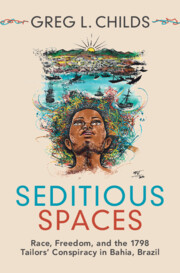
What a difference four years makes. Back in February 2021, still struggling to understand what had just happened at the Capitol, John and Elizabeth spoke with Brandeis historian Greg Childs. He is an expert in Latin American political movements and public space; his Seditious Spaces: Race, Freedom, and the 1798 Conspiracy in Bahia, Brazilis imminently forthcoming from Cambridge UP.
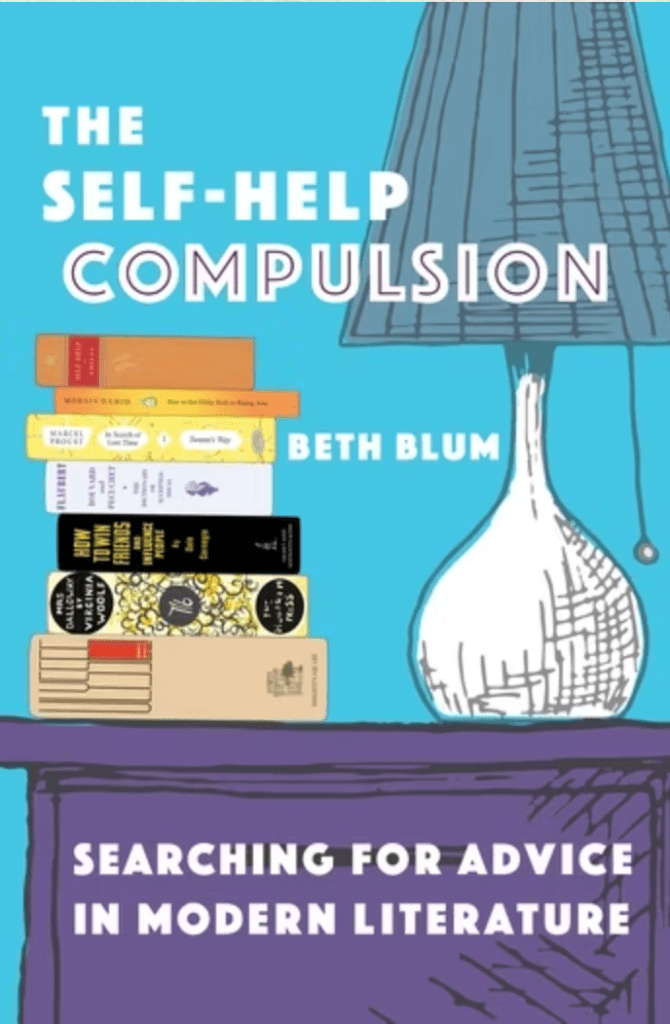
In 202o, she spoke with John about how how self-help went from its Victorian roots (worship greatness!) to the ingratiating unctuous style prescribed by the other-directed Dale Carnegie (everyone loves the sound of their own name) before arriving at the “neo-stoical” self-help gurus of today, who preach male and female versions of “stop apologizing!” You’ll laugh, you’ll cry, you’ll either help yourself or learn how to stop caring.
This June 2020 episode, part of a Global Policing series, was Recall this Book’s first exploration of police brutality, systemic and personal racism and Black Lives Matter. Elizabeth and John were lucky to be joined by by Daniel Kryder and David Cunningham,two scholars who have worked on these questions for decades.
Do we understand racism as the primary driving engine of American inequality?Or do we focus instead on the indirect ways that frequently hard-to-discern class inequality and inegalitarian power relations can produce racially differentiated outcomes? Adaner Usmani, Assistant Professor of Sociology and Social Studies at Harvard and on the editorial board at Catalyst joined Elizabeth and John back in Fall, 2020, to wrestle with the subtle and complex genealogy of Southern plantation economy and its racist legacy.
The largest slave uprising in the 18th century British Caribbean was also a node of the global conflict called the Seven Year’s War, though it isn’t usually thought of that way. In the first few days of the quarantine and our current geopolitical and epidemiological shitshow, John and Elizabeth spoke with Vincent Brown, who had recently published Tacky’s Revolt: The Story of an Atlantic Slave War (Belknap, 2019), centered on a group of enslaved West Africans, known under the term “Coromantees” who were the chief protagonists in this war.
Before she became the host and star of Violent Majorities, the RTB series on Israeli and Indian ethnonationalism, Ajantha Subramanian sat down with Elizabeth and John to discuss The Caste of Merit: Engineering Education in India. It is much more than simply an historical and ethnographic study of the elite Indian Institutes of Technology. Ajantha talked to JP and EF about the language of “merit” and the ways in which it can conceal the continuing relevance of caste (and class, and race) privilege–in India, yes, but also in American and other meritocratic democracies as well.
In the third episode of our Global Policing series, Elizabeth and John spoke back in 2020 with anthropologist Laurence Ralph about The Torture Letters: Reckoning with Police Violence. The book relates the decades-long history in which hundreds of people (mostly Black men) were tortured by the Chicago Police. Fascinatingly, it is framed as a series of open letters that explore the layers of silence and complicity that enabled torture and the activist movements that have helped to uncover this history and implement forms of collective redress and repair. Elizabeth and John ask Laurence about that genre choice, and he unpacks his thinking about responsibility, witnessing, trauma and channels of activism. Arendt’s “banality of evil” briefly surfaces.
“People are always reckoning. People are always trying, no matter how overwhelming the odds may be, people are always trying to fight back.”
“My subject was not my inward self, but…the worlds within me.”
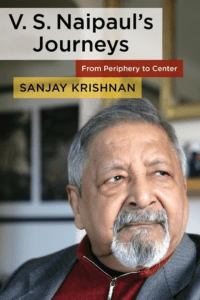
John spoke in 2020 with Sanjay Krishnan, Boston University English professor and Conrad scholar. The topic? His marvelous new book about that grumpiest of Nobel laureates, V. S Naipaul’s Journeys. Krishnan sees the “Contrarian and unsentimental” Trinidad-born but globe-trotting novelist and essayist as early and brilliant at noticing the unevenness with which the blessings and curses of modernity were distributed in the era of decolonization. Centrally, Naipaul realized and reckoned with the always complex and messy question of the minority within postcolonial societies.
Recall This Book first heard from the sociologist of American racism David Cunningham in Episode 36 Policing and White Power. Less than a week after the horrors of January 6th, 2021, he came back for this conversation about “asymmetrical policing” of the political right and left–and of White and Black Americans. His very first book (There’s Something Happening Here, 2004) studied the contrast between the FBI’s work in the 1960’s to wipe out left-wing and Black protests and its efforts to control and tame right-wing and white supremacist movements. That gives him a valuable perspective on the run-up to January 6th–and what may happen next.
John Plotz talked with Samuel Delany, living legend of science fiction and fantasy back in 2019. You probably know him best for breakthrough novels like Dhalgren and Trouble on Triton, which went beyond “New Wave” SF to introduce an intense and utterly idiosyncratic form of theory-rich and avant-garde stylistics to the genre. Reading him means leaving Earth, but also returning to the heady days when Greenwich Village was as caught up in the arrival of Levi-Strauss and Derrida to America as it was in a gender and sexuality revolution.
RTB loves him especially for his mind-bending Neveryon series: did you know that many consider his 1984 novella from that series, “The Tale of Plagues and Carnivals,” (set both inside the world of Neveryon and along Bleecker Street in NY) the first piece of fiction about AIDS in America?
Our Recall this Buck series, back in 2020 and 2021, explored the history of money, ranging from the earliest forms of labor IOUs to the modern world of bitcoin and electronically distributed value. We began by focusing on the rise of capitalism, the Bank of England, and how an explosion of liquidity changed everything.
Chris Desan
We were lucky to do so, just before the Pandemic struck, with Christine Desan of Harvard Law School, who recently published Making Money: Coin, Currency, and the Coming of Capitalism (Oxford University Press, 2014). She is also managing editor of JustMoney.org, a website that explores money as a critical site of governance. Desan’s research explores money as a legal and political project. Her approach opens economic orthodoxy to question by widening the focus on money as an instrument, to examine the institutions and agreements through which resources are mobilized and tracked, by means of money. In doing so, she shows that particular forms of money, and the markets within which they circulate, are neither natural or inevitable.
panda bad, horse good: David Plotz feeds a new friend
So, when John called him up in April 2020 for the Books in Dark Times series, what was his Pandemic reading? The fully absorbing “other worlds” of Dickens and Mark Twain tempt David, but he goes another direction. He picks one book that shows humanity at its worst, heading towards world war. And another that shows how well we can behave towards one another (and even how happy we can be…) at “moments of super liquidity” when everything melts and can be rebuilt.
On a blustery fall morning back in 2019, RTB welcomed Christine Walley, anthropologist and author of Exit Zero: Family and Class in Postindustrial Chicago. In the early 1980s Chris’s father, along with thousands of other steel workers, lost his job when the mills in Southeastern Chicago closed. The book is part of a multimodal project, including the documentary film, “Exit Zero: An Industrial Family Story,” (with director Chris Boebel) and an NEH-funded digitization project of the Southeastern Chicago Historical Museum, a community-based archive of materials related to the neighborhood.