141 The Hyphen Unites: Avi Shlaim on Arab-Jewish Life (Yuval Evri, JP)

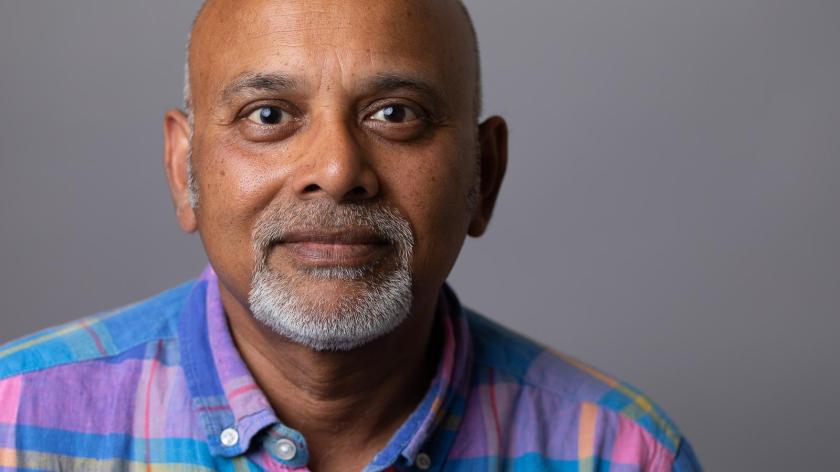
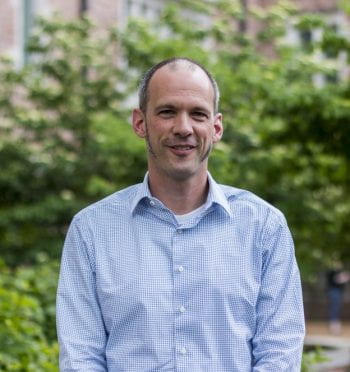
Avi Shlaim, is a celebrated “New Historian” whose earlier work established him as an influential historian of Middle Eastern politics and especially of Israel’s relations with the Arab world. Most recently he has turned to his own Iraqi/Israeli/British past in Three Worlds: Memoirs of an Arab-Jew–which he refers to as an “impersonal autobiography.”

He speaks today to John and his  Brandeis colleague Yuval Evri, the Marash and Ocuin Chair in Ottoman, Mizrahi and Sephardic Jewish Studies. Yuval’s  2020 The Return to Al-Andalus: Disputes Over Sephardic Culture and Identity Between Arabic and Hebrew explores how fluidity in such categories as the “Arab-Jew” becomes a source of resistance to exclusive claims of ownership of land, texts, traditions, or languages.

Continue reading “141 The Hyphen Unites: Avi Shlaim on Arab-Jewish Life (Yuval Evri, JP)”

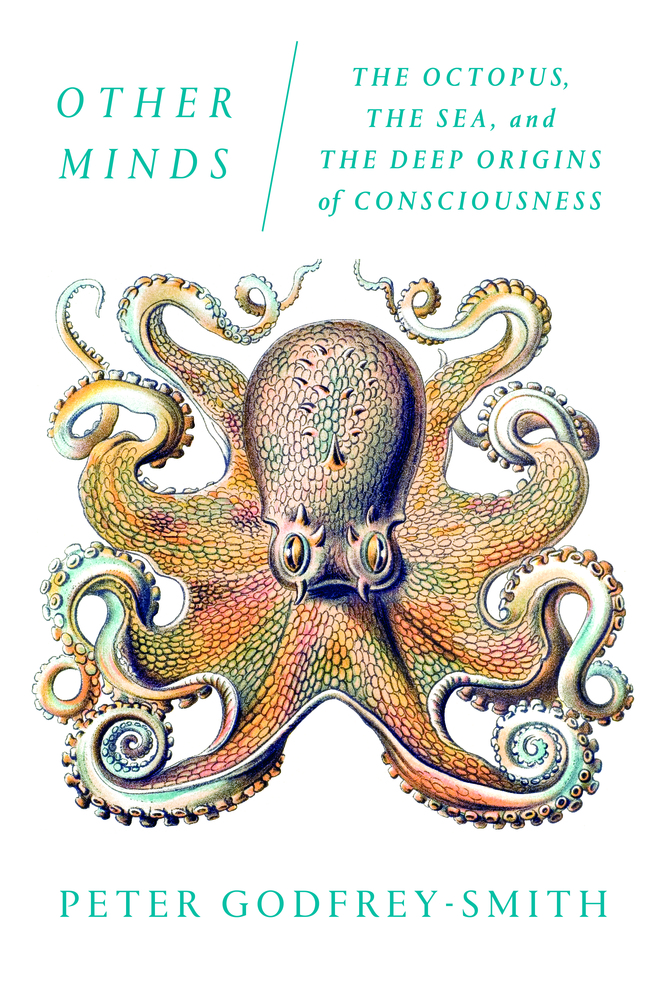
140* Octopus World: Other Minds with Peter Godfrey-Smith (EF, JP)

Peter Godfrey-Smith knows his cephalopods. His truly capacious career includes books such as Theory and Reality (2003; 2nd edition in 2020), Darwinian Populations and Natural Selection (2009)  Metazoa and most recently Living on Earth (John raves about that book here.)

Continue reading “140* Octopus World: Other Minds with Peter Godfrey-Smith (EF, JP)”

139 Recall This Story: Ivan Kreilkamp on Sylvia Townsend Warner’s “Foxcastle” (JP)

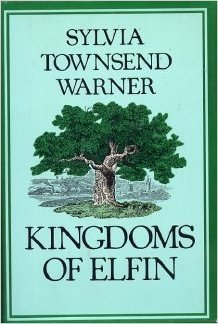
Ivan Kreilkamp, Indiana University English professor and no stranger to Recall This Book, is the author of two books on Victorian literature and one about Jennifer Egan. For this episode of Recall This Story, Ivan reads Sylvia Townsend Warner‘s “Foxcastle. It was first published in The New Yorker in 1975 and became the final story in her final book, Kingdoms of Elfin.

Continue reading “139 Recall This Story: Ivan Kreilkamp on Sylvia Townsend Warner’s “Foxcastle” (JP)”

138c. What Just Happened? David Cunningham (Herbert Hoover gave us Woody Guthrie)


Welcome to the final episode of What Just Happened, a Recall This Book experiment. In it you will hear three friends of RTB reacting to the 2024 election and discussing the coming four years.David Cunningham, chair of Sociology at Washington University in St Louis, is author of Klansville, U.S.A. and There’s something happening Here: The New Left, the Klan, and FBI Counterintelligence His ongoing research includes the recent wave of conflicts around Confederate monuments and other sites of contested memory.

David’s vision of what has changed in 2024 relates to an extended analogy to the election of 1972, when the avowedly racist George (“Segregation….forever“) Wallace almost rode right-wing fury to victory.

Continue reading “138c. What Just Happened? David Cunningham (Herbert Hoover gave us Woody Guthrie)”

138b. What Just Happened? Vincent Brown (Ronald Reagan Gave Us Punk Rock)

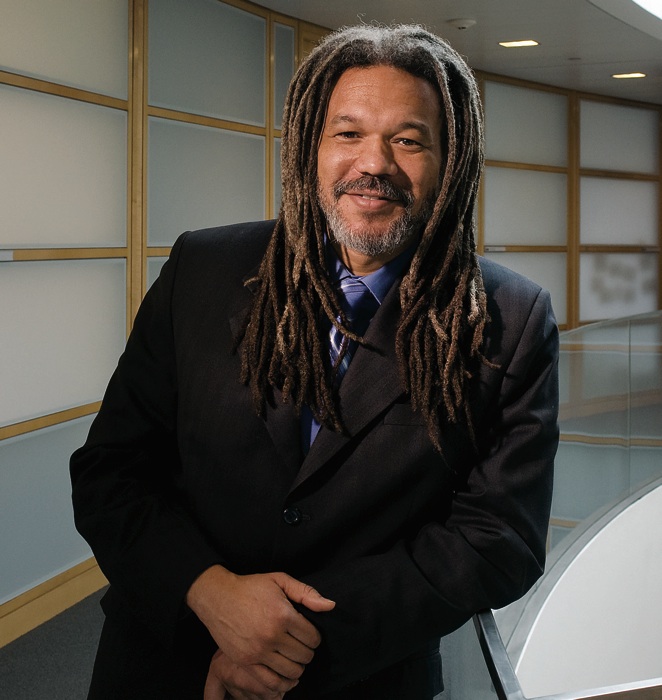
Welcome to What Just Happened, a Recall This Book experiment. In it you will hear three friends of RTB reacting to the 2024 election and discussing the coming four years. In this episode, Vincent Brown (History professor at Harvard) last spoke with us about his own work on Caribbean slave revolts; his many other well known projects include the recent PBS series The Bigger Picture.

Continue reading “138b. What Just Happened? Vincent Brown (Ronald Reagan Gave Us Punk Rock)”

138a. What Just Happened? Mark Blyth (An Existential Fight between Green and Carbon Assets)


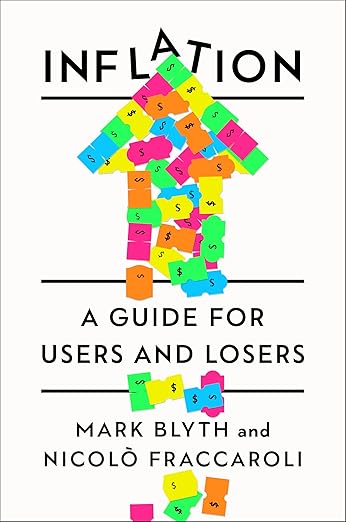
Welcome to What Just Happened, a Recall This Book experiment. In it you will hear three friends of RTB reacting to the 2024 election and discussing the coming four years. Mark Blyth (whose planned February 2020 appearance was scrubbed by the pandemic) is an international economist from  Brown University,  whose many books for both scholars and a popular audience  include Great Transformations (2002), Angrynomics (2020; with Eric Lonergan) and (with Nicolo Fraccaroli) Inflation: A Guide for Users and Losers (New York: Norton 2025).

Continue reading “138a. What Just Happened? Mark Blyth (An Existential Fight between Green and Carbon Assets)”

137 David Peña-Guzmán: Animals dream, which makes them morally considerable (JP)

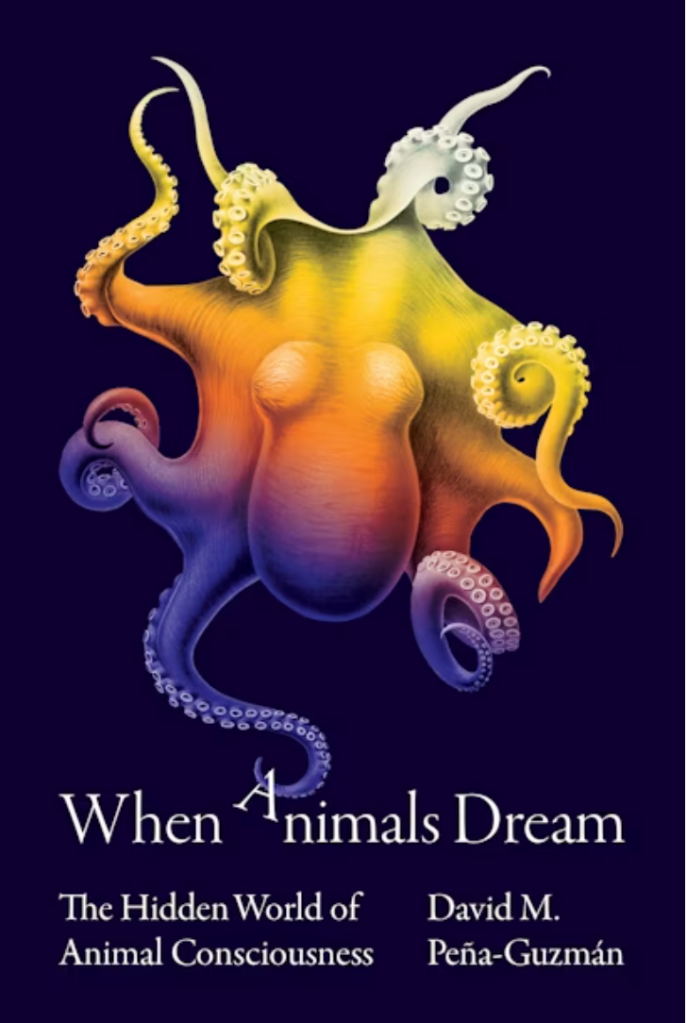
In his marvelous new book, When Animals Dream: The Hidden World of Animal Consciousness, David Peña-Guzmán (SF State as well as the lovely philosophical podcast Overthink) offers up something new in animal studies–“a philosophical interpretation of biological subjectivity.” Although we share no linguistic schema with animals there is lots more evidence than just You Tube (octopuses, dogs, signing chimpanzees, brain scans of dreaming birds etc) to suggest oneiric behaviors and underlying mental states occur all over the animal kingdom. Here is what it means that we are not alone in our dreams…

Continue reading “137 David Peña-Guzmán: Animals dream, which makes them morally considerable (JP)”

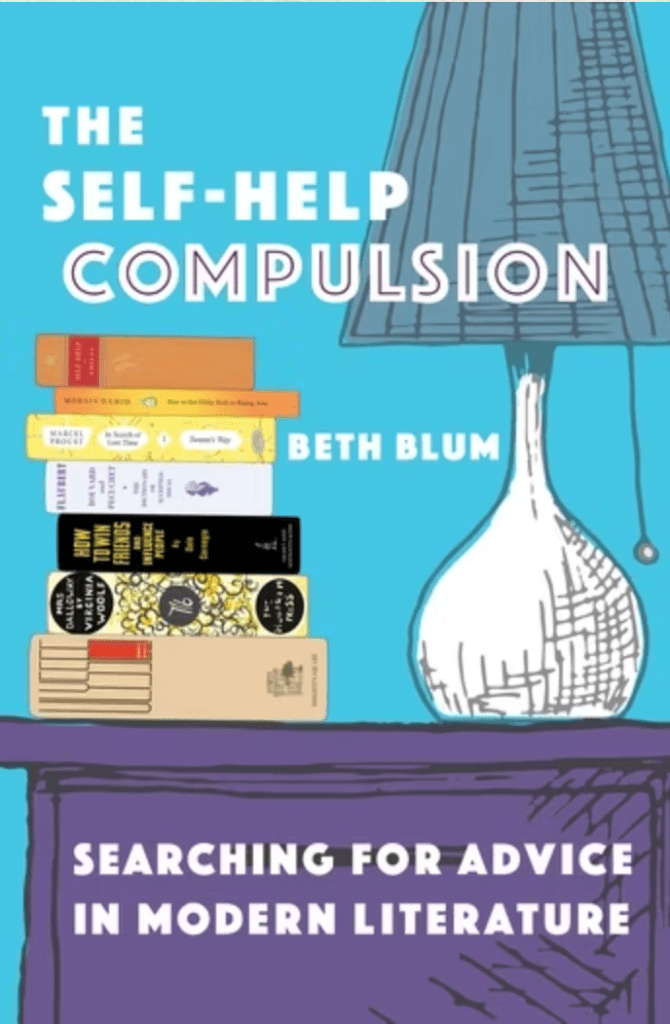
136* Beth Blum on Self-Help, Dale Carnegie to Today (JP)

Beth Blum, Associate Professor of English at Harvard, is the author of The Self-Help Compulsion (Columbia University Press 2019).

In 202o, she spoke with John about how how self-help went from its Victorian roots (worship greatness!) to the ingratiating unctuous style prescribed by the other-directed Dale Carnegie (everyone loves the sound of their own name) before arriving at the “neo-stoical” self-help gurus of today, who preach male and female versions of “stop apologizing!” You’ll laugh, you’ll cry, you’ll either help yourself or learn how to stop caring.

Continue reading “136* Beth Blum on Self-Help, Dale Carnegie to Today (JP)”

135.2 Recall This Story: Part 2 of Linda Schlossberg on Alice Munro’s “Miles City, Montana” (JP)

{You will want to start with Part 1 of episode 135; it can be found right here]

Linda Schlossberg, author of Life in Miniature, who teaches at Harvard, joins RTB to read and explore one of her favorite Alice Munro stories, “Miles City, Montana” in our new series, Recall This Story.

Continue reading “135.2 Recall This Story: Part 2 of Linda Schlossberg on Alice Munro’s “Miles City, Montana” (JP)”

135.1 Recall This Story: Part 1 of Linda Schlossberg reading and discussing Alice Munro’s “Miles City, Montana” (JP)

[this is the first half of the story; the second half can be found here]

Linda Schlossberg, author of Life in Miniature, who teaches at Harvard, joins RTB to read and explore one of her favorite Alice Munro stories, “Miles City, Montana” in our new series, Recall This Story.

Continue reading “135.1 Recall This Story: Part 1 of Linda Schlossberg reading and discussing Alice Munro’s “Miles City, Montana” (JP)”

134* Etherized: Anne Enright in a Novel Dialogue conversation (Paige Reynolds, JP)

Anne Enright, writer, critic, Booker winner, kindly made time back in 2023 for Irish literature maven Paige Reynolds and for John Plotz in his role as host for our sister podcast, Novel Dialogue. In this conversation, she reads from The Wren, The Wren and says we don’t yet know if the web has become a space of exposure or of authority. We can be sure that the state of diffusion we all exist in is “pixilated”–though perhaps we can take comfort from the fact that “Jeff Bezos…is not as interested in your period as you might think.”

Continue reading “134* Etherized: Anne Enright in a Novel Dialogue conversation (Paige Reynolds, JP)”

133 Beri Marusic on Grief and other Expiring Emotions (Katie Elliott, JP)

Why is that when a loved one dies, grief seems inescapable–and then diminishes? The brilliant Edinburgh philosopher Berislav Marusic‘s “Do Reasons Expire? An Essay on Grief” begins with his grief for the unexpected and early loss of his mother: “I stopped grieving or at least the grief diminished, yet the reason didn’t really change. It’s not like that my mother stopped mattering to me or that I stopped loving her, but still this change in grief somehow seemed reasonable.” What are philosophers and the rest of us to make of this durable insight?

Continue reading “133 Beri Marusic on Grief and other Expiring Emotions (Katie Elliott, JP)”

132* Policing and White Power with David Cunningham and Daniel Kryder


This June 2020 episode, part of a Global Policing series, was Recall this Book’s first exploration of police brutality, systemic and personal racism and Black Lives Matter. Elizabeth and John were lucky to be joined by by Daniel Kryder and David Cunningham,two scholars who have worked on these questions for decades.

Many of the mechanisms that create an oppressed and subordinated American community of color can seem subtle and indirect, despite the insidious ways they pervade housing law (The Color of Law), education (Why Are All the Black Kids Sitting TogetherSavage Inequalities) and the carceral state (The Condemnation of BlacknessThe New Jim Crow, Locking Up Our Own).

Continue reading “132* Policing and White Power with David Cunningham and Daniel Kryder”

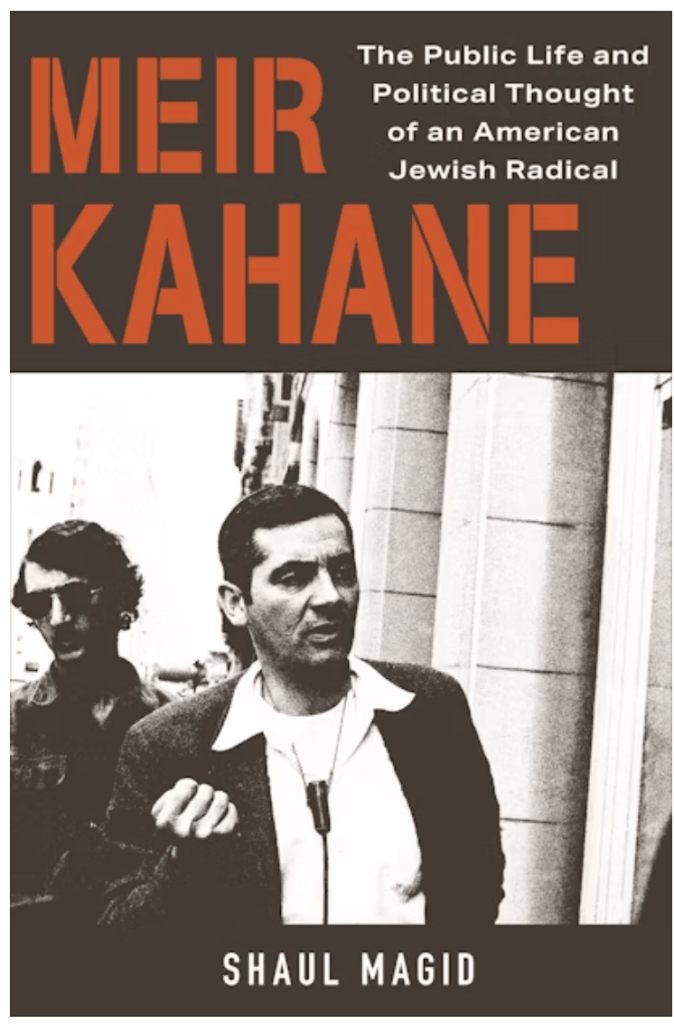
131 Shaul Magid on the Jewish Radicalism of Meir Kahane (JP, Eugene Sheppard)

“For Kahane, the greatest enemy of the Jews was not the black nationalist, the greatest enemy of the Jews was not the Arabs. The greatest enemy of the Jews was liberalism.”

Shaul Magid, Distinguished Fellow in Jewish Studies at Dartmouth College and Rabbi of the Fire Island Synagogue, is a celebrated and brilliant scholar of radical and dissident Judaism in America. He joins John and his Brandeis colleague Eugene Sheppard to discuss his book on Jewish Defense League Founder and the surprising American origins of Jewish radicalism not of the left but of the right.

Continue reading “131 Shaul Magid on the Jewish Radicalism of Meir Kahane (JP, Eugene Sheppard)”

130* Adaner Usmani, Racism as Power Relation (EF, JP)

Do we understand racism as the primary driving engine of American inequality?Or do we focus instead on the indirect ways that frequently hard-to-discern class inequality and inegalitarian power relations can produce racially differentiated outcomes? Adaner Usmani, Assistant Professor of Sociology and Social Studies at Harvard and on the editorial board at Catalyst joined Elizabeth and John back in Fall, 2020, to wrestle with the subtle and complex genealogy of Southern plantation economy and its racist legacy.

Continue reading “130* Adaner Usmani, Racism as Power Relation (EF, JP)”

129* Vince Brown, Vectors ( EF, JP)

The largest slave uprising in the 18th century British Caribbean was also a node of the global conflict called the Seven Year’s War, though it isn’t usually thought of that way. In the first few days of the quarantine and our current geopolitical and epidemiological shitshow, John and Elizabeth spoke with Vincent Brown, who had recently published Tacky’s Revolt: The Story of an Atlantic Slave War (Belknap, 2019), centered on a group of enslaved West Africans, known under the term “Coromantees” who were the chief protagonists in this war.

Continue reading “129* Vince Brown, Vectors ( EF, JP)”

128 Recall This Story: Steve McCauley excavates John Cheever’s “The Five-Forty-Eight” (JP)

We debut a new feature: Recall This Story, in which a contemporary writer picks out a bygone story to read and to analyze. Surely there is no better novelist to begin with than RTB’ shouse sage, Steve McCauley.

And not just because he’s got the pipes to power through a whole fantabulous John Cheever story. “The Five-Forty-Eight” (published in The New Yorker 70 years ago) is about sordidness uncovered, a train, and a face in the dirt. It ticks almost every Cheever box, evoking an infinitude of lives unled elsewhere while ostensibly documenting nothing more than the time to takes to down a couple of drinks, scuttle feverishly through some midtown streets, and take a lumbering commuter train out of the city.

Continue reading “128 Recall This Story: Steve McCauley excavates John Cheever’s “The Five-Forty-Eight” (JP)”

127* Helena De Bres on Life-Writing (JP, EF)

How does the past live on within our experience of the present? And how does our decision to speak about or write down our recollections of how things were change our understanding of those memories–how does it change us in the present? Asking those questions back in 2019 brought RTB into the company of memory-obsessed writers like Virginia Woolf and Marcel Proust. Discussing autofiction by Rachel Cusk, Sheila Heti and Karl Ove Knausgaard, John and Elizabeth begin to understand that the line between real-life fact, memory, and fiction is not quite as sharp as we had thought.

Continue reading “127* Helena De Bres on Life-Writing (JP, EF)”

125*David Ferry, Roger Reeves, and the Underworld

In Memoriam: David Ferry (1924-2023)

“I feel the feathers softly gather upon

My shoulders and my arms, becoming wings.

Melodious bird I’ll fly above the moaning

Bosphorus, more glorious than Icarus,

 I’ll coast along above the coast of Sidra

 And over the fabled far north Hyperborean steppes.”

— from “To Maecenas”, The Odes of Horace, II: 20.

Continue reading “125*David Ferry, Roger Reeves, and the Underworld”

124 The Reeducation of Race with Sonali Thakkar (JP)

NYU professor Sonali Thakkar’s brilliant first book, The Reeducation of Race, begins as a mystery of sorts. When and why did the word “equality” get swapped out of the 1950 UNESCO Statement on Race, to be replaced by “educability, plasticity”? She and John sit down to discuss how that switcheroo allowed for a putative anti-racism that nonetheless preserved a sotto voce concept of race.

They discuss the founding years of UNESCO and how it came to be that Jews were defined as the most plastic of races, and “Blackness” came to be seen as a stubbornly un-plastic category. The discussion ranges to include entwinement and interconnectedness, and Edward Said’s notion of the “contrapuntal” analysis of the mutual implication of seemingly unrelated historical developments. Sonali’s “Recallable Book” shines a spotlight on Aime Cesaire’s Discourse on Colonialism–revised in 1955 to reflect ongoing debates about race and plasticity.

Continue reading “124 The Reeducation of Race with Sonali Thakkar (JP)”