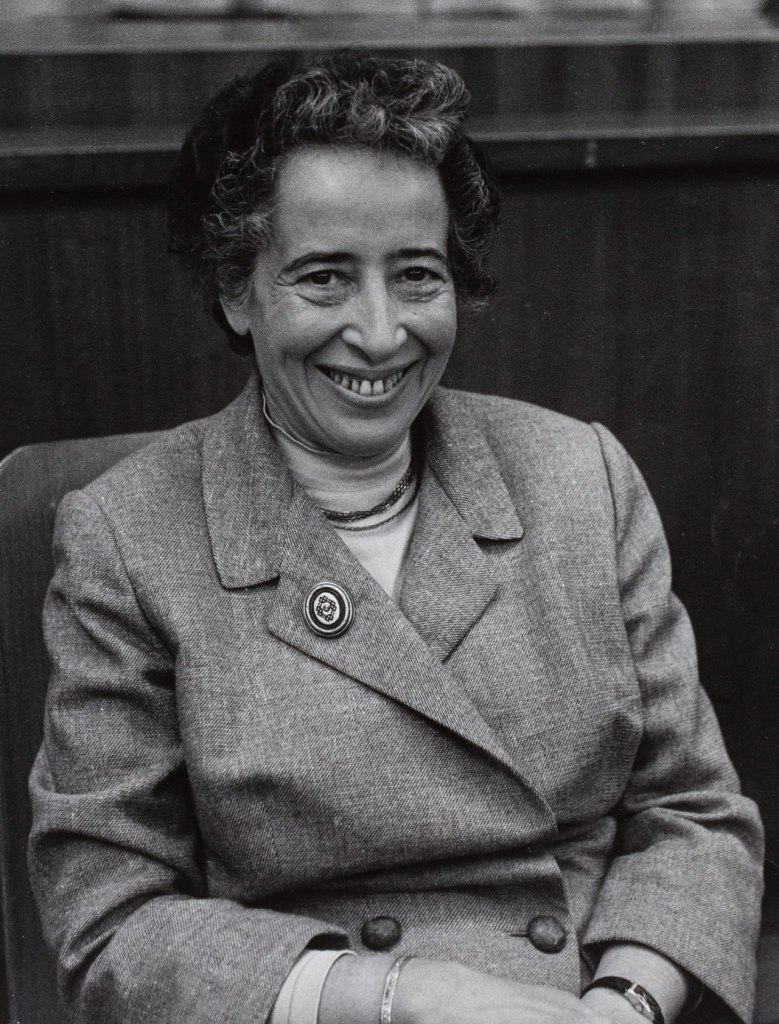
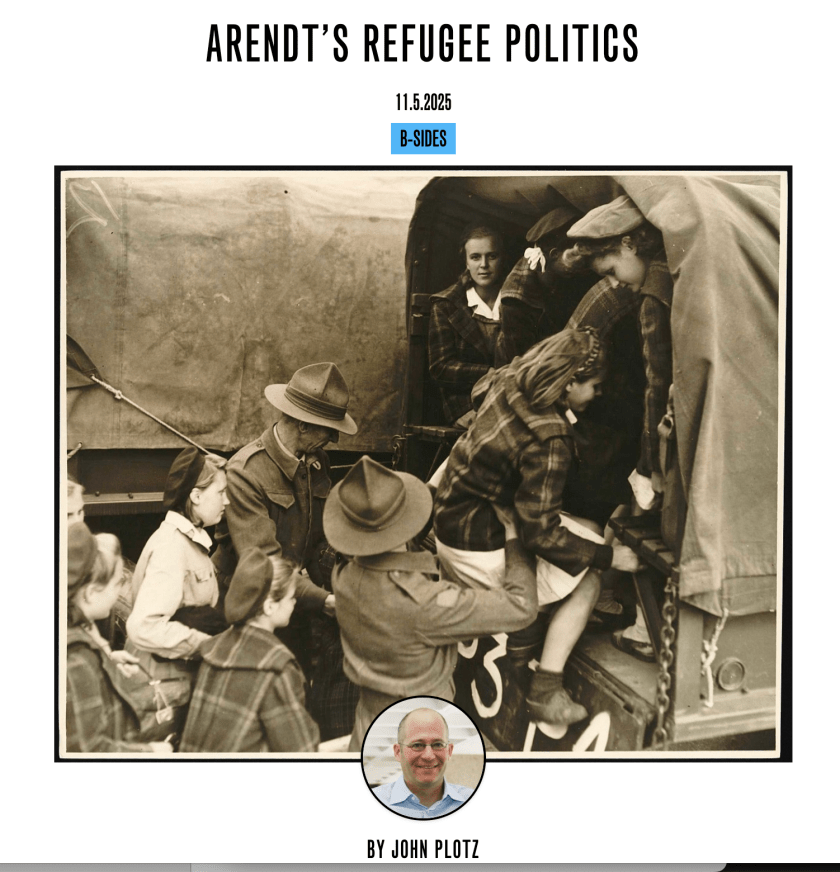
John’s “Arendt’s Refugee Politics” came out in Public Books in early November. He made the case that his favorite political philosopher, Hannah Arendt is an opponent both of identity politics and also of a cosmpolitan universalism that is blind to all the differences (of race, gender, belief) that make us who though not what we are. Going back to one of the first pieces she published in English, a 1943 essay from Menorah called “We Refugees“, he reflected on how amazingly Arendt was able to air her unease about militant Zionism at the same time she warned fellow arrivals in America from rushing to disguise their origins.
Glenn has lifetime of insights about the boundary markers and easy to miss shibboleths that define life in divided places–and in divided times. In Belfast, everyone learns to use words without being marked out: how do you avoid uttering “the one word that gets you killed”?
Ben Fountain is far more than just the author of Billy Lynn’s Long Halftime Walk, which won RTB hearts and minds (and the National Book Award) long before it became a weird Ang Lee movie.
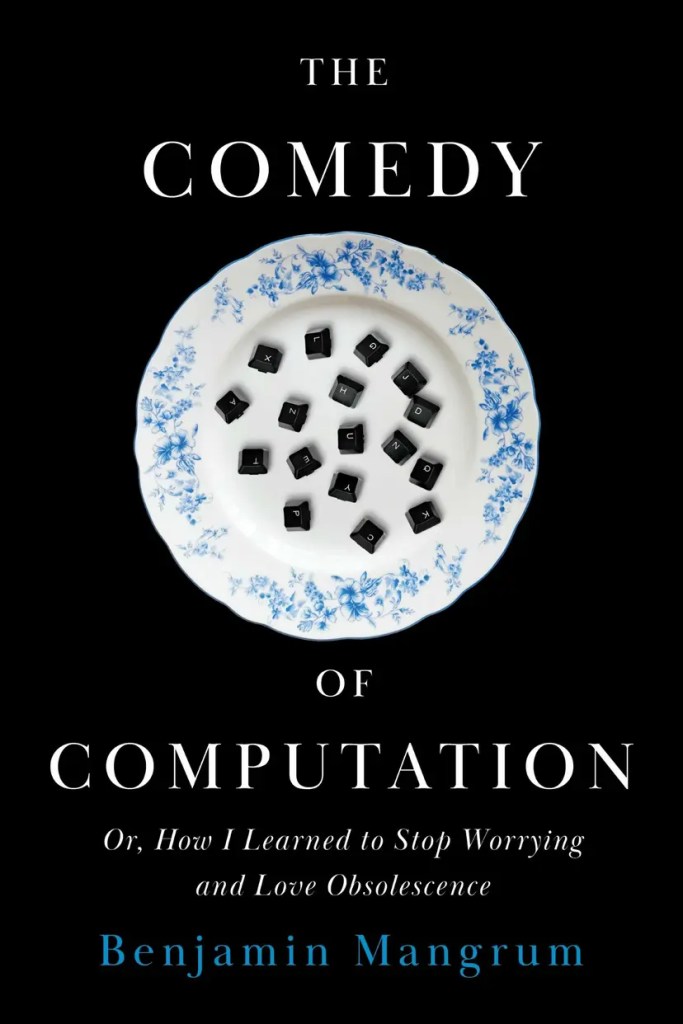
When does comedy become more than a laugh? Ben Mangrum of MIT joins RtB to discuss The Comedy of Computation: Or, How I Learned to Stop Worrying and Love Obsolescence, which in some ways is organized around “the intriguing idea that human knowledge work is our definitive feature and yet the machines we are ourselves made are going to replace us at it.” Comedyhas provided a toolbox (Charles Tilly calls them “collective repertoires”) for responding to the looming obsolescence of knowledge workers.
RtB loves the present-day shadows cast by neglected books, which can suddenly loom up out of the backlit past. So, you won’t be shocked to know that John has also been editing a Public Books column called B-Side Books. In it, around 50 writers (Ursula Le Guin was one) have made the case for un-forgetting a beloved book. Now, there is a book that collects 40 of these columns. Find it as your local bookstore, or Columbia University Press, or Bookshop, (or even Amazon).
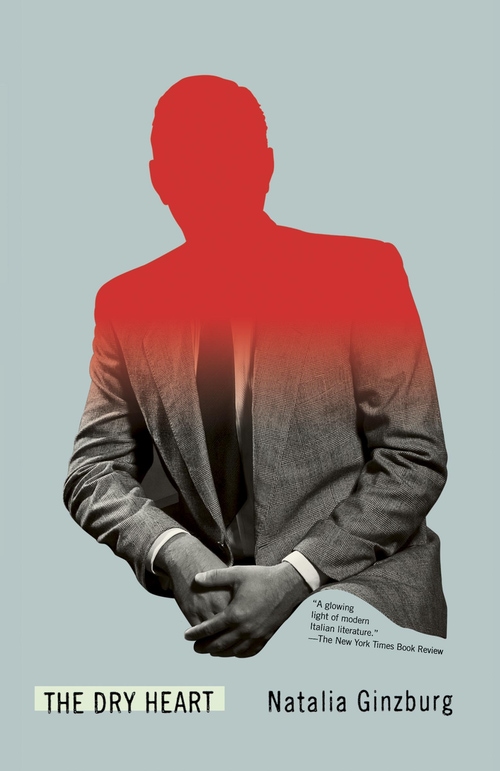
Like our podcast, B-Side Books focuses on those moments when books topple off their shelves, open up, and start bellowing at you. The one that enthralled Merve Emre (Wesleyan professor and author ofsuch terrific works as The Personality Brokers) was a novella by the luminous midcentury Italian pessimist, Natalia Ginzburg. And if you think you know precisely why a mid-century Italian writer would have a dark and bitter view of the world (already thinking of the Nazi shadows in work by Italo Calvino, Primo Levi and Giorgio Bassani) Ginzburg’s The Dry Heart will have you thinking again.
An Arendt expert has arrived at Arendt-obsessed Recall This Book. Lyndsey Stonebridge discusses her widely praised 2024 We Are Free to Change the World: Hannah Arendt’s Lessons in Love and Disobedience. Lesley sees both radical evil and the banality of evil at work in Nazi Germany and in the causes of suffering and death in Gaza today. She compares the moral idiocy of authoritarians (like the murderous Nazis and those who are starving Gaza) to that of philosophers who cannot hear the echoes of what they are doing.
Lesley and John discuss Arendt’s belief in the fragile ethics of the Founding Fathers, with its checks and balances and its politics based not on emotion but cool deliberation. Arendt could say that “The fundamental contradiction of [America] is political freedom coupled with social slavery,”” but why was she too easy on the legacy of imperial racism in America, missing its settler-colonial logic? Arendt read W. E. B. DuBois (who saw and said this) but perhaps, says Lesley, not attentively enough.
All of that, though, only prepared the ground for The Ministry for the Future, his 2020 vision of a sustained governmental and scientific rethinking of humanity’s fossil-burning, earth-warming ways. Flanked by JP, KSR’s friend and ally Elizabeth Carolyn Miller (celebrated eco-critic and UC Davis professor) asked him to reflect on the book’s impact in this conversation with our sister podcast, Novel Dialogue.
John recently published “Lying in Politics: Hannah Arendt’s Antidote to Anticipatory Despair” in Public Books. It makes the case against anticipatory despair in the face of the Trump administration’s relentless campaign of lies, half-lies, bluster, and bullshit by turning for inspiration to his favorite political philosopher, Hannah Arendt.
Half a century ago, in “Lying in Politics: Reflections on the Pentagon Papers” (1971) she showed how expedient occasional lies spread to become omnipresent–not just in how America’s campaigns in Vietnam were reported, but throughout Nixon-era governance.
In RTB 151, you heard the Kristin, Nasser and John discussing what might happen before their Northeastern Victorian Studies Association conference actually took place. This episode, recorded a few weeks later, looks back at what actually occurred and see how it aligned with or defied the panelists’ prior expectations.
The three discuss what it means to have an emergent and residual shticks; differences between how you prepare to talk to undergraduates and your peers matter, and the three agree that going in without any expectations of your audience makes for a weaker presentation. Imaginary interlocution makes for better pre-gaming.
Most scholars are both haunted, even undone, by the task of writing papers for peers and traveling to strange campuses to deliver them. Yet we keep it up–we inflict it on our peers, we inflict it on ourselves. Why?
To answer that question, Recall This Book assembled three (if you count John) scholars of Victorian literature asked to speak at the Spring 2025 Northeastern Victorian Studies Association conference. Their discussion began with the idea that agreeing to give papers is an act of “externalized self-promising” and ranged across the reasons that floating ideas before our peers is terrifying, exhilarating and ultimately necessary.
Kristin Mahoney‘s books include Literature and the Politics of Post-Victorian Decadence (Cambridge UP, 2015) and Queer Kinship After Wilde: Transnational Decadence and the Family. Nasser Mufti ‘s first scholarly book was Civilizing War and he is currently working on a monograph about what Britain’s nineteenth century looks like from the perspective of such anti-colonial thinkers as C.L.R. James and Eric Williams. (RTB listeners don’t need to hear about John or his Arendt obsession.
The three discuss Foucault’s notion of capillarity a form of productive constraint, which Nasser uses to characterize both early 20th century Orientalism, and the paradigms of postcolonialism that replaced it,
Paul Saint Amour’s chapter on Ford Madox Ford is in Tense Future.
John Guillory on the distinctions between criticism and scholarship in Professing Criticism; the rhizomatic appeal of B-Side Books.
The “hedgehog and the fox” as a distinction comes from a poem by Archilochus—and sparked Isaiah Berlin’s celebrated essay of the same name.
Back in 2019, John spoke with the celebrated comic novelist Stephen McCauley. Nobody knows more about the comic novel than Steve–his latest is You Only Call When You’re in Trouble, but John still holds a candle for his 1987 debut, Object of My Affection, made into a charming Jennifer Aniston Paul Rudd movie. And there is no comic novelist Steve loves better than Barbara Pym, a mid-century British comic genius who found herself forgotten and unpublishable in middle age, only to roar back into print in her sixties with A Quartet in Autumn. Steve and John’s friendship over the years has been sealed by the favorite Pym lines they text back and forth to one another, so they are particularly keen to investigate why her career went in this way.
Steve McCauley
In the episode, they talk about some of these favorite sentences from Pym, and then turn to the comic novel as a genre. They talk about the difference between humorous and comic writing, the earthiness of comedy, whether comic novels should have happy or sad endings, and whether the comic novel is a precursor to, or an amoral relief from, the sitcom. They also discuss some of Steve’s fiction, including his Rain Mitchell yoga novels. In Recallable Books John recommends Pictures from an Institution by Randall Jarrell and Steve recommends After Claude by Iris Owens.
Emilie Diouf of Brandeis English, whose monograph on genocide and trauma is forthcoming, joins John to speak with the celebrated French journalist and activist Rokhaya Diallo. Diouf places Diallo within a transnational black intellectual tradition, founded in the interwar period in the Negritude movement; it was then that Paulette, Jeanne, and Anne Nardal’s literary salon became a meeting ground for African, Antillean, and African-American intellectuals, in the Parisian suburb of Clamart.
The three discuss the slowly changing racial climate in France and globally; how to counter ethnonationalism; as well as the currents of dissent or disdain that threaten to disrupt even leftwing political solidarity.
Mentioned in the Episode
Diallo has directed 8 documentaries among which her 2013 award winning film, Les Marches de la Liberté (Steps to Freedom) . She is also the author of many books, including most recently, La France tu l’aimes ou tu la fermes or France, Love it or Shut it, a collection of her major articles on the “struggle against oppression in France and globally.”
2005 Clichy-sous-bois, a Paris banlieue, was the site of major unrest. Zyed Benna, 17, of Tunisian descent, and Bouna Traoré, 15, of Mauritanian descent, died tragically in a substation while trying to avoid detention.
The leading French TV station, TF1, made waves (and history) by hiring Harry Roselmack in 2016
Back in 2021, John and Elizabeth sat down with Brandeis string and quantum theorist Albion Lawrence to discuss cooperation versus solitary study across disciplines. They sink their teeth into the question, “Why do scientists seem to do collaboration and teamwork better than other kinds of scholars and academics?”
The conversation ranges from the merits of collective biography to the influence of place and geographic location in scientific collaboration to mountaineering traditions in the sciences. As a Recallable Book, Elizabeth champions The People of Puerto Rico, an experiment in ethnography of a nation (in this case under colonial rule) from 1956, including a chapter by Robert Manners, founding chair of the Brandeis Department of Anthropology. Albion sings the praises of a collective biography of the Art Ensemble of Chicago, A Message to Our Folks. But John stays true to his Victorianist roots by praising the contrasting images of the withered humanist Casaubon and the dashing young scientist Lydgate in George Eliot’s own take on collective biography, Middlemarch.
First image taken of a black hole by a collaboration of scientists for the Event Horizon Telescope (EHT) project
Brown explains how the very categories of “the wealthy” and “the poor” had to be invented in late Antiquity. Hence the importance of civic euergetism in the Greek and Roman worldview–i.e. benefaction and charity strictly confined to the good of the city.
John joins Lori Allen and Ajantha Subramanian for the roundup episode of the second series of Violent Majorities, focusing on long-distance ethnonationalism. Looking back at their conversations with Peter Beinart on Zionism and Subir Sinha on Hindutva, Lori begins by asking whether Peter underestimates the material entanglements keeping Jewish American support for Israel in place. Ajantha wonders if a space has been opened up by Zionism’s more naked dependence on coercion and brute force. When John expresses puzzlement about the fervent ethnonationalism of minorities within a pluralistic society Lori and Ajantha point out that a sense of minority vulnerability may heighten the allures of long-distance ethnonationalism.
Lori Allen and Ajantha Subramanian continue their second series on Violent Majorities. Their previous episode featured Peter Beinart on Zionism as long-distance ethnonationalism; here they speak with Subir Sinha, who teaches at SOAS University of London, comments on Indian and European media, and is a member of a commission of inquiry exploring the 2022 unrest between Hindus and Muslims in Leicester, UK.
The catalysts he identifies for the rise of Hindu nationalism (Hindutva) include the emergence of new middle classes after economic liberalization, the rise of Islamophobia after 9/11, the 2008 crisis in capitalism, and the spread of new communications technologies.
Political anthropologists Ajantha Subramanian and Lori Allen are back to continue RTB’s Violent Majorities series with a set of three episodes on long-distance ethno-nationalism. Today, they speak with Peter Beinart (an editor at Jewish Currents and Professor of Journalism and Political Science at the City University of New York) about his just-released book,Being Jewish After the Destruction of Gaza: A Reckoning. It aims to mobilize Jewish religious ethics and teachings to reach a Jewish-American audience shaped by Zionism. Beinart seeks to debunk myths that prevent many from realizing that the moral abominations committed against Palestinians are part of the Israeli settler-colonial-nation-state project.
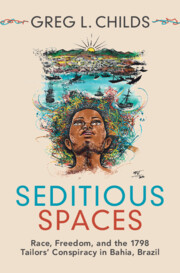
What a difference four years makes. Back in February 2021, still struggling to understand what had just happened at the Capitol, John and Elizabeth spoke with Brandeis historian Greg Childs. He is an expert in Latin American political movements and public space; his Seditious Spaces: Race, Freedom, and the 1798 Conspiracy in Bahia, Brazilis imminently forthcoming from Cambridge UP.
Avi Shlaim, is a celebrated “New Historian” whose earlier work established him as an influential historian of Middle Eastern politics and especially of Israel’s relations with the Arab world. Most recently he has turned to his own Iraqi/Israeli/British past inThree Worlds: Memoirs of an Arab-Jew–which he refers to as an “impersonal autobiography.”