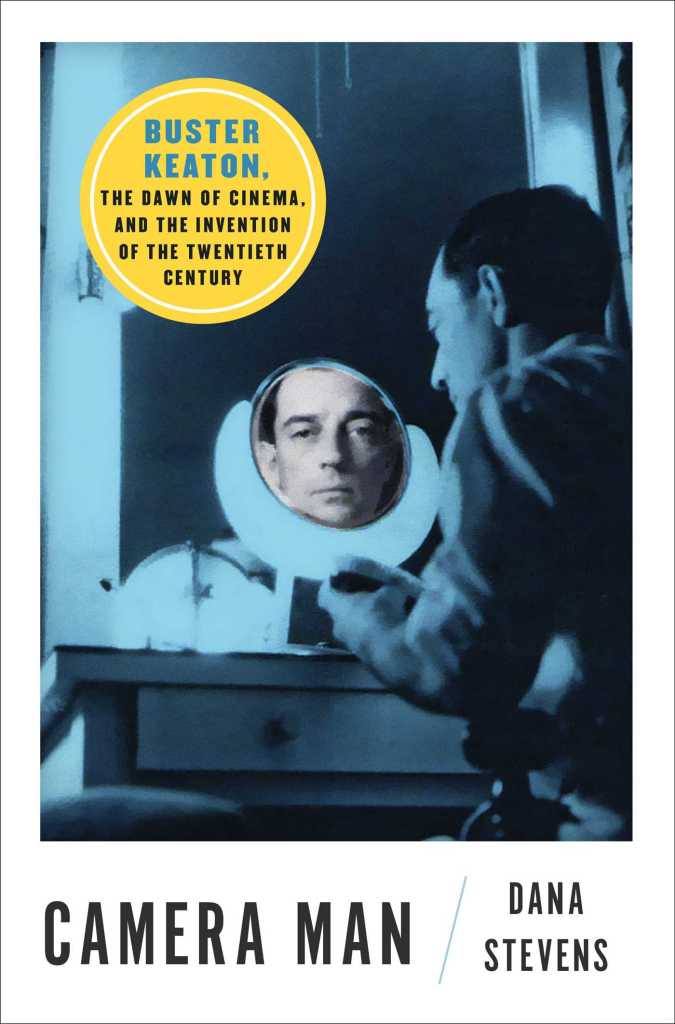
Dana Stevens joins Elizabeth and John to discuss Camera Man: Buster Keaton, the Dawn of Cinema and the Invention of the Twentieth Century. Her fantastic new book serves as occasion to revel in the work and working world of Buster Keaton, that “solemn, beautiful, perpetually airborne man.” Although packed with fascinating tidbits from Keaton’s life, Camera Man is much more than just a biography. It performs its own airborne magic, lightly traversing topics like the crackdown on the use of children in vaudeville, the fluidity of roles before and behind the camera in early Hollywood and the doors that were briefly (ever so briefly) opened for female directors.
Among other treats, Dana unpacks one of Keaton’s early great “two-reelers” One Week ( a spoof of brisk upbeat industrial films) and his parodic “burlesques” e.g. of Lillian Gish.
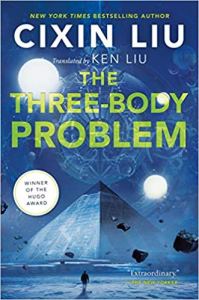
Our first August rebroadcast was John and Pu’s 2019 interview with SF superstar Cixin Liu (you may want to re-listen to that episode before this one!). Here, they reflect on the most significant things that Liu had said, and to ponder the political situation for contemporary Chinese writers who come to the West to discuss their work.
In the original interview, Pu leans forward to fine-tune a translation….
They consider whether our world is like a cabinet in a basement, and what kind of optimism or pessimism might be available to science fiction writers, and extend the conversation from their interview about world building, realism, and film. They compare the interview to a recent profile of Liu in The New Yorker, and ponder the advantages and disadvantages of pressing writers to weigh in on the hot-button topics of the day (hint: RTB made the right choice!).
John and Pu Wang, a Brandeis professor of Chinese literature, spoke with science-fiction genius Cixin Liu back in 2019. His most celebrated works include The Three Body Problem, The Dark Forest, and Death’s End.
When he visited Brandeis to receive an honorary degree, Liu paid a visit to the RTB lair to record this interview. Liu spoke in Chinese and Pu translated his remarks in this English version of the interview (the original Chinese conversation is at 刘慈欣访谈中文版 Episode 14c).
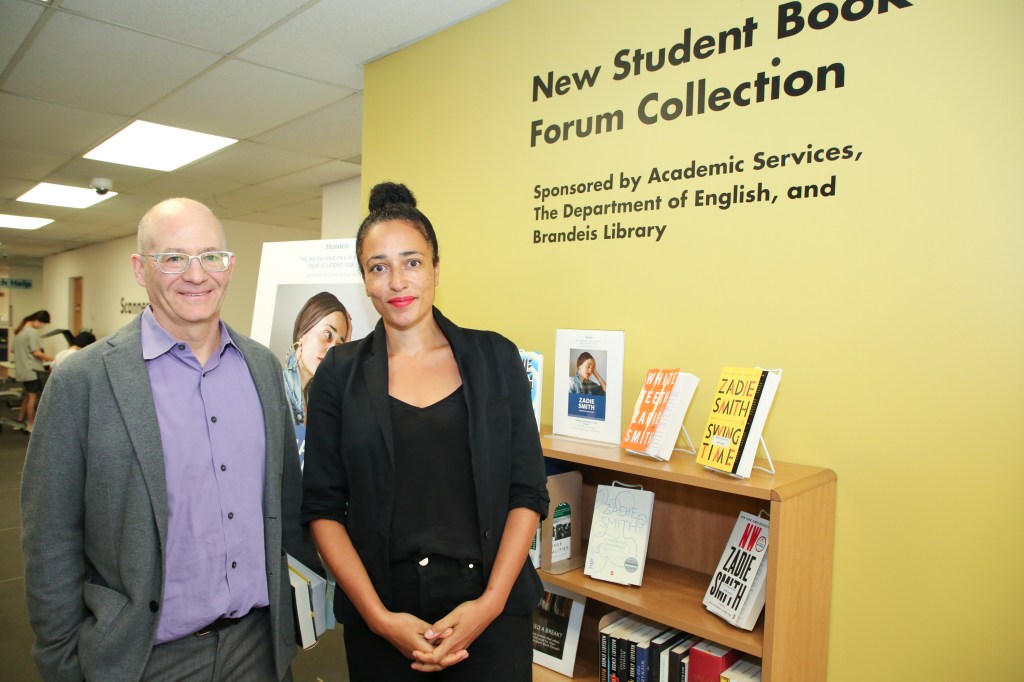
In this 2019 conversation, rebroadcast now to follow up RTB 82, Elizabeth and John try their best to unpack Zadie Smith’s take on sincerity, authenticity and human sacredness; the “golden ticket” dirty secret behind our hypocritical academic meritocracy; surveillance capitalism as the “biggest capital grab of human experience in history;” and her genealogy of the novel. If we had to sum the day up with a few adjectives (and we do): funny, provocative, resplendent, chill, generous, cantankerous.
In this 2019 episode, John interviews the celebrated British writer Zadie Smith. Zadie’s horror at the idea of rereading her own novels opens the show; she can more easily imagine rewriting one (as John’s beloved Willa Cather once did) than having to go through them all again. From there the conversation quickly moves through Brexit (oh, the inhumanity!) and what it means to be a London–no, a Northwest London–writer before arriving at her case against identity politics. That case is bolstered by a discussion of Hannah Arendt on the difference between who and what a person is. As Zadie puts it, “When you say my people, you can[‘t] know for certain who those people are by looking at them and by hearing what they have to say. I think what fiction as a kind of philosophy always assumed is that what people make manifest is not all that people are. There’s a great part of human selves which are hidden, unknown to the self, obscure, and that’s the part that fiction is interested in.”
Since the original airing of this episode in June 2021, Roger Reeves’ second book Best Barbarian was published by W.W. Norton, and the paperback edition of David Ferry’s translation of The Aeneid was published by the University of Chicago Press.
Their tongues are ashes when they’d speak to us.
David Ferry, “Resemblance”
The underworld, that repository of the Shades of the Dead, gets a lot of traffic from heroes (Gilgamesh, Theseus, Odysseus, Aeneas) and poets (Orpheus, Virgil, Dante). Some come down for information or in hopes of rescuing or just seeing their loved ones, or perhaps for a sense of comfort in their grief. They often find those they have loved, but they rarely can bring them back. Comfort they never find, at least not in any easy way.
Rajiv Mohabir is a dazzling poet of linguistics crossovers, who works in English, Bhojpuri, Hindi and more. He is as prolific as he is polyglot (three books in 2021!) and has undertaken a remarkable array of projects includes the prizewinning resurrection of a forgotten century-old memoir about mass involuntary migration. (If you don’t need to read any further, Listen to the episode here).
He joined John and first-time host Ulka Anjaria (English prof, Bollywood expert and Director of the Brandeis Mandel Center for the Humanities) in the old purple RtB studio. During the conversation, Rajiv read and in one case sang poems from his wonderful recent books, Cutlish and Antiman.
Parmigianino – Circe and the Companions of Ulysses
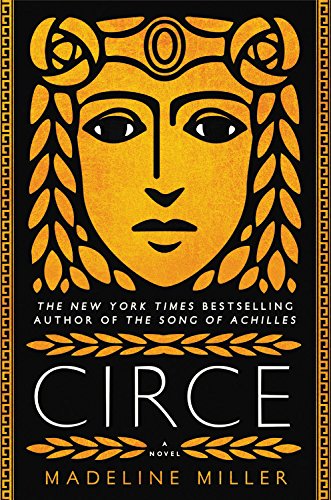
Madeline Miller has made a name for herself by retelling Greek myths; she calls it literary adaptation or mythological realism. Her 2012 debut novel The Song of Achilles (Orange prize winner), retells an episode from the Iliad. Circe, published in 2018, is a retelling and expansion of the Odyssey from the perspective of Circe.
In Homer’s Odyssey, Circe is a witch who lives on the island of Aiaia and turns visitors into beasts. She traps Odysseus’s men this way, but with his cleverness and help from the gods, Odysseus himself evades her tricks, frees his men, and wins her over. She is an important ally, telling him how to visit the underworld and return home. As the introduction to the RtB conversation with Miller puts it, though, she only has a “bit part.” Reflecting on her approach to retelling Circe’s story, Miller tells RtB, “I do feel like it’s a corrective in the sense that it’s a balancing […] We’ve had three thousand years of the male heroic tradition. Can we just pull on that a little bit, and bring the female voices up?”
Retellings are intensified stories. When you read a retelling, you read at least two stories at once, like the doubled vision of blurry eyes. Because of this, I was fascinated to see that Circe in Miller’s retelling has a similarly doubled vision of herself. She constantly sees herself as men see her, constantly hears her story as a man would tell it.
“I could imagine the stories he was telling of me, humorless, prickly, and smelling of pigs,” Circe says after sending Hermes away from her island. She is well aware of the stereotypes she inhabits, steps around, plays into and is forced into. They have become the lenses through which she views herself, and therefore limit the ways she can imagine herself being. She is haunted by the way others will tell her story.
In this rebroadcast, John and Brandeis neuroscientist Gina Turrigiano (an occasional host and perennial friend of Recall this Book) speak with Madeline Miller, author of the critically acclaimed bestseller Circe.
They discuss Circe’s place in Greek mythology and in a retelling of the Odyssey “from below” or “from the side,” the concept of “mythological realism,” and the influence of The Once and Future King on Madeline’s writing. They touch too on the sweet family aspects that show up in Homer, and on Odysseus’s changing reputation throughout time. Madeline has two totally unexpected recommendations in our Recallable Books section.
When Stephenie Meyer’s first Twilight Saga entry made it to the big screen in Catherine Hardwicke’s Twilight (2008), it dutifully included a rendition of the vampiric Cullen family’s supernaturally enhanced baseball game. The film sequence – affectionately nicknamed Vampire Baseball by fans – diverges slightly but significantly from its novel counterpart, depicting the game with a certain conscious absurdity that never devolves into self-parody. Everything from the soundtrack’s bombastic guitar riffs to the rapid, disorienting cuts offer a high-octane viewing experience unmistakably out of step with this strange permutation of what Immortal Teenage Heartthrob Edward Cullen drolly identifies as “the American pastime.” Indeed, something more complicated lurks beneath the surface of Hardwicke’s ballgame. Unlike earlier scenes that allow the Cullens to credibly perform normalcy and mortality in front of protagonist Bella Swan, the Vampire Baseball sequence highlights the conspicuous traits which remind her that her newfound friends are neither normal nor mortal at all.
John asks about hopeful visions of the radical politics of fantasy (Le Guin, but also Graeber and Wengrow’s recent work); Elizabeth stresses that fantasy’s appeal is at once childish and childlike. E. Nesbit surfaces, as she tends to in RtB conversations. The question of film TV and other visual modes comes up: is textual fantasy on the way out?
John and Elizabeth talk cultural renewal with Christina Thompson in this rebroadcast of a 2019 Recall this Book conversation. Her Sea People: The Puzzle of Polynesia both relates the history of Polynesia, and explores how histories of Polynesia are constructed.
Tupaia’s map
The discussion considers various moments of cultural contact between Polynesian and European thinkers and doers. Those range from the chart Tupaia drew for Captain Cook during the “first contact” era (above) to the moment ijn 1976 when the Hokule’a‘s traveled from Hawaii to Tahiti in a triumphant reconstruction of ancient Polynesian wayfinding. Thompson has fascinating thoughts on how the work of David Lewis, Brian Finney and the Bishop Planetarium served as invaluable background to the navigational achievements of Mau Pialug and Nainoa Thompson.
As an indigenous person, listening to “Land-Grab Universities” (Recall this Book 76) made me reflect on my own education–acquired from a land-grant institution. It was both sobering and stimulating to consider how I profited from a university whose historic and present-day rhetoric on land-grabbing, land acknowledgement, and land-use is a continued support for the settler colonialism project in the U.S.
The episode unfolds from Robert Lee and Tristan Athone’s project, “Land-Grab Universities,” a High Country News investigation into how the United States funded land-grant universities with expropriated Indigenous Land. He explains that under the Morrill Act of 1862, colleges were built across the U.S. to teach branches of learning related to agricultural and mechanic arts to foster agricultural production. States received parcels of land to build their colleges on but also received land beyond the campus grounds to lease and sell for fundraising efforts. But before these states could be given parcels of land to sell, the federal government violently seized lands from Indigenous people – nearly 11 million acres of land from 250 tribes, bands and communities.
John and new host Jerome Tharaud (author of Apocalyptic Geographies) learn exactly how the growth of America’s public universities relied on shameful seizures of Native American land. Working with Tristan Athone (editor of Grist and a member of the Kiowa Tribe) historian Robert Lee wrote a stunning series of pieces that reveal how many public land-grant universities were fundamentally financed and sustained by a long-lasting settle-colonial “land grab.” Their meticulous work paints an unusually detailed picture of how most highly praised institutions of higher education in America (Cornell, MIT, UC Berkeley and virtually all of the great Midwestern public universities) were initially launched and sometimes later sustained by a flood of cash deriving directly or indirectly from that stolen and seized land.
This July 2021 conversation (the asterisk in 75* indicates a rebroadcast) features Brandeis poet Elizabeth Bradfield, and the poet Sean Hill, author of Blood Ties and Brown Liquor (2008) and Dangerous Goods (2014).
Sean read his “Musica Universalis in Fairbanks,” (it appeared in the Alaska Quarterly Review) and then, like someone seated in an archive turning over the pages of aged and delicate documents, unfolded his ideas about birds, borders, houses and “who was here before me.”
Crossover Month at Recall this Book ends with a glance sideways at the doings of our pals Saronik and Kim of the delightfully lapidary podcast High Theory. Refresh your sense of them with Recall this Book 52: they joined John to showcase their distinctive approach, taking as their topic “the pastoral.” Or, just click Play without further ado to hear their thoughts on teletherapy, a concept that proves far more familiar, and omnipresent than we at RtB had realized. Take those omnipresent signs for the Suicide Hotline, for starters….
This essay first appeared on the website Novel Dialogue, our partner podcast for this month’s episodes, and is reprinted by permission, with our thanks. If you like what you read, head over to Noveldialogue.org to read and hear more.
“The novel wraps itself around you like a cocoon.”
In last week’s RtB, Jennifer Egan speaks of Samuel Richardson’s Clarissa (1747) and wonders at the 18th century author’s ability to sustain a creative exploration over “many thousands of pages.” At this prompting, I have been thinking a lot about novels that refuse to let you go. I’ll never forget how Cynthia Wall first introduced Clarissa to our graduate seminar: “you don’t read through Clarissa, you sink into Clarissa. The novel wraps itself around you like a cocoon or being trapped in a web.” Her description was apt. I remember reading for hours at a time, making excruciatingly slow progress through densely packed, oversized pages with teensy font. But I was ensnared by the text’s progress, just as trapped and frustrated as Clarissa herself, and I couldn’t stop reading. I met Lovelaces and Clarissas in the people around me; my emails and texts took on an epistolary verbosity; I dreamt of being unheard, imprisoned, tricked, assaulted; I felt an unfamiliar impulse to write a will and research casket designs.
This week on Recall this Book, another delightful crossover episode from our sister podcast Novel Dialogue, which puts scholars and writers together to discuss the making of novels and what to make of them. (If you want to hear more, RtB 53 featured Nobel Orhan Pamuk, RtB 54 brought in Helen Garner, and in RtB 72 we haveCaryl Phillips). Who better to chat with John and Jennifer Egan–prolific and prize-winning American novelist–than Ivan Kreilkamp? The distinguished Indiana Victorianist showed his Egan expertise last year in his witty book, A Visit from the Goon Squad Reread.
As a fellow anthropologist of finance, I especially enjoyed this month’s Recall this Book conversation with Dan Souleles. His trajectory—from studying monks to private equity mavens!–proves anthropologists can help us make sense of the inequality that the world of finance produces. Building on comparisons with other powerful groups in the anthropological record, such as Inka accountants, Dan’s eye-opening book, Songs of Profit, Songs of Loss, and his subsequent research, emphasizes the diversity of groups within finance. He explores the particularities of private equity investors as well as theorizes on how to compare accounting across the anthropological record, from the present day to that of the Inka.
This analysis of diversity in finance is integral to my own research as an anthropologist of finance in the world of climate finance, a sector of financial markets promoted as financing/refinancing projects that have climate and environmental benefits. In my research, I study different forms of expertise and work amongst climate-finance practitioners: among them bankers, accountants, and policymakers. Climate change itself is defined by the time horizons of our new Anthropocene era. Some may seem distant (when will the last amphibian vanish?) while others (2 degrees Celsius rise, anyone?) now loom terrifyingly near. In climate finance, geological climate time interacts with the profit-and-loss time horizons familiar from accountancy and Wall Street quarterly reports. Understanding what type of time climate-finance practitioners focus on turns out to be crucial to unpacking their assumptions—and their actions.









 Recall This Book