157 Mangrum’s Comical Computation (JP)


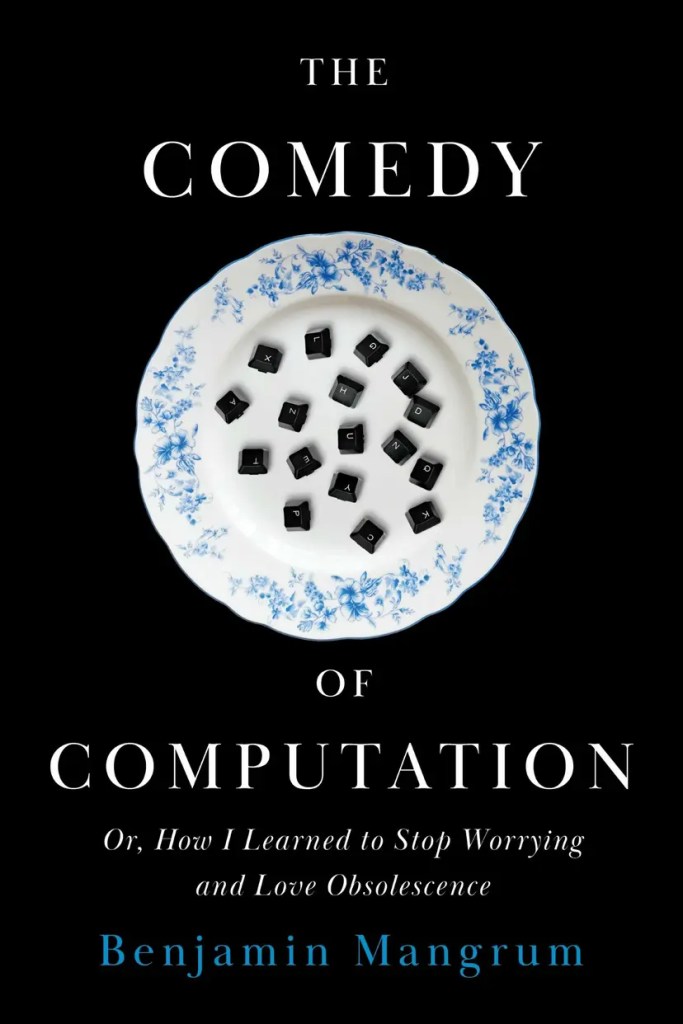
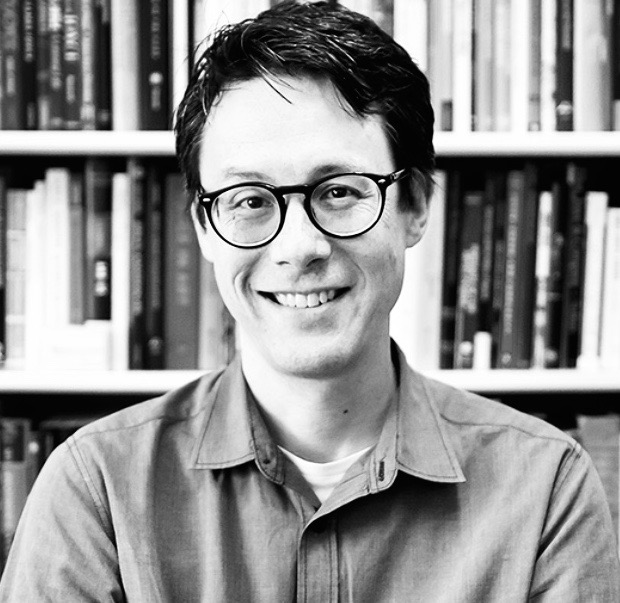
When does comedy become more than a laugh? Ben Mangrum of MIT joins RtB to discuss The Comedy of Computation: Or, How I Learned to Stop Worrying and Love Obsolescence, which in some ways is organized around “the intriguing idea that human knowledge work is our definitive feature and yet the machines we are ourselves made are going to replace us at it.” Comedyhas provided a toolbox (Charles Tilly calls them “collective repertoires”) for responding to the looming obsolescence of knowledge workers.

Continue reading “157 Mangrum’s Comical Computation (JP)”

154* Planetary Boundaries are Non-Negotiable: Kim Stanley Robinson (Elizabeth Miller, JP)

With influential series on California, on the terraforming of Mars, and on human civilization as reshaped by rising tides,  Kim Stanley Robinson  has established a conceptual space as dedicated to sustainability as his own beloved Village Homes in Davis, California.

All of that, though, only prepared the ground for The Ministry for the Future, his 2020 vision of a sustained governmental and scientific rethinking of humanity’s fossil-burning, earth-warming ways. Flanked by JP, KSR’s friend and ally Elizabeth Carolyn Miller (celebrated eco-critic and UC Davis professor) asked him to reflect on the book’s impact in this conversation with our sister podcast, Novel Dialogue.

Continue reading “154* Planetary Boundaries are Non-Negotiable: Kim Stanley Robinson (Elizabeth Miller, JP)”

126 E.G. Condé / Steve Gonzalez on Hurricanes, Fiction, and Speculative Ethnography (EF)

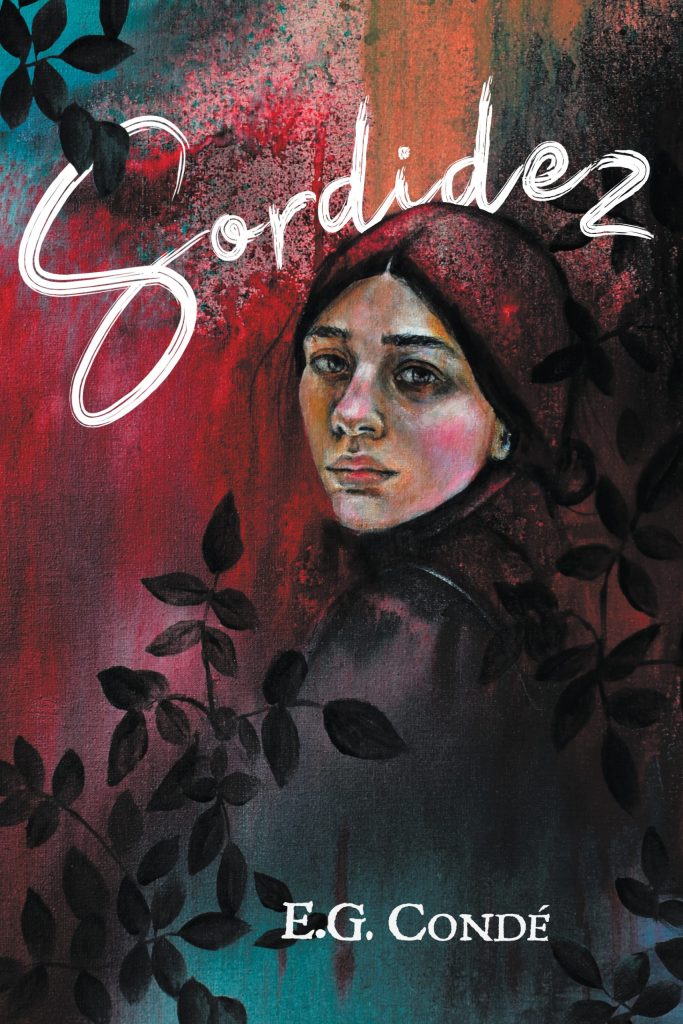
Sordidez, by E.G. Condé, Stelliform Press, 2023

In this episode, Elizabeth talks with Steven Gonzalez, anthropologist and author of speculative fiction under the pen name E.G. Condé. They discuss the entanglement of politics, Taíno animism, and weather events in the form of a hurricane named Teddy. Steve describes the suffusion of sound he has experienced in Puerto Rico and the soundlessness at the heart of hurricanes, and tells us about his academic work on data centers, and a collaborative speculative film that imagines a world without clouds.

Continue reading “126 E.G. Condé / Steve Gonzalez on Hurricanes, Fiction, and Speculative Ethnography (EF)”

112 Earthsea, and other realms: Ursula Le Guin as social inactivist (EF, JP, [UKL])

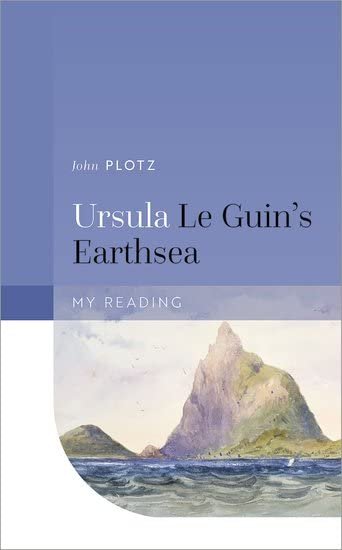
To mark the publication of John’s book Ursula Le Guin’s Earthsea (My Reading), with Oxford University Press, John and Elizabeth take to the airways to share their love of Le Guin’s “speculative anthropology,” gender politics, and goats.

And we share a delight we’ve been holding back for just this occasion, a series of clips from John’s interview with Le Guin in her hometown of Portland, Oregon, in 2015 (a longer print-only version appeared in Public Books). Since Ursula is no longer with us, having died in 2018, it’s especially poignant to listen to their conversation. Though in fact, the tone of their conversation isn’t sad at all, but friendly, generous, and ruminative.

Continue reading “112 Earthsea, and other realms: Ursula Le Guin as social inactivist (EF, JP, [UKL])”

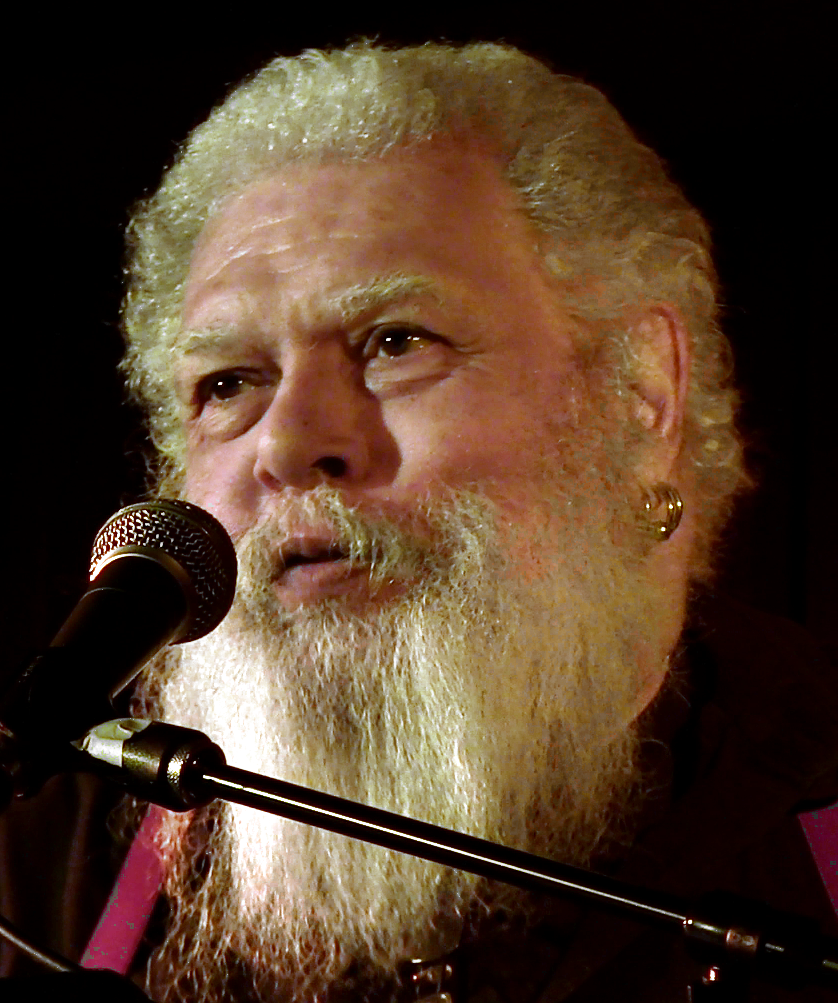
111* Samuel R Delany, Nevèrÿon and beyond (JP)

John Plotz talked with Samuel Delany, living legend of science fiction and fantasy back in 2019. You probably know him best for breakthrough novels like Dhalgren and Trouble on Triton, which went beyond “New Wave” SF to introduce an intense and utterly idiosyncratic form of theory-rich and avant-garde stylistics to the genre.  Reading him means leaving Earth, but also returning to the heady days when Greenwich Village was as caught up in the arrival of Levi-Strauss and Derrida to America as it was in a gender and sexuality revolution.

RTB loves him especially  for his mind-bending Neveryon series: did you know that many consider his 1984 novella from that series, “The Tale of Plagues and Carnivals,” (set both inside the world of Neveryon and along Bleecker Street in NY) the first piece of fiction about AIDS in America?

Continue reading “111* Samuel R Delany, Nevèrÿon and beyond (JP)”

95* Kim Stanley Robinson, Books in Dark Times (JP)

Kim Stanley Robinson, SF novelist of renown, has three marvelous trilogies: The Three CaliforniasScience in the Capital and Red Mars, Green Mars and Blue Mars. But lately it is The Ministry for the Future, his “science fiction nonfiction novel” (Jonathan Lethem) that has politicians, Eurocrats and the rest of us pondering how policy might fight climate change.

In this Books in Dark Times conversation from the RTB vaults (you can also read a longer version that appeared as an article in our partner Public Books) Stan and John start out with Stan’s emerging from the Grand Canyon into the pandemic moment of late March, 2020. Then they discuss Stan’s sense that SF is the realism of the day and his take on “cognitive estrangement.” Finally, they happen upon a shared admiration for the great epic SF poet, Frederick Turner. Small fact connecting him to RTB-land: he completed a literature PhD directed by Frederic Jameson with a dissertation-turned-book on the  novels of Phillip K. Dick.

Continue reading “95* Kim Stanley Robinson, Books in Dark Times (JP)”

93* Quinn Slobodian on Ethnonationalism since 1973 (JP, EF)

What’s the relationship between immigration, globalization and demographics? And what is woke particularism?

John and Elizabeth turn for answers to Quinn Slobodian, professor of history at Wellesley College and author, most recently, of Globalists:  The End of Empire and the Birth of Neoliberalism.

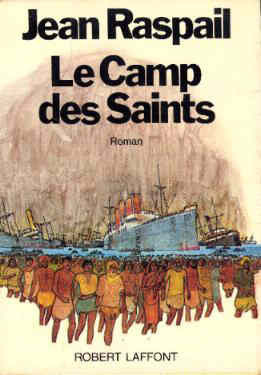
TheCampOfTheSaints

In a 2019 discussion that proves eerily prescient of politics in 2022, first discuss Jean Raspail‘s racist 1973 novel The Camp of the Saints, a book whose popularity in certain quarters since its publication might explain how Europe has gone from Thatcher to Brexit, from Vaclav Havel to Viktor Orban.  How is this xenophobic screed related to science fiction of the same period–and to John Locke? Pat Buchanan,  American early adapter of Raspail’s hate-mongering, figures prominently.

Continue reading “93* Quinn Slobodian on Ethnonationalism since 1973 (JP, EF)”

89* Charles Yu with Chris Fan: The Work of Inhabiting a Role (Novel Dialogue Crossover, JP)

Charles Yu won the 2020 National Book Award for Interior Chinatown but some of us became fans a decade earlier, with How to Live Safely in a Science Fictional Universe (2010). That novel brilliantly uses SF conventions to uncover the kind of self-deceptive infilling that we all do every day, the little stories we tell ourselves to make our world seem predictable and safe when it’s anything but. In this crossover episode, which originally aired on Novel Dialogue, where critics and novelists sit down together in peace, He speaks with John and with science-fiction scholar Chris Fan, Assistant Professor at UC Irvine, senior editor and co-founder of  Hyphen magazine.

Continue reading “89* Charles Yu with Chris Fan: The Work of Inhabiting a Role (Novel Dialogue Crossover, JP)”

*85 Pu Wang and JP unpack their Cixin Liu interview


Our first August rebroadcast was John and Pu’s 2019 interview with SF superstar Cixin Liu (you may want to re-listen to that episode before this one!). Here, they reflect on the most significant things that Liu had said, and to ponder the political situation for contemporary Chinese writers who come to the West to discuss their work.

IMG_0345
In the original interview, Pu leans forward to fine-tune a translation….

They consider whether our world is like a cabinet in a basement, and what kind of optimism or pessimism might be available to science fiction writers, and extend the conversation from their interview about world building, realism, and film. They compare the interview to a recent profile of Liu in The New Yorker, and ponder the advantages and disadvantages of pressing writers to weigh in on the hot-button topics of the day (hint: RTB made the right choice!).

Continue reading “*85 Pu Wang and JP unpack their Cixin Liu interview”

*84 Cixin Liu (JP, Pu Wang)


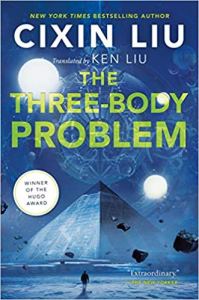
John and Pu Wang, a Brandeis professor of Chinese literature, spoke with science-fiction genius Cixin Liu back in 2019. His most celebrated works include The Three Body ProblemThe Dark Forest, and Death’s End.

When he visited Brandeis to receive an honorary degree, Liu paid a visit to the RTB lair to record this interview. Liu spoke in Chinese and Pu translated his remarks in this English version of the interview (the original Chinese conversation is at 刘慈欣访谈中文版 Episode 14c).

Continue reading “*84 Cixin Liu (JP, Pu Wang)”

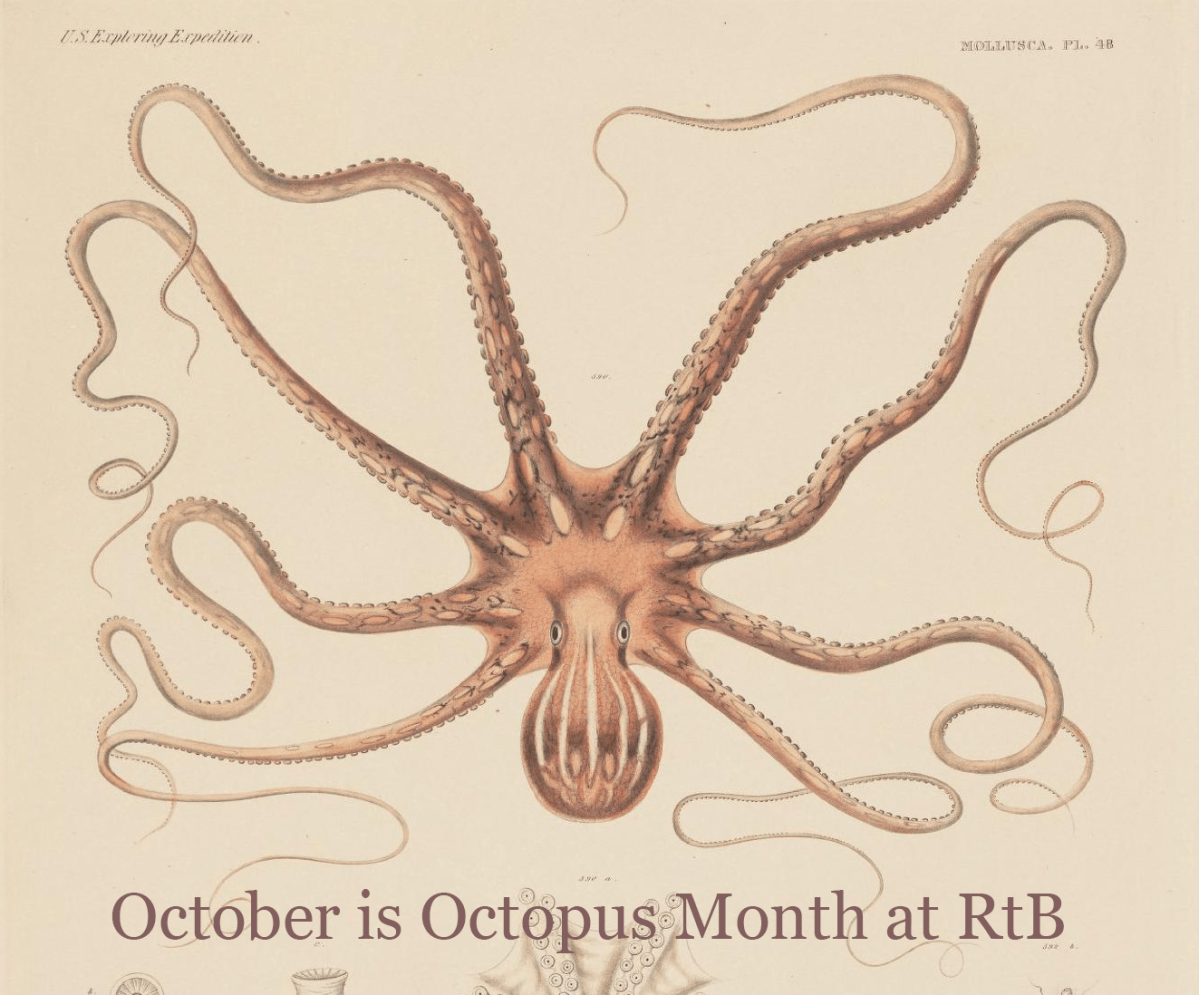
65 Octopus World: Other Minds with Peter Godfrey-Smith (EF, JP)

Peter Godfrey-Smith knows his cephalopods. Once of CUNY and now a professor of history and philosophy of science at University of Sydney, his truly capacious career includes books such as Theory and Reality (2003; 2nd edition in 2020), Darwinian Populations and Natural Selection (2009) and most recently Metazoa. RtB–including two Brandeis undergraduates as guest hosts, Izzy Dupré and Miriam Fisch– loves his astonishing book on the fundamental alterity of octopus intelligence and experience of the world, Other Minds: The Octopus, the Sea and the Deep Origins of Consciousness. Another equally descriptive title for that book, and for the discussion we share with you here (after Thomas Nagel’s “What is it like to be a Bat?“) might be What is it Like to be an Octopus?

As always, below you will find helpful links for the works referenced in the episode, and a transcript for those who prefer or require a print version of the conversation. Please visit us at Recallthisbook.org (or even subscribe there) if you are interested in helpful bonus items like related short original articles, reading lists, visual supplements and past episodes grouped into categories for easy browsing.

Continue reading “65 Octopus World: Other Minds with Peter Godfrey-Smith (EF, JP)”

32 RTB Books in Dark Times 8: Paul Saint-Amour (JP 5/20)

Who better to talk about Dark Times than the author of an unforgettable scholarly book about the grimness of the interwar years, Tense Future? Paul Saint-Amour, Professor of English at University of Pennsylvania and author of various prizewinning books and brilliant articles, joins John to talk about realism, escapism and the glories of science fiction.

Paul wonders if immersive reading is even possible during this terrible imminence. Can we really gaze at the dental work of the pandemical lion as its jaws open upon us? He goes on to praise “recursive” plots as glimpsed in time-travel narratives, which produce not interactivity with a text, but interpassivity; the immersion into a form that has its ending always waiting for readers from their very beginning. Throughout he manages to be pessimistic but hopeful.

Continue reading “32 RTB Books in Dark Times 8: Paul Saint-Amour (JP 5/20)”

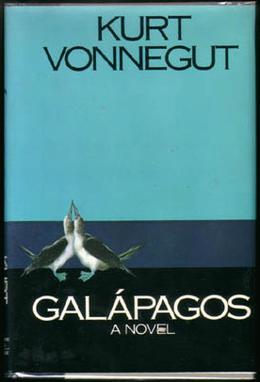
Pandemic in the Pacific: Kurt Vonnegut’s COVID novel

Just about every adult human being back then had a brain weighing about three kilograms! There was no end to the evil schemes that a thought machine that oversized couldn’t imagine and execute. … This was a very innocent planet, except for those great big brains.

There is a volcanic archipelago in the Pacific that Polynesian settlers on their canoes never reached. In 1854, Herman Melville saw “The Encantadas” through a dark lens, darkly:

Take five-and-twenty heaps of cinders dumped here and there in an outside city lot, imagine some of them magnified into mountains, and the vacant lot the sea, and you will have a fit idea of the general aspect of the Encantadas, or Enchanted Isles. A group rather of extinct volcanoes than of isles, looking much as the world at large might after a penal conflagration. It is to be doubted whether any spot on earth can, in desolateness, furnish a parallel to this group.

Darwin, though,  saw the Galapagos islands quite differently when he arrived in September of 1835 He may not have wasted much time praising the landscape in the ways he praised the mind-bending sublimity of Patagonian steppes. But in The Voyage of the Beagle includes this teaser about those soon-to-be-famous Galapagos finches:

Seeing this gradation and diversity of structure in one small, intimately related group of birds, one might really fancy that from an original paucity of birds in this archipelago, one species had been taken and modified for different ends.

Continue reading “Pandemic in the Pacific: Kurt Vonnegut’s COVID novel”

29 RTB Books in Dark Times 6: Kim Stanley Robinson (JP)

Kim Stanley Robinson, SF novelist of renown, has three marvelous trilogies: The Three Californias, Science in the Capital and, most celebrated of all, Red Mars, Green Mars and Blue Mars. His honors include many Locus, Hugo and Nebulae awards. Small fact connecting him to RTB-land: he completed a literature PhD directed by Frederic Jameson with a dissertation-turned-book on the  novels of Phillip K. Dick.

Stan and John start out with Stan’s emerging from the Grand Canyon in late March. Then they discuss Stan’s sense that SF is the realism of the day and his take on “cognitive estrangement.” Finally, they happen upon a shared admiration for the great epic SF poet, Frederick Turner.

Continue reading “29 RTB Books in Dark Times 6: Kim Stanley Robinson (JP)”

14x Afterthoughts about the Cixin Liu interview (Pu Wang and John)

In May, John and Pu interviewed SF superstar Cixin Liu (you will want to listen to that episode before this one). In August they entered the studio again to work on the final edits for that interview in both its Chinese and English versions. While they were there, they took some time to reflect on the most significant things that Liu had said, and to ponder the political situation for contemporary Chinese writers who come to the West to discuss their work.

IMG_0345
In the original interview, Pu leans forward to fine-tune a translation….
Continue reading “14x Afterthoughts about the Cixin Liu interview (Pu Wang and John)”

14 In Focus: Cixin Liu (in English, with Pu Wang, JP)

In this episode, John and Brandeis professor Pu Wang talk with the bestselling science fiction author Cixin Liu.

Mr. Liu is the author of The Three Body Problem, The Dark Forest, Death’s End, and other works. When he visited Brandeis to receive an honorary degree, Liu paid a visit to the RTB lair to record this interview. He spoke in Chinese and Pu translated his remarks in this English version of the interview: if you would rather listen to the original Chinese conversation, you will find it on the RTB website and in your podcast stream (see 刘慈欣访谈中文版 Episode 14c).

Continue reading “14 In Focus: Cixin Liu (in English, with Pu Wang, JP)”

7 In Focus: Samuel Delany in conversation with John Plotz (Nevèrÿon, Triton, Gertrude Stein and more….)

loz_delany_2015

On August 6, 2019, an article based on this podcast interview appeared in our partner publication, Public Books. 

Fresh on the heels of our conversation with Madeline Miller, author of Circe,  John Plotz has a talk with Samuel Delany, living legend of science fiction and fantasy. You probably know him best for breakthrough novels like Dhalgren and Trouble on Triton, which went beyond “New Wave” SF to introduce an intense and utterly idiosyncratic form of theory-rich and avant-garde stylistics to the genre.  Reading him means leaving Earth, but also returning to the heady days when Greenwich Village was as caught up in the arrival of Levi-Strauss and Derrida to America as it was in a gender and sexuality revolution. Continue reading “7 In Focus: Samuel Delany in conversation with John Plotz (Nevèrÿon, Triton, Gertrude Stein and more….)”