150* Steve McCauley on Barbara Pym: The Comic Novel Explored and Adored (JP)


Back in 2019, John spoke with the celebrated comic novelist Stephen McCauley. Nobody knows more about the comic novel than Steve–his latest is You Only Call When You’re in Trouble, but John still holds a candle for his 1987 debut, Object of My Affection, made into a charming Jennifer Aniston Paul Rudd movie. And there is no comic novelist Steve loves better than Barbara Pym, a mid-century British comic genius who found herself forgotten and unpublishable in middle age, only to roar back into print in her sixties with A Quartet in Autumn. Steve and John’s friendship over the years has been sealed by the favorite Pym lines they text back and forth to one another, so they are particularly keen to investigate why her career went in this way.
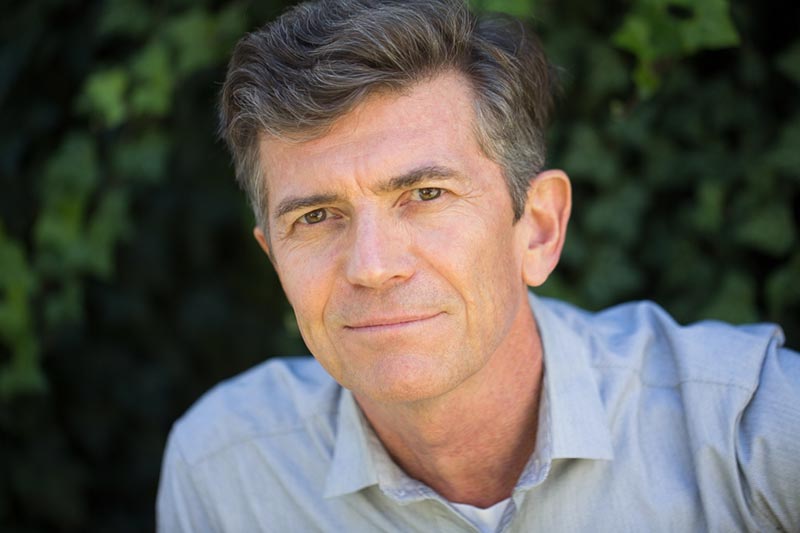
stephen-mccauley-2017 photo
Steve McCauley

In the episode, they talk about some of these favorite sentences from Pym, and then turn to the comic novel as a genre. They talk about the difference between humorous and comic writing, the earthiness of comedy, whether comic novels should have happy or sad endings, and whether the comic novel is a precursor to, or an amoral relief from, the sitcom. They also discuss some of Steve’s fiction, including his Rain Mitchell yoga novels. In Recallable Books John recommends Pictures from an Institution by Randall Jarrell and Steve recommends After Claude by Iris Owens.

barbarapym_internationalafricainstitute
Barbara Pym at work

Discussed in this episode:

The Life and Opinions of Tristram Shandy, Gentleman, Laurence Sterne

Vanity Fair, William Makepeace Thackeray

Jane Eyre, Charlotte Bronte

The Adventures of Huckleberry Finn, Mark Twain

Jude the Obscure, Thomas Hardy

The Beast in the Jungle,” Henry James

The Thurber Carnival, James Thurber

The Group, Mary McCarthy

After Claude, Iris Owens

Pictures from an Institution, Randall Jarrell

An Unsuitable Attachment, Barbara Pym

Less than Angels, Barbara Pym

The Sweet Dove Died, Barbara Pym

Portnoy’s Complaint, Philip Roth

The SelloutPaul Beatty

My Ex-Life, Stephen McCauley

You can listen here or read here.

148* Albion Lawrence: Scientists Cooperate while Humanists Ruminate (EF, JP)

Back in 2021, John and Elizabeth sat down with Brandeis string and quantum theorist Albion Lawrence to discuss cooperation versus solitary study across disciplines. They sink their teeth into the question, “Why do scientists seem to do collaboration and teamwork better than other kinds of scholars and academics?” 

The conversation ranges from the merits of collective biography to the influence of place and geographic location in scientific collaboration to mountaineering traditions in the sciences.  As a Recallable Book, Elizabeth champions The People of Puerto Rico, an experiment in ethnography of a nation (in this case under colonial rule) from 1956, including a chapter by Robert Manners, founding chair of the Brandeis Department of Anthropology. Albion sings the praises of a collective biography of the Art Ensemble of Chicago, A Message to Our Folks. But John stays true to his Victorianist roots by praising the contrasting images of the withered humanist Casaubon and the dashing young scientist Lydgate in George Eliot’s own take on collective biography, Middlemarch.

First image taken of a black hole by a collaboration of scientists for the Event Horizon Telescope (EHT) project

Discussed in this episode:

Richard Rhodes Making of the Atomic Bomb

Ann Finkbeiner, The Jasons: The Secret History of Science’s Postwar Elite

James Gleick, The Information

Jon Gertner, The Idea Factory: Bell Labs and the Great Age of American Innovation

Black Hole photographs win giant prize

Adam Jaffe, “Geographic Localization of Knowledge Spillovers as Evidenced by Patent Citations

Jamie Cohen-Cole, The Open Mind

Julian Steward et al., The People of Puerto Rico

Paul Steinbeck, Message to Our Folks

Jenny Uglow, Lunar Men

George Eliot, Middlemarch

Listen to and Read the episode here.

142* Greg Childs on seditious conspiracy (EF, JP)

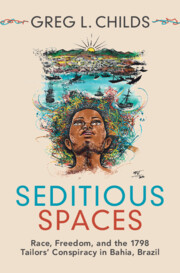
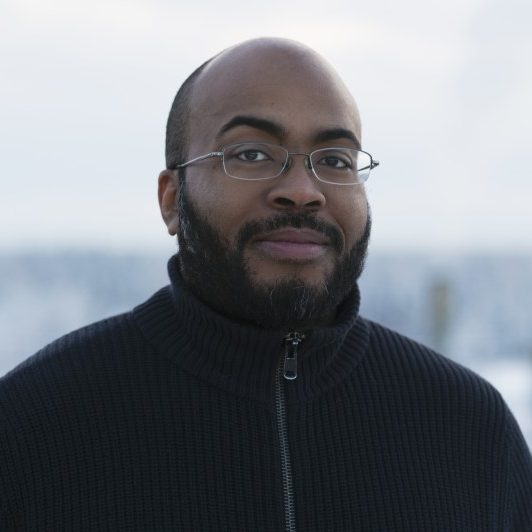
What a difference four years makes. Back in February 2021, still struggling to understand what had just happened at the Capitol, John and Elizabeth spoke with Brandeis historian Greg Childs. He is an expert in Latin American political movements and public space; his Seditious Spaces: Race, Freedom, and the 1798 Conspiracy in Bahia, Brazil is imminently forthcoming from Cambridge UP.

Continue reading “142* Greg Childs on seditious conspiracy (EF, JP)”

141 The Hyphen Unites: Avi Shlaim on Arab-Jewish Life (Yuval Evri, JP)

Avi Shlaim, is a celebrated “New Historian” whose earlier work established him as an influential historian of Middle Eastern politics and especially of Israel’s relations with the Arab world. Most recently he has turned to his own Iraqi/Israeli/British past in Three Worlds: Memoirs of an Arab-Jew–which he refers to as an “impersonal autobiography.”

He speaks today to John and his  Brandeis colleague Yuval Evri, the Marash and Ocuin Chair in Ottoman, Mizrahi and Sephardic Jewish Studies. Yuval’s  2020 The Return to Al-Andalus: Disputes Over Sephardic Culture and Identity Between Arabic and Hebrew explores how fluidity in such categories as the “Arab-Jew” becomes a source of resistance to exclusive claims of ownership of land, texts, traditions, or languages.

Continue reading “141 The Hyphen Unites: Avi Shlaim on Arab-Jewish Life (Yuval Evri, JP)”

133 Beri Marusic on Grief and other Expiring Emotions (Katie Elliott, JP)

Why is that when a loved one dies, grief seems inescapable–and then diminishes? The brilliant Edinburgh philosopher Berislav Marusic‘s “Do Reasons Expire? An Essay on Grief” begins with his grief for the unexpected and early loss of his mother: “I stopped grieving or at least the grief diminished, yet the reason didn’t really change. It’s not like that my mother stopped mattering to me or that I stopped loving her, but still this change in grief somehow seemed reasonable.” What are philosophers and the rest of us to make of this durable insight?

Continue reading “133 Beri Marusic on Grief and other Expiring Emotions (Katie Elliott, JP)”

132* Policing and White Power with David Cunningham and Daniel Kryder


This June 2020 episode, part of a Global Policing series, was Recall this Book’s first exploration of police brutality, systemic and personal racism and Black Lives Matter. Elizabeth and John were lucky to be joined by by Daniel Kryder and David Cunningham,two scholars who have worked on these questions for decades.

Many of the mechanisms that create an oppressed and subordinated American community of color can seem subtle and indirect, despite the insidious ways they pervade housing law (The Color of Law), education (Why Are All the Black Kids Sitting TogetherSavage Inequalities) and the carceral state (The Condemnation of BlacknessThe New Jim Crow, Locking Up Our Own).

Continue reading “132* Policing and White Power with David Cunningham and Daniel Kryder”

128 Recall This Story: Steve McCauley excavates John Cheever’s “The Five-Forty-Eight” (JP)

We debut a new feature: Recall This Story, in which a contemporary writer picks out a bygone story to read and to analyze. Surely there is no better novelist to begin with than RTB’ shouse sage, Steve McCauley.

And not just because he’s got the pipes to power through a whole fantabulous John Cheever story. “The Five-Forty-Eight” (published in The New Yorker 70 years ago) is about sordidness uncovered, a train, and a face in the dirt. It ticks almost every Cheever box, evoking an infinitude of lives unled elsewhere while ostensibly documenting nothing more than the time to takes to down a couple of drinks, scuttle feverishly through some midtown streets, and take a lumbering commuter train out of the city.

Continue reading “128 Recall This Story: Steve McCauley excavates John Cheever’s “The Five-Forty-Eight” (JP)”

122 The Culture Trap, with sociologist Derron Wallace (EF, JP)

In this episode, Elizabeth and John talk with Derron Wallace, sociologist of race, ethnicity, and education, and Brandeis colleague, about his new book The Culture Trap, which explores “ethnic expectations” for Caribbean schoolchildren in New York and London. His work starts with the basic puzzle that while black Caribbean schoolchildren in New York are often considered as “high-achieving,” in London, they have been conversely thought to be “chronically underachieving.” Yet in each case the main cause — of high achievement in New York and low achievement in London — is said to be cultural. We discuss the concept of ethnic expectations and the ways it can have negative effects even when the expectations themselves are positive, the dense intertwining of race, class, nation, colonial status, and gender, and the travels of the concept of culture in the 20th and 21st centuries.

Continue reading “122 The Culture Trap, with sociologist Derron Wallace (EF, JP)”

113* David Cunningham, January 6th and Asymmetrical Policing (JP, EF)

Recall This Book first heard from the sociologist of American racism David Cunningham in Episode 36 Policing and White Power. Less than a week after the horrors of January 6th, 2021, he came back for this conversation about “asymmetrical policing” of the political right and left–and of White and Black Americans. His very first book (There’s Something Happening Here, 2004) studied the contrast between the FBI’s work in the 1960’s to wipe out left-wing and Black protests and its efforts to control and tame right-wing and white supremacist movements. That gives him a valuable perspective on the run-up to January 6th–and what may happen next.

Continue reading “113* David Cunningham, January 6th and Asymmetrical Policing (JP, EF)”

110* Novel Dialogue: Joshua Cohen (JP, Eugene Sheppard)

In this episode (originally aired by our partner Novel Dialogue) John and his Brandeis colleague Eugene Sheppard  speak with Joshua Cohen about The Netanyahus. Is the 2021 novel a Pulitzer-winning bravura story of the world’s worst job interview? Or is it a searing indictment of ethno-nationalist Zionism–and the strange act of pretense whereby American Jewish writers and thinkers in postwar America pretended that Israel and its more extreme ethno-nationalist strains didn’t concern them?

Cohen dramatizes the return of that repressed by imagining the family of the Benzion Netanyahu (actual medieval Spanish historian and father of Israel’s past and present Prime Minister Bibi)  landing itself on a would-be assimilated American Jewish family ripped straight from the pages of a Philip Roth or Bernard Malamud novel.

Continue reading “110* Novel Dialogue: Joshua Cohen (JP, Eugene Sheppard)”

103* Elizabeth Bradfield in Dark Times (JP)

For the RtB Books in Dark Times series back in 2021, John spoke with Elizabeth Bradfied, editor of Broadsided Press, poet, professor of creative writing at Brandeis, naturalist, photographer.

Her books include Interpretive WorkApproaching IceOnce Removedand Toward Antarctica. She lives on Cape Cod, travels north every summer to guide people into Arctic climes, birdwatches.

Continue reading “103* Elizabeth Bradfield in Dark Times (JP)”

92 Janet McIntosh on “Let’s Go Brandon,” QAnon and alt-right language (EF, JP)

John and Elizabeth talk with Brandeis linguistic anthropologist Janet McIntosh about the language of US alt-right movements. Janet’s current book project on language in the military has prompted thoughts about the “implausible deniability” of “Let’s Go Brandon”–a phrase that “mocks the idea we have to mince words.”

The three of them unpack the “regimentation” of the phrase, the way it rubs off on associated signs, and discusses what drill sergeants on Parris Island really do say. They speculates on the creepy, Dark Mirror-esque similarity between the deciphering of “Q-drops” and academic critique. Turning back to her work on basic training, Janet unpacks the power of “semiotic callousing.”

Continue reading “92 Janet McIntosh on “Let’s Go Brandon,” QAnon and alt-right language (EF, JP)”

*85 Pu Wang and JP unpack their Cixin Liu interview


Our first August rebroadcast was John and Pu’s 2019 interview with SF superstar Cixin Liu (you may want to re-listen to that episode before this one!). Here, they reflect on the most significant things that Liu had said, and to ponder the political situation for contemporary Chinese writers who come to the West to discuss their work.

IMG_0345
In the original interview, Pu leans forward to fine-tune a translation….

They consider whether our world is like a cabinet in a basement, and what kind of optimism or pessimism might be available to science fiction writers, and extend the conversation from their interview about world building, realism, and film. They compare the interview to a recent profile of Liu in The New Yorker, and ponder the advantages and disadvantages of pressing writers to weigh in on the hot-button topics of the day (hint: RTB made the right choice!).

Continue reading “*85 Pu Wang and JP unpack their Cixin Liu interview”

*83 Plotz and Ferry on Zadie Smith

In this 2019 conversation, rebroadcast now to follow up RTB 82, Elizabeth and John try their best to unpack Zadie Smith’s take on sincerity, authenticity and human sacredness; the “golden ticket” dirty secret behind our hypocritical academic meritocracy; surveillance capitalism as the “biggest capital grab of human experience in history;” and her genealogy of the novel. If we had to sum the day up with a few adjectives (and we do):  funny, provocative, resplendent, chill, generous, cantankerous.

Continue reading “*83 Plotz and Ferry on Zadie Smith”

66 On Multi-Species Community: A Critical Conversation with Patricia Alvarez Astacio (Gina T, John P)

Octopus month has morphed seamlessly into Multispecies month here at RtB, bringing with it not only last week’s piece on chimpanzees, but also this sparkling conversation about all sorts of multi-species communities. Recorded live in front of an audience of writing students and introduced by Brandeis physicist Matthew Headrick, it features Patricia Alvarez Astacio, an anthropologist and filmmaker. She has made a film about her work in the Peruvian highlands, where people live with, respect, shear and sometimes eat alpacas. Gina Turrigiano, RtB guest-host of long standing, wears her biological hat in this conversation, bringing to bear insights about avian intelligence and the other sorts of animal community that silently surround our species (think microbiome…). John tries to steer the conversation towards SF as usual.

Continue reading “66 On Multi-Species Community: A Critical Conversation with Patricia Alvarez Astacio (Gina T, John P)”

64 Brahmin Left 4: Adaner and John wrap up with Elizabeth

Our Summer series on the Brahmin Left, winding down as Fall approaches, was inspired by our bracing but terrifying interview with Thomas Piketty. It starts from the assumption that a major realignment (or, rather, a “dealignment”) from the class-based politics of the mid-20th century is underway all over Europe and North America–and perhaps worldwide. What caused that? Piketty’s explanation centers on the rise of the Brahmin Left. He maintains that Left parties have abandoned the working-class for an increasingly highly educated voter-base (as if on cue, Nate Cohn recently supplied this analysis).

We spoke with Matt Karp, Jan-Werner Mueller and Arlie Hochschild and learned far more than we bargained for. Karp is among those who point to political changes produced by the waning power of labor in our post-industrial era; Mueller points to populist revival and ethnonationalism resurgent; Hochschild notes the breakdown in the narratives that succeeded in tying working-class white voters to Left parties in the 20th century. Other scholars (we spoke with Quinn Slobodian in 2019 for example) see in the Right’s recent successes the latest twist in a neoliberalism controlled by corporate elites.

Continue reading “64 Brahmin Left 4: Adaner and John wrap up with Elizabeth”

60 Sean Hill on Bodies in Space and Time (EF, EB)

Elizabeth is joined by Elizabeth Bradfield, poet, naturalist and professor of poetry at Brandeis, in a conversation with the poet Sean Hill, author of Blood Ties and Brown Liquor (2008) and Dangerous Goods (2014).

Sean read his “Musica Universalis in Fairbanks,” (it appeared in the Alaska Quarterly Review) and then, like someone seated in an archive turning over the pages of aged and delicate documents, unfolded his ideas about birds, borders, houses and “who was here before me.”

Continue reading “60 Sean Hill on Bodies in Space and Time (EF, EB)”

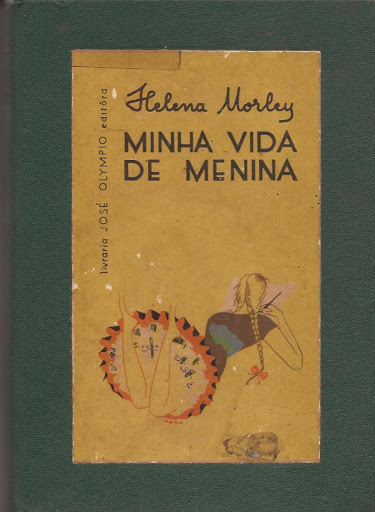
57 Recall this B-side #2: Elizabeth Ferry on “The Diary of ‘Helena Morley'” (JP)

Given this podcast’s love of neglected books, you won’t be shocked to know that John has a side-hustle–in which Elizabeth plays a significant part. He edits a Public Books column called B-Side Books, where writers like Namwali Serpell and Ursula Le Guin sing praises to a beloved but neglected book. Now, there is a book that collects 40 of these columns (Washington Post review; interview with John about the B-side concept on Five Books).  Find it as your local bookstore, or Columbia University Press, or Bookshop, (or even Amazon).

Continue reading “57 Recall this B-side #2: Elizabeth Ferry on “The Diary of ‘Helena Morley’” (JP)”

40 Global Policing 1: Hayal Akarsu on Turkish Community Policing (EF, JP)

The Black Lives Matter movement and the policing-related deaths of George Floyd, Breonna Taylor, Ahmaud Arbery and others have struck a nerve worldwide. Our “Global Policing” series aims to capture the protests over systemic racism and policing in their various national forms.

Picture taken from journalist Zeynep Kuray’s Twitter account.

In Turkey, for example, a June 19 article in the English edition of DuvaR. news magazine reported that

Footage of the detentions of five individuals detained at pro-Kurdish Peoples’ Democratic Party’s (HDP) press conference in Istanbul reveal shouts from the civilians begging the police to stop pressing on their backs and telling them that their chest hurts…reminiscent of the recent police killing of black Minneapolis resident George Floyd, remembered with his words “I can’t breathe!

Continue reading “40 Global Policing 1: Hayal Akarsu on Turkish Community Policing (EF, JP)”

37 RTB Books In Dark Times 11: Elizabeth Bradfield (JP)

Elizabeth Bradfied is editor of Broadsided Press, professor of creative writing at Brandeis, naturalist, photographer–and most of all an amazing poet (“Touchy” for example just appeared in The Atlantic). Her books include Interpretive Work, Approaching Ice, Once Removed, and Toward Antarctica. She lives on Cape Cod, travels north every summer to guide people into Arctic climes, birdwatches. She is in and of and for our whole natural world.

So, is it poetry sustaining her now? Or does she (she does!) have other sources of inspiration?

Continue reading “37 RTB Books In Dark Times 11: Elizabeth Bradfield (JP)”